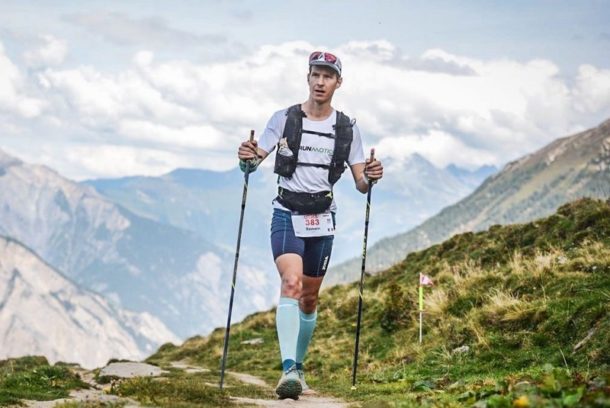
Aiming for your first 100-mile race? It is the iconic ultra-trail distance: UTMB, the Diagonale des Fous, Western States or the Grand Raid de l’Ultra-Marin. Depending on the course, most runners take between 30 and 45 hours, often with two nights out on the trail.
Preparing for 100 miles is not just about running more than for a 100K trail training plan. You need to build endurance over several months and learn to manage sleep, digestion and your mindset over almost two days. Here is how long to plan for, what a typical week looks like and what makes the difference.
The short answer
- Allow 6 to 9 months of specific preparation, after having already finished at least one 50 to 60-mile ultra.
- At the peak of your preparation, expect 8 to 14 hours of training a week, with long hike-and-run sessions and intensive training weekends.
- Schedule a 50 to 60-mile tune-up race 2 to 3 months before your goal.
- Train yourself to manage the night, sleep and nutrition: over 100 miles, they often decide whether you finish.
Contents
- Understanding the profile of your 100 miler
- The basics of a 100-mile training plan
- How long does it take to prepare for a 100-mile race?
- Sample training week for a 100 miler
- Tune-up races before a 100 miler
- Managing the night and sleep
- Preparing your nutrition and digestion
- Mandatory gear and equipment
- Managing your effort on race day
- 100-mile preparation: frequently asked questions
- They finished their 100 miler with RunMotion Coach
- Your 100-mile training plan in RunMotion Coach
Understanding the profile of your 100 miler
No two 100-mile races are alike. In the mountains, a 100 miler can climb more than 9,000 to 10,000 m (30,000 ft or more), with technical sections and altitude: you will walk a large part of the climbs, and the descents will weigh heavily on your quads.
On a more runnable course, the difficulty comes from the repetition of strides and the muscle fatigue that builds up, to the point of having to walk on the flat late in the race if you are not prepared.
Also check the cut-off times. On a 100 miler, they often impose a minimum average pace that leaves little margin for mid- and back-of-the-pack runners. Look them up at the start of your preparation so you know what pace you need to hold.
Comparing two 100 milers with effort kilometres
To compare courses, trail running uses effort kilometres (km-effort), a metric based on kilometres: each kilometre counts as 1, and every 100 m of elevation gain adds 1 effort-km. A 105-mile race with 10,000 m of climbing is 270 effort-km, while a gently rolling 100 miler stays around 170. Learn more about how to calculate elevation gain.
The basics of a 100-mile training plan
Over 100 miles, endurance, running economy and muscle strength remain the three pillars, just as for a 100K. But the length of the effort adds new factors: sleep deprivation, digestion and the ability to stay clear-headed enough to make good decisions.
Hike-and-run: the key session for 100 miles
A hike-and-run alternates running and walking at a moderate intensity. It is the session that best prepares you for 100-mile pacing. Build up gradually to outings of 4 to 5 hours: beyond that, fatigue becomes hard to recover from. To add volume, favour intensive training weekends with two back-to-back long outings, or add one to two hours of cycling after your hike-and-run.
Building strength, climbing and descending
Hill sessions build strength and climbing economy: short hills of 12×30″, long hills of 4×8′, or uphill threshold work of 3×10′. Also work on your power hiking, which you will use for hours on the climbs.
Descents are often what makes runners drop out of a 100 miler. Include fast 1′ downhills in training and trail-specific strength work all year round: your quads will have to absorb thousands of metres of descent. For technique, read our advice on how to descend in trail running.
How long does it take to prepare for a 100-mile race?
Allow 6 to 9 months of specific preparation, and often several seasons to get to the 100-mile distance. Before your first 100 miler, finishing at least one 50 to 60-mile ultra teaches you how you react over a long effort. Many races also require qualifying races.
If you have just finished a 100K, give yourself time to recover and build your volume gradually. Our advice on increasing your trail running distance helps you plan that progression without getting injured.
Sample training week for a 100 miler
This example is for a runner who has already finished a 100K and trains 5 times a week over 24 weeks, for a mountain 100 miler. The durations are guidelines to adapt to your level, recovery and schedule.
| Phase | During the week | At the weekend |
|---|---|---|
| Base (weeks 1 to 10) | 1h easy run; short hills 12×30″; 30′ of strength work; 1 bike ride | 3h hilly long run |
| Specific (weeks 11 to 21) | Long hills 4×8′ or uphill threshold 3×10′; easy run with 10 downhills of 1′; 4 rounds of strength and conditioning; 1 to 2 bike rides | 5h to 6h hike-and-run, or an intensive training weekend with two back-to-back long outings |
| Taper (weeks 22 to 24) | Volume cut by 30 to 50%, short hill reminder | 2h hike-and-run, then race day |
Every 3 to 4 weeks, schedule a lighter week. Over such a long preparation, consistency and recovery matter more than any single big session.
Tune-up races before a 100 miler
A 50 to 60-mile race, 2 to 3 months before your goal, is the best dress rehearsal: you test your gear, nutrition and pacing in real conditions, with aid stations and organised safety. Then allow 4 to 6 weeks to recover and resume specific training. For UTMB, our UTMB training plan details this calendar.
Managing the night and sleep
On a 100 miler, you will probably spend one or even two nights on the course. Do several night runs during your preparation, on trails you know, to get used to your headlamp. On the other hand, there is no need to stay out a whole night in training: the fatigue would take too long to recover from. All our tips for trail running at night.
During the race, many runners take one or more short naps of 10 to 20 minutes when drowsiness becomes dangerous. Test this strategy beforehand, for example during an intensive training weekend or a night race. And arrive at the start well rested: the nights of the previous week count.

Preparing your nutrition and digestion
Over 30 hours or more, your stomach is put to the test, and digestive problems are a common reason for dropping out. Train your gut on every long hike-and-run: test what you eat, how often and with which drink, and plan savoury food for when sweet things no longer go down. Check what your race’s aid stations offer. Our guide on fuelling for an ultra and our tips on night-time nutrition explain the method.
Mandatory gear and equipment
On a mountain 100 miler, the mandatory gear list is often long: waterproof jacket, warm layers, survival blanket, two headlamps… Train with a loaded pack on your long outings to check comfort and access to your things. Take time to check your mandatory gear well before the race, and choose a GPS watch with enough battery life.
Managing your effort on race day
The most common mistake on a 100 miler is starting too fast. The first hours should feel easy: walk from the first steep climbs and keep something in reserve for the second half, where the race really happens.
Prepare a race plan with realistic split times at the aid stations and cut-offs. Our Race Strategy tool helps you estimate your pace and nutrition along the course.
100-mile preparation: frequently asked questions
How many hours a week to train for a 100 miler?
At the peak of their preparation, many amateur runners train 8 to 14 hours a week, long outings and cycling included. Consistency over several months matters more than the exact number.
Do I need to run a 100K before a 100 miler?
It is strongly recommended. A 50 to 60-mile ultra teaches you to manage pacing, nutrition and the night over a long effort, and many 100-mile races require qualifying races.
What is the longest run before a 100 miler?
Hike-and-run sessions of 5 to 6 hours, intensive training weekends with two back-to-back long outings, and a 50 to 60-mile tune-up race 2 to 3 months before. Running 100 miles in training is neither useful nor advisable.
Can you sleep during a 100 miler?
Yes. Many runners take one or more short naps of 10 to 20 minutes, especially on the second night. Test it in training to see how your body reacts.
How long should I recover after a 100 miler?
Allow several weeks before returning to normal training. See our tips on recovering after UTMB.
They finished their 100 miler with RunMotion Coach
At RunMotion, we also know the 100-mile distance from the inside. Romain Adam, the app’s co-founder, finished UTMB 2023 in 29h24, a year after dropping out around mile 78, then UTMB 2026 in 27h19.

La Bande à D+: 4 RunMotion runners at UTMB 2026
In a special episode of the French podcast La Bande à D+, “Ils ont réussi leur premier UTMB” (in French), produced in partnership with RunMotion Coach, Nicolas Fréret followed four amateur runners who prepared with RunMotion for their first UTMB. Before the start they talk about their goals and doubts; the debrief continues during the race around Mont Blanc. All four made it back to Chamonix:
- Loïc Angenard in 32h18, a former smoker who trained in Brittany by repeating the same loops to build elevation;
- Yann Bellenguez in 34h28, who moved from the Somme to Haute-Savoie after falling for the Tour du Mont-Blanc;
- Guillaume Scellier in 40h31, back for revenge twenty years after a DNF at the Diagonale des Fous;
- Thibaud Hennequin in 44h32, who kept his goal through a year marked by illness and grief.
More 100-mile success stories
- Christian finished UTMB after ten years of self-coached trail running and his first structured preparation with RunMotion Coach.
- Claudine finished the 109-mile Grand Raid de l’Ultra-Marin in 30h30, her very first ultra.
- Noëlle completed the 109 miles of the Grand Raid de l’Ultra-Marin in under 30 hours, her goal.
- Vincent finished the 109-mile Grand Raid de l’Ultra-Marin by alternating 10 minutes of running and 5 minutes of walking.
- Mickaël took 15th place at the 112-mile UTMJ (7,500 m of climbing) in brutal conditions.
Your 100-mile training plan in RunMotion Coach
In the RunMotion Coach app, our algorithms build your 100-mile training plan. They take into account your goal, experience, availability and training terrain, then adapt your sessions to your feedback. You can add up to 2 bike rides a week and follow trail-specific strength circuits.
Ready to go? Try RunMotion Coach free for 7 days and build your plan for your first 100 miler.