For ultra trail running, the right GPS watch is the one that lasts your whole race in an accurate GPS mode, with a margin, and helps you stay on course when fatigue and darkness set in. Real battery life, map navigation, a barometric altimeter and readability matter far more than the number of training metrics.
The short answer
- Golden rule: choose a GPS battery life, in the mode you will actually use, at least 30% longer than your expected race time.
- Best battery-to-price ratio: Coros Apex 4 (€499.90) or Suunto Race 2 (€499.90).
- For 100 milers and extreme battery life: Garmin Enduro 4 or Suunto Vertical 2.
- Small budget: Coros Nomad, with maps and up to 56 h of GPS.
- Apple Watch Ultra 4: fine for a shorter ultra, tight beyond one night.
- All of them connect to RunMotion Coach (Apple, Garmin, Polar, Suunto, Coros).
Contents
- Why ultra running changes everything when choosing a watch
- How to choose an ultra trail watch
- Comparison table: GPS watches for ultra trail running
- Our verdict on each model
- The Apple Watch Ultra 4 on an ultra trail
- Preparing your ultra with your watch and RunMotion Coach
- Using your watch well on race day
- FAQ
- Key takeaways
Why ultra running changes everything when choosing a watch
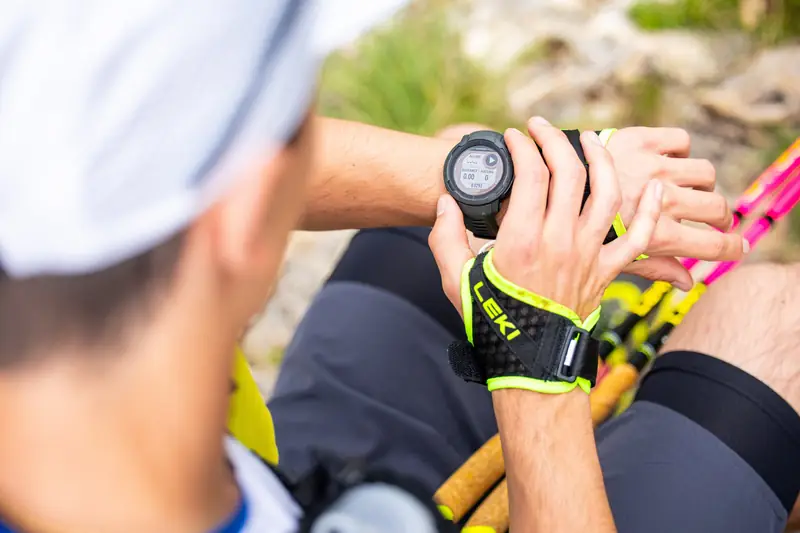
Over 10K, almost every watch does the job. On an ultra, the watch becomes race equipment in its own right. A mountain 80K can take 12 to 20 hours depending on the course and your level; on a 100 miler, many runners spend one or even two nights out. Your watch has to last all that time, in the cold and the rain, with the backlight switching on regularly and sometimes navigation running.
It also has to help you when your judgement fades. At 3 a.m., after 60 km, following a track on a map on your wrist is far easier than searching for course markings under your headlamp. And knowing the climbing left before the next aid station makes managing your effort much easier.
How to choose an ultra trail watch
Real battery life, not marketing battery life
This is the number one criterion, and the most misleading. Manufacturers often quote figures from power-saving modes: a GPS point recorded every minute or two, solar charging in full sun, screen off. On a zigzagging mountain trail, these modes noticeably degrade distance accuracy.
So look at battery life in “all systems” or “dual-frequency” mode (the GPS uses several constellations and two frequency bands, which improves accuracy in forests and deep valleys). Then add a margin: navigation, cold and backlight all reduce real battery life. For a 30-hour ultra, aim for at least 40 hours claimed in that mode.
Navigation and maps
A GPX track with off-course alerts is the minimum. A topographic map on your wrist is real comfort, especially at night or when markings have been removed. All the watches in this selection offer navigation; the quality and smoothness of the maps vary by brand.
Barometric altimeter
Essential for ultras. It measures altitude and elevation far more accurately than GPS alone. Combined with the track, it can display the remaining profile of the current climb, a great help for pacing your effort.
Readability, day and night
MIP (transflective) screens remain perfectly readable in full sun and use very little power. AMOLED screens are brighter and nicer to look at, but hungrier. A built-in flashlight, found on some models, is handy at aid stations or when rummaging in your pack, but does not replace your headlamp.
Charging during the race
On very long races, check that the watch keeps recording while charging from a small power bank. On a 100 miler, that is often safer than relying on an overly degraded power-saving mode.
Safety
Live location sharing (LiveTrack on Garmin, for example) reassures your family and crew. Some high-end models go further with satellite messaging, useful in areas without mobile coverage. These features never replace your race’s mandatory kit or the phone required by the organiser.
Comparison table: GPS watches for ultra trail running
| Model | Approx. price* | GPS battery (accurate mode) | Max claimed battery | Screen | Best for |
|---|---|---|---|---|---|
| Coros Nomad | €369.90 | up to 34 h (dual-frequency) | up to 56 h (all systems) | MIP | First ultra, tight budget |
| Coros Apex 4 46 mm | €499.90 | around 65 h (all systems) | — | MIP, sapphire | Best battery-to-price ratio |
| Suunto Race 2 | €499.90 | up to 55 h (dual-frequency) | up to 200 h (power-saving modes) | AMOLED, sapphire | Ultras and road training |
| Polar Grit X2 Pro | €529 | up to 40 h (dual-frequency) | up to 110 h (eco mode) | AMOLED, sapphire | Ultras up to around 30 h |
| Suunto Vertical 2 | €599.90 | up to 65 h (dual-frequency) | up to 500 h (extended modes) | AMOLED, sapphire | 100 milers, adventure, built-in flashlight |
| Garmin Enduro 4 | €899.90 | up to 60 h (Max Accuracy), 90 h with solar | up to 320 h (Extended Battery, with solar) | Solar MIP, sapphire | Extreme battery life, multi-day races |
| Garmin Fenix 8 Pro AMOLED 47 mm | €999 | up to 44 h (GPS only) | — | AMOLED, sapphire | Safety (inReach, LTE) |
| Apple Watch Ultra 4 | €899 (Apple) | around 18 h of workout | up to 45 h (Max Extended mode) | OLED | Shorter ultras, iPhone users |
*Prices checked in October 2026. Battery figures claimed by the manufacturers in ideal conditions: in a race, with navigation, cold and backlight, expect noticeably less.
Our verdict on each model
Coros Nomad: the entry-level model with what you need
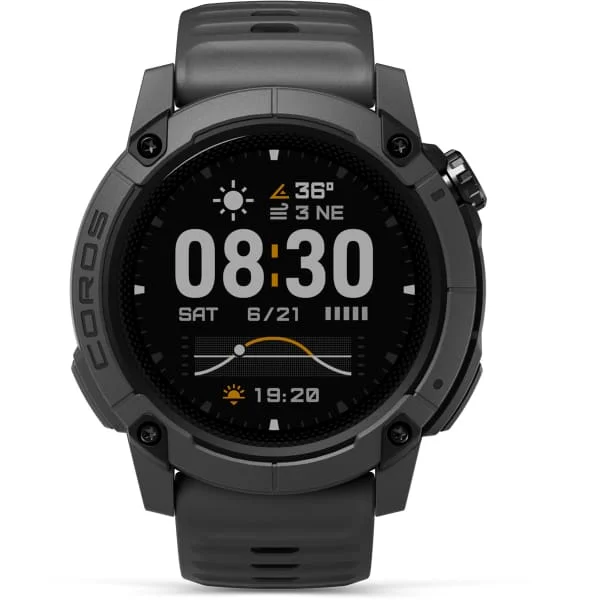
At €369.90, the Nomad offers the essentials for a first ultra: offline maps, navigation, a 1.3-inch MIP screen readable in the sun, 61 g on the wrist and a claimed battery life of up to 56 hours of all-systems GPS (34 hours in dual-frequency). It was designed for the outdoors in the broad sense (hiking, fishing, running), which makes it a rugged watch rather than a racing one. For a 50 to 80K, it is a very rational choice.
See the Coros Nomad on Ekosport
Coros Apex 4 46 mm: the battery-to-price benchmark
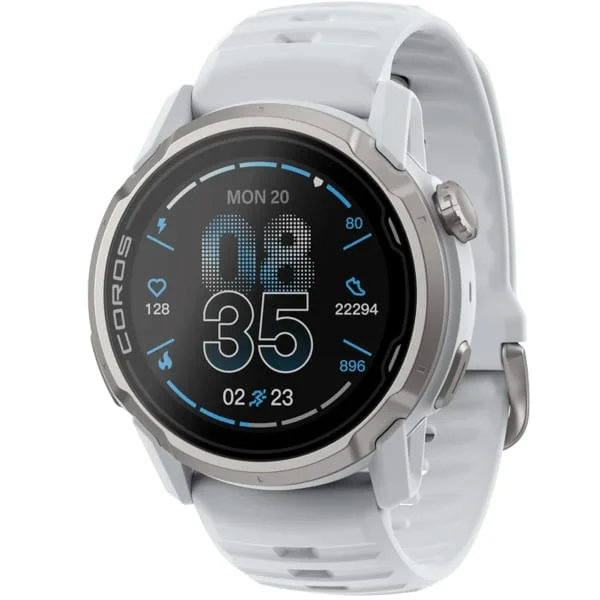
Launched in October 2025, the Apex 4 is built for the mountains: sapphire glass, titanium bezel, 1.3-inch MIP touchscreen, a crown that is easy to use with gloves and topographic maps with navigation. Coros claims around 65 hours of all-systems GPS for the 46 mm model (41 hours for the 42 mm), for 64 g. On the vast majority of ultras, from 80K to 100 miles for a fast runner, it lasts without recharging. It is our pick for anyone who wants a real ultra watch without spending more than €500.
See the Coros Apex 4 on Ekosport
Suunto Race 2: the AMOLED that goes the distance
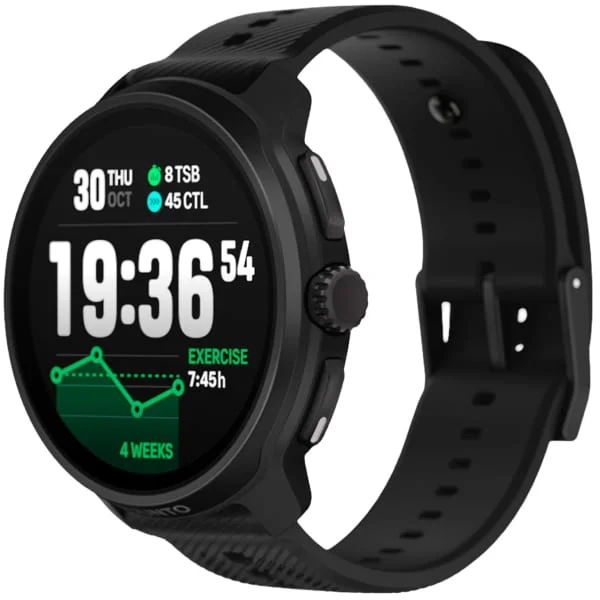
The Race 2 combines a large 49 mm AMOLED screen, sapphire glass and a claimed battery life of up to 55 hours in multi-GNSS dual-frequency mode, with up to 16 days of everyday use. It is equally suited to road training and ultras, making it a single watch for the whole season.
See the Suunto Race 2 on the Suunto website
Polar Grit X2 Pro: rugged and heavily discounted
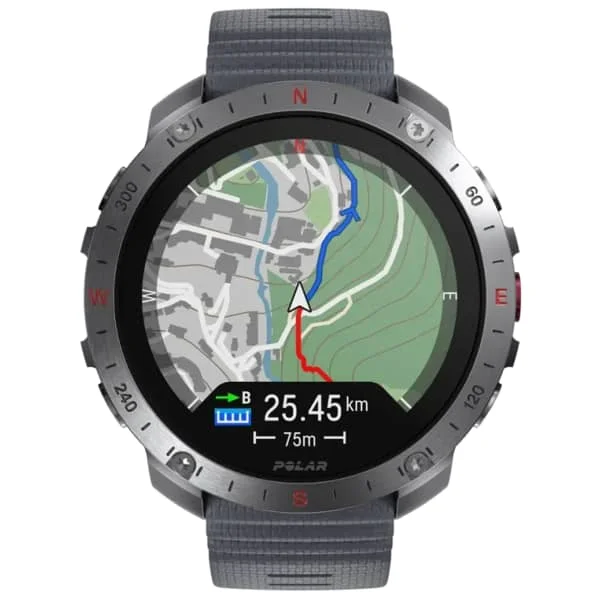
Built to military standards, with sapphire glass, a steel case, an AMOLED screen and dual-frequency GPS with offline maps, the Grit X2 Pro is currently €529 instead of €749.90 on Ekosport. Polar claims up to 40 hours in high-performance mode (dual-frequency, one GPS point per second) and up to 110 hours in eco mode. It suits ultras of up to 25 to 30 hours; beyond that, plan to charge it. With RunMotion Coach, your Polar runs sync automatically, but sending workouts to the watch is not yet possible with Polar.
See the Polar Grit X2 Pro on Ekosport
Suunto Vertical 2: the watch for sleepless nights
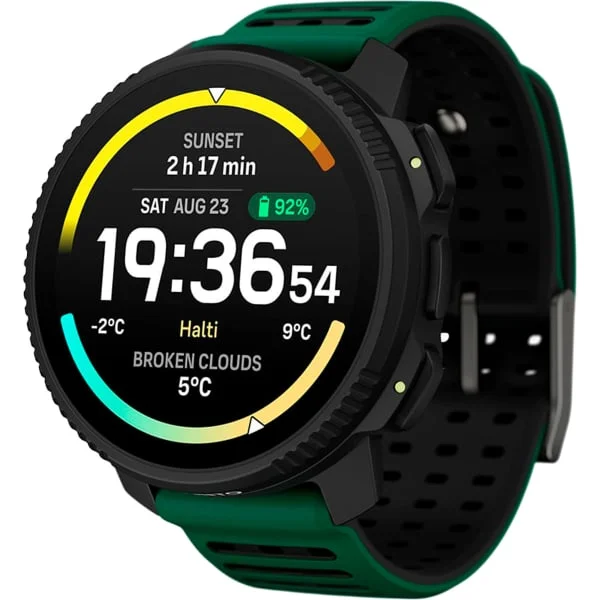
The Vertical 2 is one of the longest-lasting watches on the market in a truly accurate mode: up to 65 hours of dual-frequency GPS according to Suunto, and up to 500 hours in extended modes. It gains a 1.5-inch AMOLED screen, a built-in flashlight, free offline maps and more than 115 sport profiles. It weighs 86 g in the steel version: the price of the battery. For a 100 miler or a race of more than 40 hours, it is one of the most reassuring options.
See the Suunto Vertical 2 on the Suunto website
Garmin Enduro 4: battery life above all
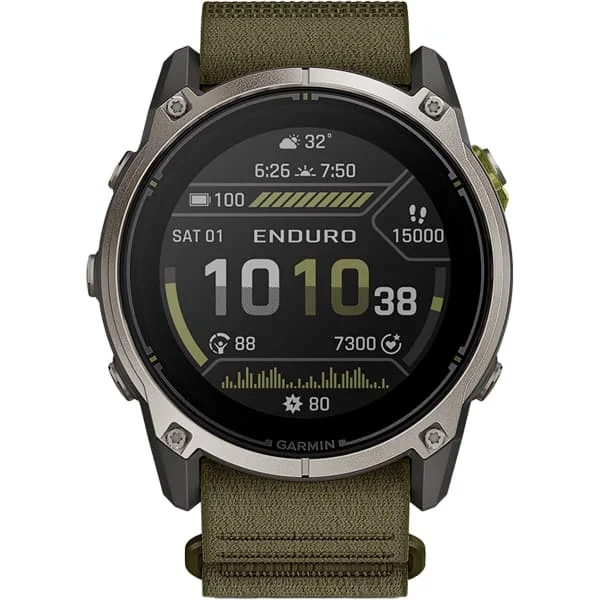
Announced in early October 2026, the Enduro 4 is Garmin’s ultra watch par excellence. It weighs 66 g with its fabric strap and has a 1.4-inch solar MIP screen under Power Sapphire glass, an LED flashlight, 64 GB of storage and a faster mapping engine. Garmin claims up to 60 hours in Max Accuracy mode (90 hours with solar charging), 80 hours in normal mode and up to 90 days of everyday use with solar. The record figure of 320 hours applies to the Extended Battery power-saving mode with solar charging: useful on a multi-day ultra, less accurate on the track. For multi-day races, it is the benchmark, with the whole Garmin ecosystem (Connect IQ, LiveTrack).
See the Garmin Enduro 4 on Ekosport
Garmin Fenix 8 Pro AMOLED 47 mm: connected safety
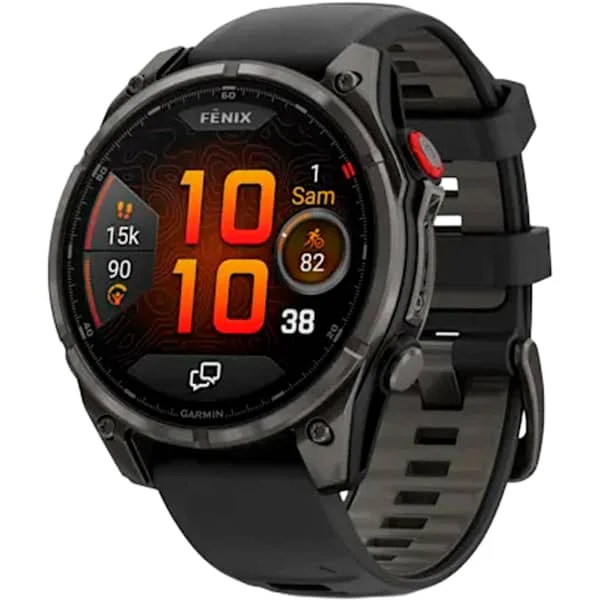
The Fenix 8 Pro stands out for its connectivity: inReach technology (satellite messaging) and LTE, with a speaker and microphone to call or send messages without a phone. For anyone running alone in the mountains or heading into remote areas, it is a strong safety argument. On battery, Garmin claims up to 44 hours of GPS only for the AMOLED 47 mm model: enough for most ultras, tight on a mountain 100 miler. It is the most expensive watch in this selection, best kept for those who will really use these features.
See the Garmin Fenix 8 Pro on Ekosport
The Apple Watch Ultra 4 on an ultra trail
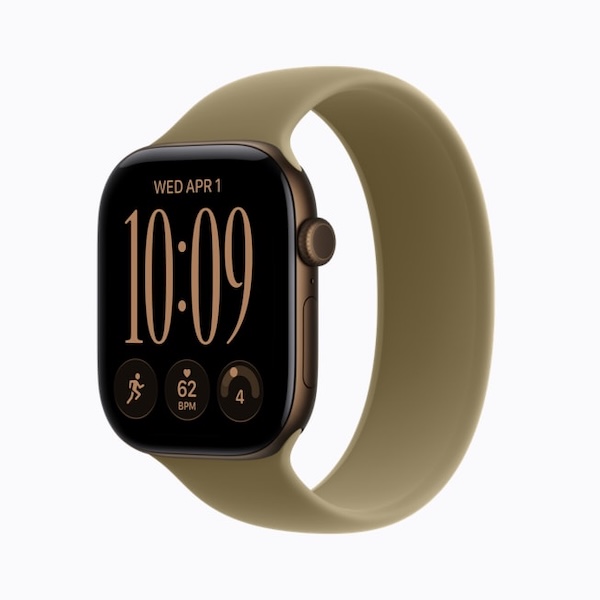
Released in September 2026, the Apple Watch Ultra 4 (€899 at Apple) makes a clear step forward in battery life: around 50 hours of normal use according to Apple, dual-frequency GPS, 63 g. For GPS workouts, expect around 18 hours in standard mode, and up to 45 hours in “Max Extended” mode, which reduces how often data is recorded.
In practice, it is very well suited to a long trail or an ultra completed within a day, and to everyday training if you have an iPhone. On a 100 miler or a race of more than 24 hours, you will have to accept a degraded mode or charge it during the race. The specialist watches in this selection remain more reassuring for these formats.
Discover the Apple Watch Ultra 4
Preparing your ultra with your watch and RunMotion Coach
The best watch in the world does not replace proper preparation. On an ultra, time on feet, uphill and downhill work, power hiking, strength and nutrition matter as much as weekly mileage. To structure your preparation, our article on the 100K trail training plan covers the key principles.
RunMotion Coach connects with Apple Watch, Garmin, Polar, Suunto and Coros. Your runs sync automatically to the app, elevation included, and your plan adapts to what you actually did. With a Garmin, an Apple Watch, a Coros or a compatible Suunto, you also receive your workouts directly on the watch. With Polar, only activity import is available for now. All the details are in our watch sync guide.
An ultra on the horizon? RunMotion Coach builds a trail plan tailored to your race, its elevation and the time you have. Try the app free for 7 days.
Using your watch well on race day
Test your setup in training. GPS mode, data screens, loaded track, alerts: everything should be validated on a 5 to 6 hour long run, not discovered on race day. Note the battery drain on that run to extrapolate over your race time.
Simplify your screens. Three or four data fields are enough: elapsed time, distance, remaining climb, distance to the next aid station. On an ultra, instant pace means little; heart rate can help you avoid going out too fast.
Turn off what drains the battery. Notifications, Wi-Fi, music, always-on display on AMOLED: disable anything you do not need during the race.
Plan for charging. Beyond 30 hours, pack a small power bank and cable, and check that your watch can record while charging.
Do not forget your shoes. If you are preparing a long race, our comparison of the best long-distance trail running shoes for 2026 will help you complete your kit.
FAQ
How much GPS battery life do you need for an ultra trail?
Take your estimated race time and add at least a 30% margin, looking at battery life in “all systems” or “dual-frequency” mode. For a 24-hour ultra, aim for at least around 32 hours in that mode.
Is dual-frequency GPS essential?
It improves accuracy in forests, deep valleys and near cliffs, where standard watches tend to cut corners on switchbacks. It is not essential, but it is a real plus in the mountains, and most ultra watches now offer it.
Do you need maps on your watch for an ultra?
A GPX track with off-course alerts is enough on a well-marked race. Maps become very useful at night, when markings fail or when training on unfamiliar routes.
Can you run an ultra with a standard running watch?
Yes on a shorter format, if its battery covers the race with a margin. The Coros Pace 4, for example, claims around 41 hours of all-systems GPS. You will mostly miss maps and, depending on the model, a barometric altimeter. For a first watch, see our guide to GPS watches for beginners.
Is solar charging useful?
It extends battery life, especially in daytime races and at altitude, but how much depends heavily on sunshine. See it as a bonus, not a guarantee.
Key takeaways
For ultra trail running, choose battery life in an accurate GPS mode first, then navigation and the altimeter. The Coros Apex 4 and Suunto Race 2 offer the best balance at around €500, the Suunto Vertical 2 and Garmin Enduro 4 are the most reassuring over 100 miles, and the Coros Nomad suits a first ultra on a tight budget. The Apple Watch Ultra 4 remains a good option for races completed within a day.
Then test everything in training: a watch you have mastered beats a powerful one discovered at the start line. Next step: discover our trail running training plans.
Ready to prepare your ultra properly? Connect your watch to RunMotion Coach and let your plan adapt to every run. Start your 7-day free trial.