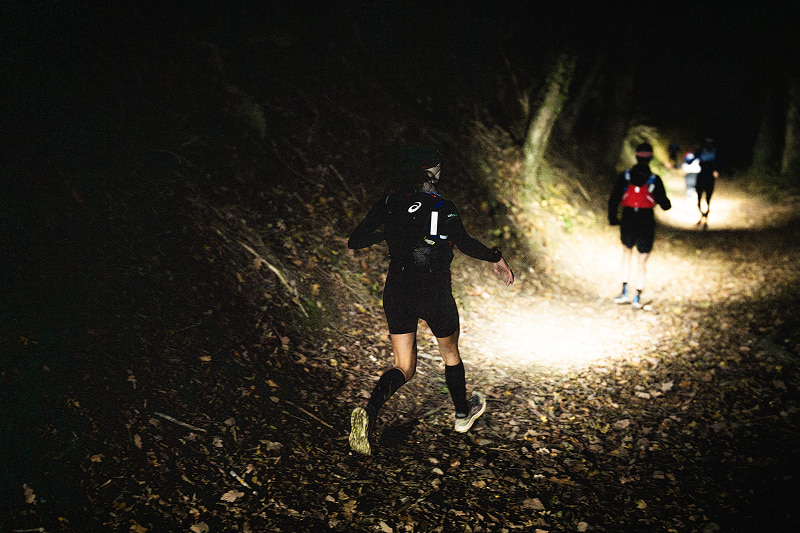
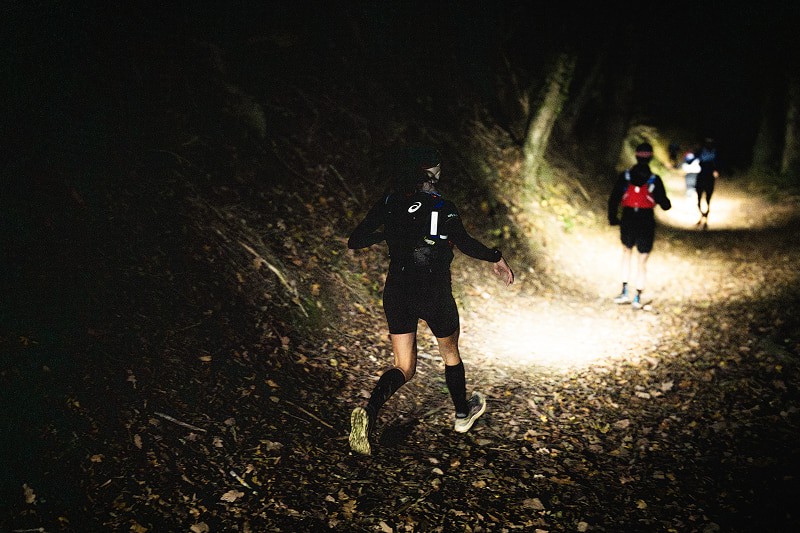
Whether you are taking on the UTMB, the SaintéLyon or any other ultratrail, running at night adds another challenge for your body. Fatigue builds, temperatures often drop and your digestive system can become more sensitive as the hours pass.
Yet nutrition remains one of the biggest factors in long-distance racing success. A well-planned fueling strategy helps you sustain energy levels, limit digestive issues and better handle the tough patches that inevitably arise in the middle of the night.
Contents
- Why Is Nutrition Even More Important in a Night Trail Race?
- Before the Start: Build Your Energy Stores
- During the Race: Eat Regularly to Avoid an Energy Crash
- How to Handle the Tough Patch Between 1 a.m. and 4 a.m.
- Focus on Baouw Caffeinated Gels
- Hydration: An Often Underestimated Factor
- After a Night Trail Race: Do Not Neglect Recovery
- Key Takeaways for Successful Night Trail Nutrition
Why Is Nutrition Even More Important in a Night Trail Race?
In an ultratrail, the nutrition goal is the same by day or night: regularly provide energy to fuel your muscles while keeping your digestion comfortable.
However, several factors make nutrition management more complex at night:
- fatigue gradually increases;
- appetite may decrease;
- alertness naturally drops between 1 a.m. and 4 a.m.;
- cold weather can increase energy expenditure;
- the digestive system may work less efficiently.
This is often when runners start eating less than they should, which can lead to a major drop in performance a few hours later.
Before the Start: Build Your Energy Stores
If your trail race starts in the evening, as many night races do, your final pre-race meal plays an essential role.
The goal is simple: top up your energy stores without overloading your digestive system.
Prioritize:
- easy-to-digest carbohydrates, such as rice, pasta or potatoes;
- low-fibre cooked vegetables;
- a serving of lean protein;
- a moderate amount of fat.
An effective pre-race meal could include:
- rice;
- cooked carrots or zucchini;
- chicken or white fish;
- a fruit puree for dessert.
On the other hand, avoid very spicy dishes, too much cheese, fried foods or any food you have never tested before a race.
As always in sports nutrition, the golden rule remains the same: try nothing new on race day.
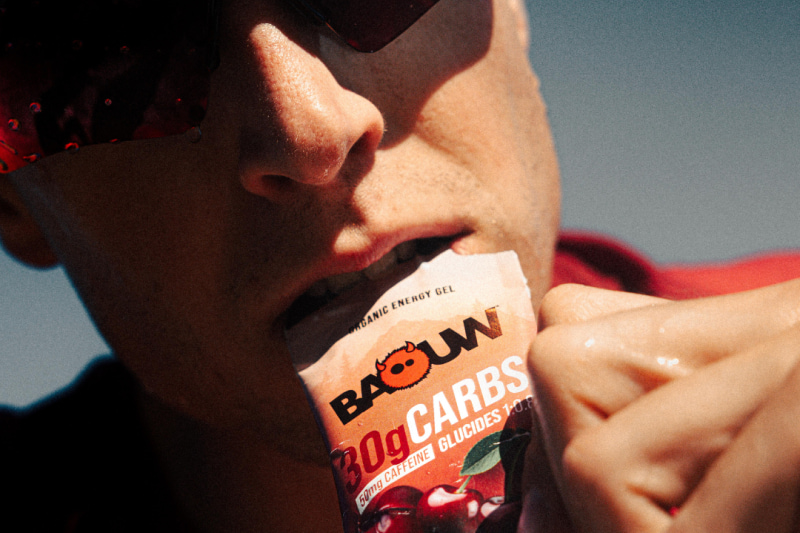
A few minutes before your race, have an energy puree to keep your energy stores topped up.
During the Race: Eat Regularly to Avoid an Energy Crash
One of the most common mistakes in night trail races is waiting until you feel hungry before eating.
When hunger strikes, it is often already too late to maintain optimal energy intake.
Most experts recommend starting to fuel within the first hours of the race, then continuing with small, regular intakes.
Alternate Textures to Support Digestion
After several hours of effort, some foods can become difficult to eat.
That is why it is often useful to alternate between:
- sports drinks;
- fruit purees;
- energy purees;
- energy bars;
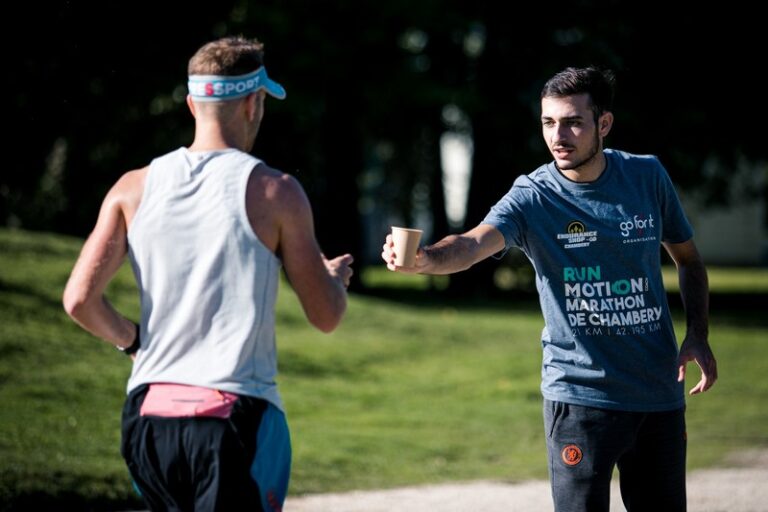
- foods available at aid stations.
This variety helps prevent food fatigue and allows you to adapt your intake to how you feel at any given moment.
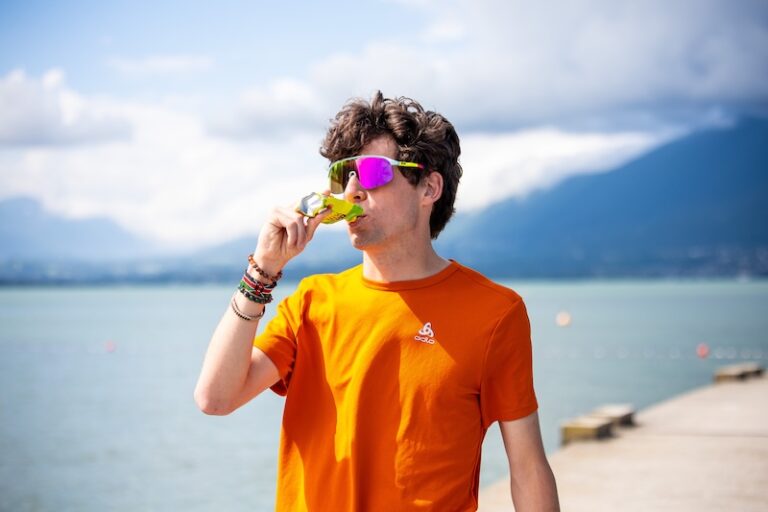
For example, some trail runners enjoy fruit and vegetable purees or bars made with natural ingredients when gels become hard to tolerate after several hours of racing. This is the approach developed by Baouw, with products designed to provide energy while prioritizing recipes inspired by real food.
Sweet or Savory: What Should You Choose During a Night Trail Race?
This is a question many trail runners ask before their first ultra.
In reality, the best option is often not to choose. During the first hours of racing, sweet foods are generally the easiest to eat and provide the carbohydrates needed for the effort quickly.
But as the night goes on, flavour fatigue often sets in. After several hours of sweet products, some runners experience real disgust, which can lead them to eat less.
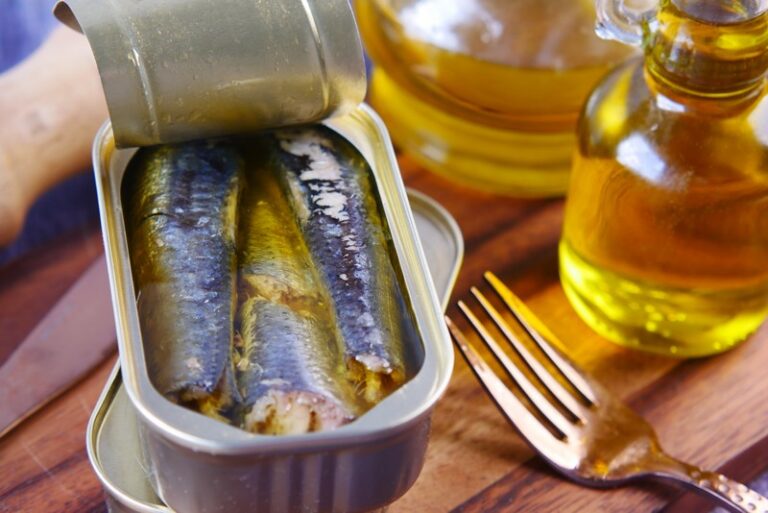
This is when savory foods become especially valuable. They vary the flavours, help you maintain the desire to eat and provide sodium, which is particularly useful during prolonged endurance efforts.
At aid stations, you will often find:
- soups;
- broths;
- potatoes;
- cheese;
- ham;
- savory crackers.
Ideally, alternate flavours and textures throughout the night. Some savory or sweet-and-savory products can also be an interesting alternative when very sweet foods become difficult to eat. Discover Baouw’s savory range, designed to address this type of challenge.
How Much Should You Eat During an Ultratrail?
Your needs vary according to fitness level, intensity and duration of the effort. Read our dedicated guide to trail and ultratrail nutrition right here!
As a guide, many trail runners aim to consume between 40 and 90 grams of carbohydrates per hour, depending on their experience and digestive capacity.
The goal is not to hit a perfect number, but to fuel consistently throughout the event.
How to Handle the Tough Patch Between 1 a.m. and 4 a.m.
Every experienced ultratrail runner knows this moment.
Between 1 a.m. and 4 a.m., your circadian rhythm naturally promotes sleepiness. Alertness drops, motivation can fluctuate and the urge to stop can become stronger.
To get through this period more effectively:
- keep fueling regularly;
- stay hydrated, even if you do not feel thirsty;
- set yourself intermediate goals until the next aid station;
- maintain a realistic race pace;
- use caffeine only if you have already tested it in training.
Caffeine can also be a useful part of your nutrition plan. It may temporarily improve alertness, but it can sometimes cause digestive issues.
If you expect to spend two nights out on an ultratrail, we recommend using caffeine only on the second night, unless you are already losing alertness during the first night.
Focus on Baouw Caffeinated Gels
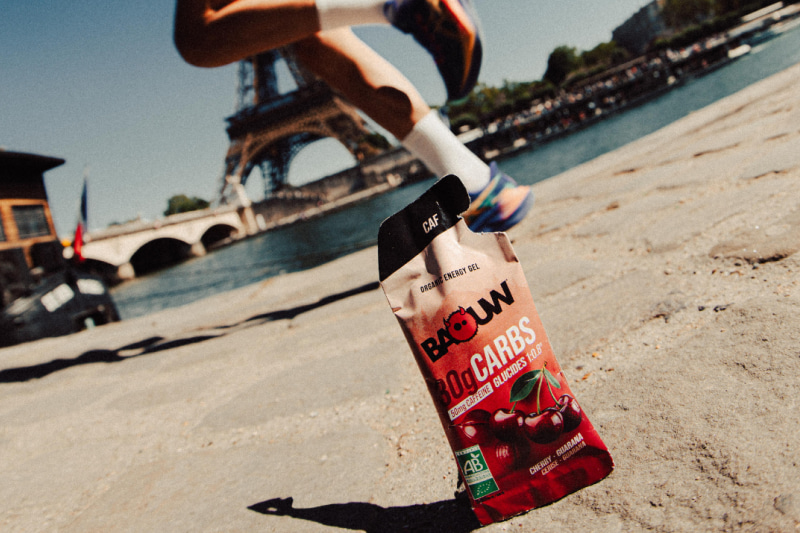
For trail runners who want to use caffeinated gels, the new Baouw Cherry-Guarana Stick can be an interesting option for getting through the toughest nighttime sections.
It provides 30 g of carbohydrates with an optimized glucose-to-fructose ratio, plus 50 mg of natural caffeine from guarana to support alertness.
Its compact format and smooth texture make it easy to consume after several hours of effort, when appetite declines. It also contains sodium to replace losses from sweating, along with naturally sourced vitamins. Another benefit of this Baouw gel is that it is 100% organic and free from preservatives and sweeteners.
As with any caffeinated product, it is essential to test it in training before race day to check your digestive tolerance and determine the best time to include it in your fueling strategy.
Hydration: An Often Underestimated Factor
At night, cooler temperatures can make you feel as though you are sweating less.
Yet fluid losses remain significant, especially in ultras with substantial elevation gain.
Try to drink regularly in small sips, and use aid stations to replenish your water and electrolyte stores.
Inadequate hydration can quickly worsen fatigue, digestive issues and concentration difficulties.
After a Night Trail Race: Do Not Neglect Recovery
Finishing a night ultratrail often comes with a lack of appetite and a strong desire to go straight to sleep.
Still, spending a few minutes on recovery can make a real difference.
Within the hour after finishing, try to consume:
- a source of carbohydrates to restore energy stores;
- protein to support muscle recovery;
- water and electrolytes to replace losses from the effort.
Even a light snack is better than having nothing at all before going to bed.
Some snacks made from simple, easy-to-digest, carbohydrate-rich ingredients can be useful during this recovery phase, provided you have tested them in training.
Key Takeaways for Successful Night Trail Nutrition
To sum up:
- plan your fueling strategy before the race;
- test every product in training;
- eat regularly without waiting to feel hungry;
- alternate sweet and savory flavours;
- vary textures to prevent food fatigue;
- stay hydrated throughout the effort;
- anticipate the challenging middle-of-the-night stretch;
- use caffeine during the final night;
- think about recovery as soon as you cross the finish line.
In long events such as the UTMB or SaintéLyon, nutrition is never a minor detail. A tailored fueling strategy can make the real difference between a controlled race and a long battle against fatigue.
Always choose foods you know, enjoy and that your digestive system tolerates well. Just like training, nutrition must be planned, tested and refined over the course of your long runs.