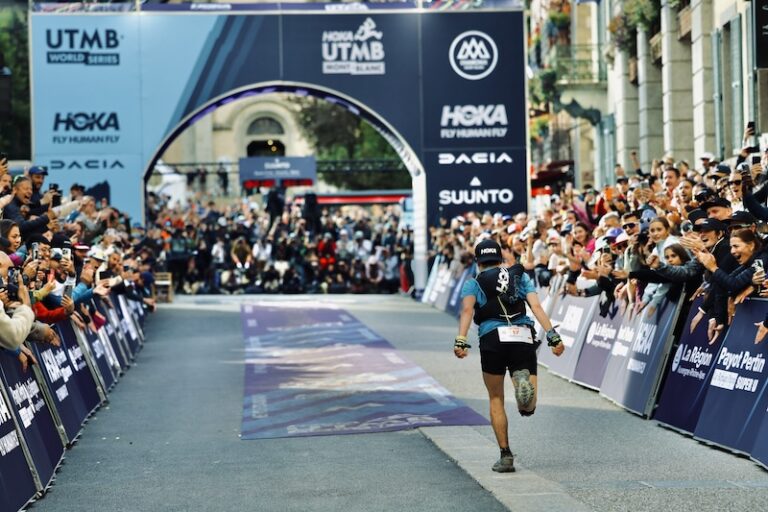
After several months of preparation, hundreds of training miles, and a demanding race around Mont Blanc, a new phase begins: recovering after the UTMB.
Whether you took part in the UTMB, CCC, OCC, TDS, MCC, or one of the other HOKA UTMB Mont-Blanc races, your body has been put through a huge amount.
After crossing the finish line, it is essential to give yourself time to recover before thinking about training again. UTMB recovery is an integral part of your preparation: it allows your body to gradually return to its normal state before you begin building your training load again.
But how long should you recover for? When can you run again? What should you do during the first few days? And how can you return to training progressively without rushing the process?
Here are our tips to recover well after the UTMB and gradually get back to training.
Contents
- Why is recovery after the UTMB so important?
- How long does it take to recover after the UTMB?
- The first few days: how to recover well after the UTMB
- Should you run after the UTMB?
- When can you start running again after the UTMB?
- How should you return to training after the UTMB?
- How do I know if I am ready to return after the UTMB?
- Is recovery the same after the UTMB, CCC, or OCC?
- Why should you not return too quickly after the UTMB?
- How can you recover after the UTMB with RunMotion Coach?
- Mistakes to avoid when recovering after the UTMB
- UTMB recovery: the 3 priorities
- Conclusion: give yourself time to recover after the UTMB
Why is recovery after the UTMB so important?
The UTMB is an exceptionally demanding challenge for the body. With around 174 kilometres and nearly 9,900 metres of elevation gain, the race places major demands on your muscles, joints, tendons, and cardiovascular system.
Then there are the long hours on the trails, repeated descents, changing terrain, altitude, and sometimes a lack of sleep.
After such an event, it is completely normal to feel deep fatigue.
You may experience:
- muscle soreness;
- heavy legs;
- general fatigue;
- a temporary drop in motivation;
- difficulty finding your usual running feel again;
- mental fatigue after dedicating several months to your goal.
These feelings are generally a normal consequence of the effort you have put in. Recovering after the UTMB does not mean losing fitness. On the contrary, this period allows your body to absorb the effort and gradually regain its capabilities.
How long does it take to recover after the UTMB?
There is no universal recovery timeline after the UTMB.
Recovery depends on many factors: the race you completed, its intensity, your training level, your ultra-running experience, how tired you were before the race, and how the event unfolded for you.
For a long ultra-trail effort, RunMotion Coach recommends planning at least 6 to 10 days without running, with optional cycling or hiking, before gradually returning to running once your usual sensations come back.
However, treat this timeframe as a guideline rather than a hard rule. If you are still very tired after ten days, there is no reason to force a return to running. Your recovery may simply take longer.
Likewise, recovery after a shorter HOKA UTMB Mont-Blanc race may be very different from the recovery needed after an ultra of more than 100 kilometres.
The best return-to-running schedule is the one that reflects how you truly feel after the race.
The first few days: how to recover well after the UTMB
The first few days after the UTMB should be dedicated to rest and recovery. There is no need to try to “run off” muscle soreness by running the very next day. Your body has just been through a tremendous effort.
Rest and sleep
Sleep is one of the most important elements of recovery. After hours of effort, and possibly a night spent running, you may have built up a significant sleep deficit. Give yourself time to sleep and recover.
It is common to need several nights to return to a normal sleep rhythm after an ultra-trail race.
Hydration
Remember to drink regularly after the race. The goal is to gradually restore normal hydration after the fluid losses of the event.
There is no need to drink huge amounts in a short time, though. Hydration that is regular and tailored to your needs is more effective.
Nutrition
Nutrition also plays an important role in UTMB recovery.
After the race, prioritise a varied diet with enough energy to gradually replenish your stores. Combining carbohydrates and protein can be particularly helpful for post-race recovery.
In the days that follow, the aim is simply to return to a balanced diet that matches your appetite and activity level.
Should you run after the UTMB?
The answer depends above all on your recovery status.
During the first few days, it is generally best not to run. However, you can stay gently active by walking or, when you feel well enough, doing easy cycling.
The goal is not to complete another training session, but simply to move without placing a major additional load on your body.
After a long ultra-trail effort, RunMotion specifically advises taking several days away from running before making a gradual return.
When can you start running again after the UTMB?
Your return to running should be gradual. When the main signs of fatigue and muscle soreness have eased, you can consider your first easy run.
This first run should not be a performance test. There is no need to chase your usual pace or check whether you can still run as fast as you did before the UTMB.
The goal is simply to rediscover your running feel: start gently, at an easy aerobic effort, and observe how your body responds during the run and in the hours afterwards.
If fatigue remains significant or pain appears, it is better to stop your return and extend your recovery period.
How should you return to training after the UTMB?
After the recovery period, you need to gradually move from no training back to your usual routine.
Your return can be organised in several stages.
Step 1: Recover
For the first few days, prioritise rest, sleep, nutrition, and hydration. You can walk and stay gently active if you feel like it.
Step 2: Rediscover movement
As your overall condition improves, gradually return to light activity. Walking, easy hiking, or relaxed cycling can be good options if they feel comfortable.
Step 3: Return to easy runs
Once your usual sensations return, start running again with easy outings. Focus on aerobic endurance and initially avoid hard sessions.
Step 4: Gradually rebuild your training
Once your first easy runs have been well absorbed, you can gradually reintroduce more volume and, later, quality workouts. There is no need to try to “make up” for the training you missed while recovering.
Your priority is to rebuild your training progressively.
How do I know if I am ready to return after the UTMB?
The number of days since the race is not the only indicator. Before returning to training, take time to listen to your body.
Ask yourself:
- Am I sleeping normally?
- Has my overall fatigue decreased?
- Do my legs feel good again?
- Has my muscle soreness gone away?
- Do I feel like running?
- Am I still experiencing pain?
- Do I feel well enough in everyday life?
The aim is not to wait until you feel exactly as you did before the race, but to make sure your body has recovered enough to handle the demands of running again.
If you have persistent, unusual, or significant pain, it is best to seek advice from a healthcare professional before returning to running.
Is recovery the same after the UTMB, CCC, or OCC?
No.
Every HOKA UTMB Mont-Blanc race requires recovery, but it can vary significantly depending on the event and how you raced it.
A runner who finishes the UTMB after many hours of effort will not necessarily recover at the same pace as someone who completed a shorter race.
Recovery also depends on intensity. A race run flat out can leave more lingering fatigue than a longer race managed at a controlled effort.
That is why it is best not to compare your recovery with another runner’s.
Your recovery is individual.
Why should you not return too quickly after the UTMB?
After a goal like the UTMB, motivation can be especially high.
You have spent several months training and may already feel eager to prepare for your next goal. But motivation does not necessarily mean that your body is ready to resume normal training immediately.
After a long effort, a return that is too fast can prolong fatigue and increase the risk of physical issues. RunMotion also points out that after a major effort, some effects of fatigue may appear in the weeks following the race.
Taking the time to recover after the UTMB allows you to get more from all the work you put in during your months of preparation.
How can you recover after the UTMB with RunMotion Coach?
Once the rest period is over, a new question arises: how should you return to training after the UTMB?
This is where a return-to-training plan can be especially valuable.
With RunMotion Coach, you can request a 2- or 3-week recovery plan after your race. The aim is to reduce your training load and schedule more rest before gradually returning to your regular workouts.
The plan may include:
- more rest days;
- easy runs;
- easy aerobic endurance work;
- a gradual return to workouts;
- training-load adjustments.
The benefit is that you do not have to decide alone when to reintroduce volume or intensity.
A return-to-training plan designed for post-UTMB recovery
After an ultra-trail, it is not always relevant to return straight to the exact training plan you followed before the race.
Your body is in a different phase.
The approach should be: recover → return gradually → rediscover your running feel → rebuild your training.
RunMotion Coach provides a personalised training plan based on your profile and goals. The app also offers plans specifically designed to help you return to running.
👉 Discover RunMotion Coach and its return-to-running plan
Mistakes to avoid when recovering after the UTMB
Some mistakes are particularly common after a major goal.
Running again the next day
Wanting to run does not mean that your body has finished recovering.
Going straight back to intense workouts
Intervals, threshold runs, and hill sessions can wait. Your first outings should stay easy.
Comparing yourself with others
Every runner recovers at their own pace. The number of days needed after a race can vary widely from one person to another.
Trying to make up for missed training
The sessions you did not complete during recovery do not need to be made up.
Immediately moving on to a new goal
After a major target race, give your body and mind time to recover before beginning a new training block.
UTMB recovery: the 3 priorities
To remember the essentials, focus on three key areas.
1. Rest
Give yourself several days without running after a long effort, and do not feel guilty about taking your foot off the gas.
2. Sleep and nutrition
Sleep enough and eat a varied diet to support your recovery.
3. A gradual return
When you start running again, ease back in and gradually increase your training load.
Recovering after the UTMB is a full part of your training process.
Conclusion: give yourself time to recover after the UTMB
After several months of preparation and a race as demanding as the UTMB, post-UTMB recovery is essential before returning to normal training.
Rest, sleep, nutrition, hydration, and a gradual return are the key priorities.
Do not try to immediately regain your pre-race performance. Your priority should be to gradually find good sensations again before rebuilding your training.
And when you are ready to return, a recovery and return-to-training plan can help you avoid rushing the process.
👉 Discover RunMotion Coach and prepare your return to training
After the UTMB, there is no rush: recover, return progressively, then get ready for the rest of your season.