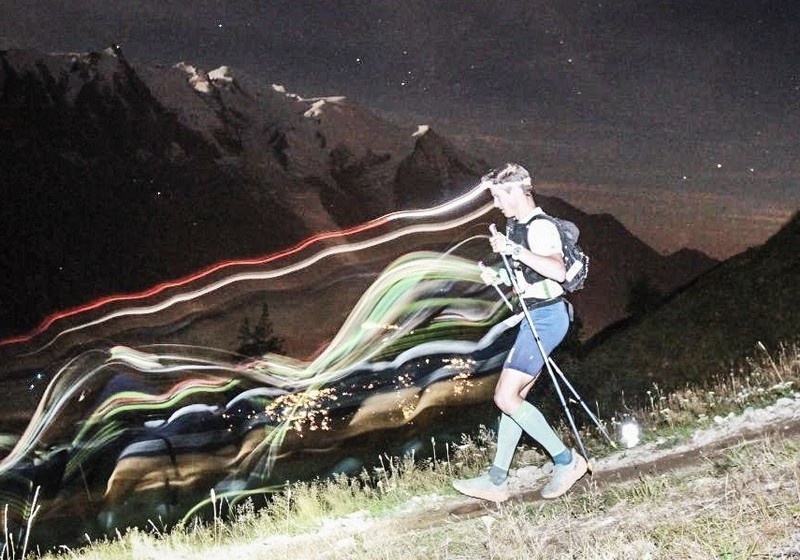
In trail running, races can happen entirely overnight, or partly. Everything changes depending on whether you spend the whole night outside, run in the evening, or start before dawn. For example, the SaintéLyon kicks off at 11:30 pm, while la 6000Dthe 6000D starts at 5 am. And then there are races like UTMB where you will inevitably spend at least one night, and often two, out on the trails. Let’s go through a few key tips to adapt and truly succeed at night running in competition.
Contents
Why running at night feels so hard
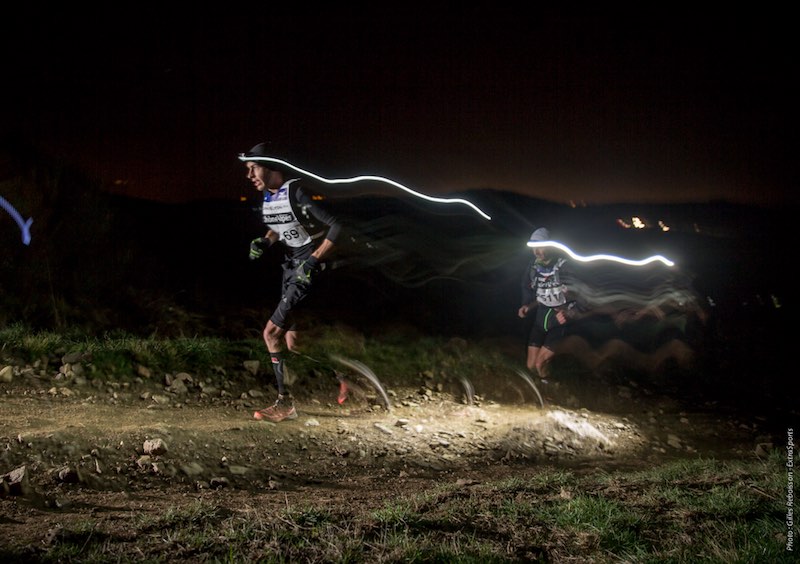
Night racing has something magical about it, a moving line of headlamps, and senses that feel totally different from daytime running. Your perception shifts. You often feel like you’re going faster because your field of vision narrows.
That narrower field of vision can help you focus on the trail right in front of you, but it also creates extra fatigue and can increase the risk of “hallucinations”.
Two key tips for running at night, scan far enough ahead to spot obstacles early, and shorten your stride.
How to train for night trail running
No secret here, you need to get used to it by running at times that match your race schedule. That helps you adapt to running in darkness, and also teaches your body to perform at unusual hours.
Evening start? Get used to running after work when it’s dark. Early morning start? Make morning runs part of your training plan. If your race includes running through the entire night, it’s smart to alternate evening sessions and early morning sessions. But we don’t recommend doing all-nighters in training outside of competition, because it can create major fatigue and ruin recovery.
Choosing the right headlamp for night running
To train safely at night, you need to be visible with a solid headlamp and reflective running gear. On race day, you need a reliable headlamp that you’ve already tested in training.
Lumens
We recommend either a headlamp worn on your forehead or a chest light for trail running at night. Check brightness and battery life (rechargeable battery or standard batteries). A headlamp’s output is measured in lumens. Aim for at least 200 lumens, and ideally 400 lumens or more for technical trail running.
Some headlamps even adjust brightness based on ambient light, then automatically dim when you need less light, especially when other runners are close to you.
Watch your battery in cold weather
If it’s very cold, battery life can drop fast. Bring two headlamps or two batteries. When you pack your gear bag, make sure both headlamps actually work. And just in case, keep them within easy reach so you can grab one quickly.
During a MaXiRace, one of my two headlamps didn’t work at the start (even though I had charged the battery), and the second one died after just 45 minutes of running. Luckily, a friend lent me his spare light for the next 7 hours, but that’s when I truly understood how crucial it is to properly check your headlamps before the start of a night race, including your “backup” light…
How to use your headlamp well
Aim your headlamp so you get maximum visibility from about 2 to 10 meters ahead. Try to keep your head upright, without constantly tipping your chin toward the ground. Looking ahead helps you anticipate and stay smooth. Also try to keep your stride as natural as possible.
Managing sleep before a night race
Ideally, you want to arrive at the start line after a full week of good sleep. If you’re already sleep-deprived before the race, night running will feel much tougher and your performance will drop.
In the days leading up to the race, try to go to bed earlier so you get high-quality sleep and enough total hours.
The day before the race, you can take a nap in the afternoon, or even early evening if the start is around midnight. Short naps of about 20 minutes are usually ideal. Longer naps of an hour or more can make waking up harder.
Wear the right gear for night trail running
At night, once the sun drops, temperatures can fall quickly. In spring and fall especially, it’s easy to get caught out if you don’t plan ahead. So gear up accordingly. Bring multiple layers for a night trail race, even if it means taking one off on climbs and putting it back on for descents. You can always stash your jacket in your pack or tie it around your waist.
Ideally, choose warm, breathable layers, and potentially a waterproof windproof shell.
During long overnight races, you’ll have moments where you feel colder than others, regardless of elevation gain. Always carry a survival blanket (often required on the mandatory gear list) to keep warm if you have to stop and wait.
If conditions are truly cold, check out our tips on how to run in winter and cold weather, especially protecting your extremities with gloves, a beanie, and the right socks.
Final tips to crush your night trail race
Here are a few final details that can make all the difference:
- Test your race nutrition and hydration strategy on a night run before race day
- Avoid very bright white light before the start, it can disrupt your circadian rhythm
- Train your mindset too, practice running alone in the dark and staying calm and focused
Running a trail race at night is a unique experience, part focus, part adventure, part pushing your limits. With smart training, a dependable headlamp, and solid preparation, you’ll fully enjoy the magic of night races and perform at your best.
Now all that’s left is to prepare your race properly, check your mandatory gear list well in advance, and enjoy the experience of racing through the night 😉. It’s unreal to see all those headlamps moving along a trail!