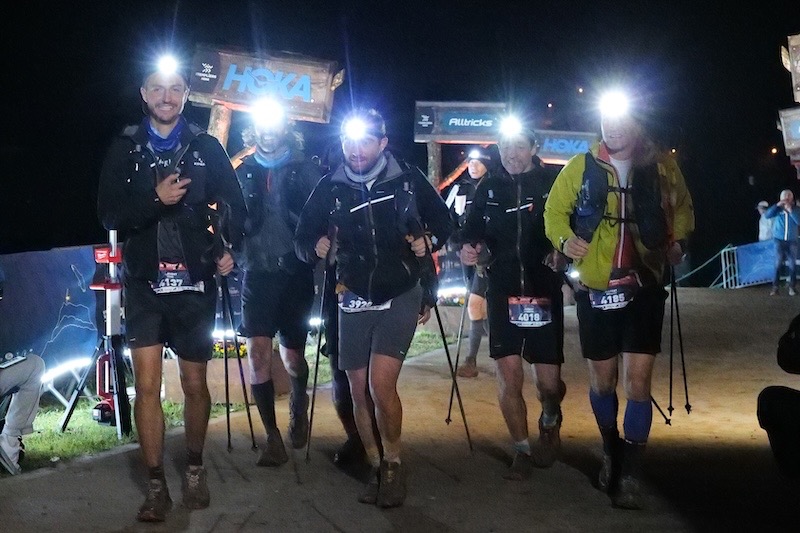
See or be seen, that’s the question. When you run at night, whether on the road or out on the trails, everything feels different than in daylight. A headlamp becomes more than an accessory, it’s a key piece of gear for your comfort, your safety, and your performance.
Headlamps even show up on the mandatory gear lists for certain trail races and ultra-trails.
But be careful, not all headlamps are created equal and considering the investment, it’s worth choosing wisely. Today, we’re shining a light on headlamps, true icons of ultra-trail running and a symbol of night races like the SaintéLyon.
Contents
What’s the difference between a road runner’s needs and a trail runner’s?
It’s all running, sure, but the difference between road running and trail running is the environment. Your headlamp is what helps you adapt to that environment.
A headlamp for road running
In urban running, the priority isn’t seeing, it’s being seen. City lights do most of the work, so there’s no need to chase big power. A headlamp between 100 and 200 lumens is more than enough. Go higher and you’ll mostly end up dazzling other people.
For battery life, you don’t need it to last all night. Choose a lightweight model with sensible runtime. What matters most is visibility from every angle, white light up front, a red rear LED, and a reflective headband.
A headlamp for trail running
On the trails, far from light pollution, your headlamp changes roles. It’s no longer a signal, it’s your main tool for reading the terrain, roots, rocks, and elevation changes.
Without enough power, every step demands extra focus, which eventually drains you mentally and increases your risk of falling.
The three key criteria to prioritize for trail running:
- Brightness: minimum 400 lumens for a short trail run, 700 to 1,100 lm for longer races or full-night efforts
- Battery life: at least 3 hours in normal mode for trail, 6+ hours for ultra. A headlamp dying in the middle of the night, miles from anywhere, is the scenario you absolutely want to avoid
- Water resistance: cold and moisture hurt battery performance. Go for at least IPX4, and IPX6 for tough conditions

What are the key criteria for choosing a good headlamp?
Now that we’ve covered the different needs of road runners and trail runners, let’s break down the key numbers you should keep in mind while shopping for a running headlamp.
Brightness
LED brightness is measured in lumens. To really understand what that means, you also need to separate lumens from beam distance. Contrary to what you might think, a high-lumen headlamp does not automatically light up far ahead. It depends on the beam pattern, which we’ll cover next.
For road running
As mentioned earlier, blinding people around you can put you in more danger than running with no light at all. So buying a headlamp above 300 lumens isn’t necessary. The sweet spot is usually between 150 and 300 lumens.
For trail running
To turn night into day, there are ultra-powerful, high-performance models like Petzl’s SWIFT RL and NAO RL ranges, pushing 1,200 to 1,500 lumens. But don’t worry, a model between 400 and 700 lumens is plenty for most night training runs and trail races. Plus, lower brightness usually means better battery life.
Beam pattern
We touched on it above, but beam pattern is one of the most important things when you talk about headlamp performance. There are three main types:
- Wide beams: the light is spread evenly, giving you peripheral vision. It won’t help much when you need to pick out a root on a narrow path
- Focused beams: the light throws farther, perfect for spotting obstacles early, especially in trail running
- Mixed beams (wide + focused): the best of both worlds. You can see your feet with the wide beam and look ahead in detail to anticipate your next moves
You guessed it, a mixed beam is the ideal setup, combining power and precision so you’re ready for anything, especially on technical trails. Most models offer a beam distance of around 100 to 150 m, and up to 200 m for top-end headlamps. That said, a wide-beam headlamp can be perfect for city runs. Power is lower, but you stay visible, even from behind.
Battery life
As we explained, battery life matters most in trail running. While many headlamps advertise 80 to 110 hours in eco mode, you should choose a model that delivers at least 3 hours in full power for trail running, and ideally 6 hours for ultra-trail.
That gives you enough time to go from aid station to aid station and swap either batteries (not very eco-friendly), a spare rechargeable pack, or even your whole headlamp.
Weight
The last big factor is weight. Nobody wants extra load on their head, especially if you also wear a cap or headband. That added bulk can get annoying fast. So comfort and a lightweight feel are crucial. Ideally, try it on first, since we all have different head shapes and different tolerance to weight.
If you’re buying online, aim for a headlamp under 100 g, otherwise it can start to feel restrictive. The headband should also be comfortable, not just a thin cord that’s light but becomes irritating over time.
Our recommendations
After this flood of info, we couldn’t leave you without our short selection. Here are a few models that match the criteria, depending on your needs.
For urban runners
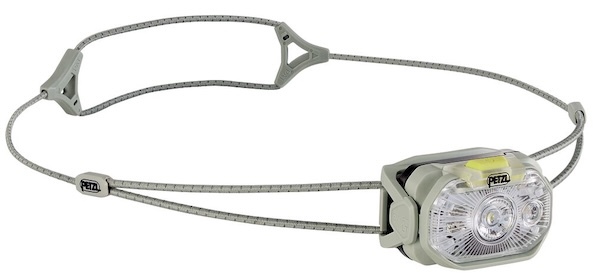
The new Petzl Swift LT is the perfect compromise. It’s compact, lightweight, and offers multiple brightness modes so you don’t blind people around you. With 380 lumens, it’s also versatile enough to take you onto darker paths once in a while.
Silva also offers a similar model at a similarly affordable price, and it includes a red rear light. It’s the Smini. Its output is lower than the Petzl Swift LT, but it’s still plenty for city running and visibility.
For trail runners
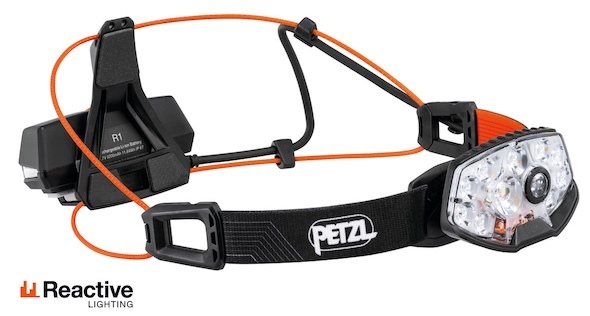
The must-have for trail runners is without a doubt one of Petzl’s models, designed and made in France with a focus on lightweight performance. The obvious pick is the NAO RL with its 1,500 lumens and a battery built to handle anything. If you’re on a tighter budget, the Swift RL is almost as capable, and so is the IKO CORE, which can run on two energy sources (standard batteries and a rechargeable pack). All three are so light you’ll forget they’re on your head.
Another strong competitor is the Distance LT 1100 from Black Diamond, with 1,100 lumens and a tilting optical unit that improves comfort. Its technology helps you save battery by boosting to maximum power only when needed to “grab information,” then dropping back into an efficient 600-lumen mode, for a total of 4h25.
Comparison of the best running and trail headlamps for 2026
| Model | Brightness | Max battery life | Weight | Budget | Best for |
|---|---|---|---|---|---|
| Petzl Swift LT | 380 lm | 45h (eco) | 61 g | ~50 € | Urban running, beginner trail |
| Silva Smini | 200 lm | 70h (eco) | 48 g | ~40 € | Urban running, visibility |
| Petzl Swift RL | 1 100 lm | 6h (normal) | 100 g | ~100 € | Trail running, night races |
| Petzl NAO RL | 1 500 lm | 7h (normal) | 175 g | ~180 € | Ultra-trail, UTMB, SaintéLyon |
| Black Diamond Distance LT 1100 | 1 100 lm | 4h25 (normal) | 92 g | ~90 € | Trail running, smart battery saving |
| Petzl IKO CORE | 500 lm | 5h (normal) | 95 g | ~70 € | Trail running, dual power (batteries + rechargeable) |
Chest lights, an alternative to headlamps?
With all this information, you’re ready to choose from the huge range of headlamps on the market. But before you decide for good, it’s worth mentioning another option, or rather a complement, to the classic headlamp, chest lights.
More and more popular in trail running and standard road running, they provide great visibility thanks to reflective straps and often a red rear light to signal your presence. It can also feel more comfortable because it reduces load around your neck and limits unwanted bouncing movements.
That said, it doesn’t replace a classic headlamp, which usually has a better-optimized beam than most chest lights on the market. The beam also follows your gaze less naturally, which can be an issue on technical sections where anticipation matters.
Many trail runners now combine both setups, headlamp plus chest light, to improve terrain reading.
For urban runs, it’s still a solution worth considering, offering the same core features with added comfort, depending on personal preference. For chest lights, we can recommend Decathlon models, which are usually very budget-friendly.
You’re now ready to light up the night. In races and in training, you can head out safely with the right running light, full visibility and a clear plan for what best matches your sport. The key models from trusted brands like Petzl, Black Diamond, and Silva won’t have any secrets left for you.
Frequently asked questions about running and trail headlamps
How many lumens do you need for trail running?
For a short trail race on technical singletrack, 400 to 700 lumens is enough. For longer races or ultra-trails like UTMB or the SaintéLyon, plan on at least 1,000 lumens to keep strong visibility on fast and technical sections.
What’s the best trail running headlamp in 2026?
The Petzl NAO RL (1,500 lm) is the go-to reference for ultra-trail thanks to its battery life and power. For a more accessible option, the Petzl Swift RL (1,100 lm, ~100 €) offers the best value for money. On a tighter budget, the Petzl IKO CORE (~70 €) is still an excellent pick with its dual power system.
Which headlamp for city running?
In urban settings, 100 to 300 lumens is enough and helps you avoid blinding other people. The Petzl Swift LT (~50 €) and the Silva Smini (~40 €) are two lightweight, versatile choices.
Do you need a waterproof headlamp for trail running?
Yes, water resistance is essential for trail running. Aim for at least IPX4 (splash resistant), and IPX6 or higher for harsh conditions (heavy rain, mud, ultra-trails). All the Petzl and Black Diamond headlamps mentioned in this article meet these criteria.
How much battery life do you need for an ultra-trail?
For an ultra-trail, plan for at least 6 hours of battery life in normal mode, not eco mode. Some models like the Petzl NAO RL can run up to 80 hours in reserve mode, which gives you plenty of time to recharge or swap batteries between aid stations.
Can you use a chest light instead of a headlamp for trail running?
A chest light is a great complement to improve visibility, especially on roads or for urban running. On technical trails, it doesn’t replace a headlamp because the beam doesn’t follow your eyes, which hurts terrain reading. Most experienced trail runners use both together on long distances.