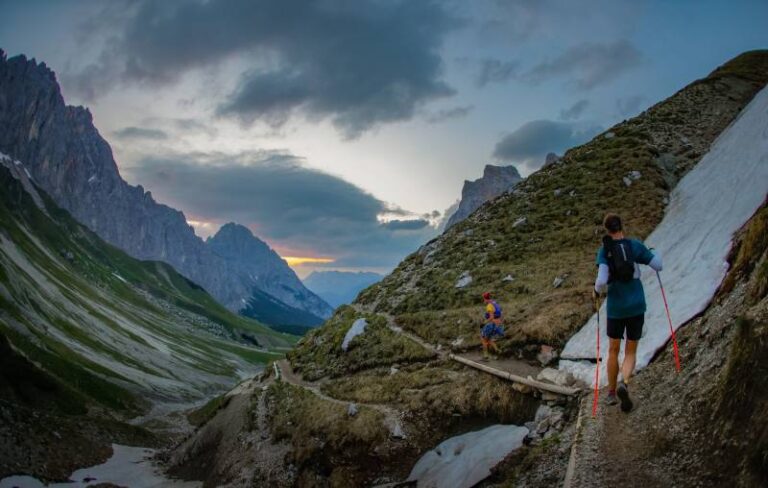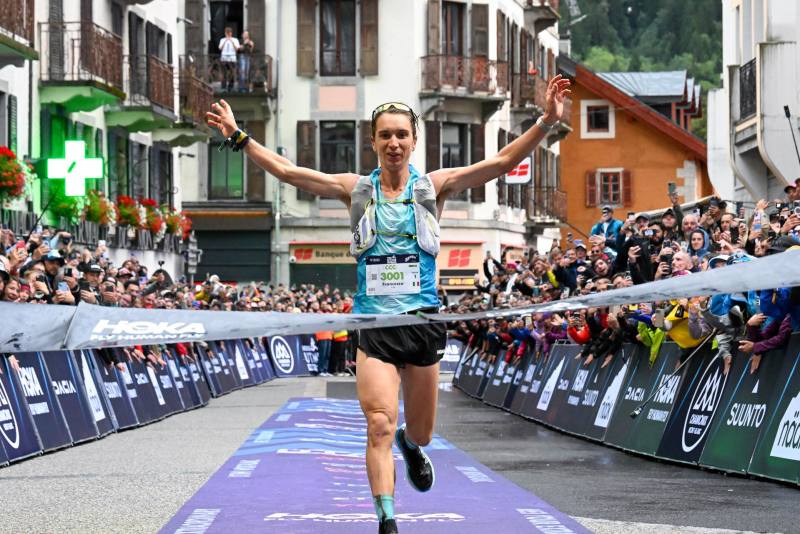
A CCC training plan has one job: getting you ready for 108 km and 6200 m of elevation gain from Courmayeur to Chamonix, through Italy, Switzerland and France on the Tour du Mont-Blanc trails. The CCC is the 100K Final of the UTMB World Series, a true mountain ultra with long climbs, quad-crushing descents and, for many runners, a finish by headlamp. Here is how to train for the CCC, phase by phase.
The short answer
- Plan 6 to 9 months of specific training if you have already finished one or more 50 to 80 km mountain races; longer if you haven’t.
- At peak, intermediate runners often train 7 to 12 hours a week with 2000 to 3500 m of weekly elevation gain. These are guidelines, not targets.
- Key sessions: long threshold hill repeats, long hike-run days with poles, back-to-back weekends, dedicated downhill work.
- The defining challenge: very long climbs above 2000 m followed by long descents, over 108 km, with a night finish for much of the field.
Contents
CCC distance and elevation gain
| Race | Distance | Elevation gain | Profile / notes |
|---|---|---|---|
| CCC® | 108 km | 6200 m | UTMB World Series 100K Final. Starts in Courmayeur late in UTMB week, finishes in Chamonix. Time limit: 28 h. |
The opening kilometres climb quickly above 2500 m. The Grand Col Ferret takes you into Switzerland, then the route runs through La Fouly, Champex and Trient before re-entering France at Vallorcine and tackling a final climb towards the Cheserys valley above Chamonix. The race takes place in late August, so expect anything from heat in the valleys to cold on the passes. Official details are on the CCC page of the HOKA UTMB Mont-Blanc website, and our CCC course guide breaks the route down section by section.
The other races of HOKA UTMB Mont-Blanc week:
| Race | Distance | Elevation gain | Category |
|---|---|---|---|
| UTMB® | 174 km | 9700 m | 100M Final |
| TDS® | 145 km | 9500 m | 4 Running Stones |
| OCC® | 60 km | 3500 m | 50K Final |
| MCC® | 40 km | 2350 m | 2 Running Stones |
| ETC® | 15 km | 1200 m | 1 Running Stone |
| YCC® | 15 km | 1200 m | Youth race, 1 Running Stone |
| PTL® | 300 km | 25000 m | Teams of 2 or 3, no ranking |
What makes the CCC so demanding
On paper, 6200 m over 108 km looks gentler than the UTMB. In your legs, it isn’t. The first climb out of Courmayeur comes straight from the start line in a crowded field, and going too hard there is the classic mistake. The Grand Col Ferret adds a long high-altitude ascent, followed by a long descent towards La Fouly that starts eating into your quads well before halfway.
The second half is where races are made or broken. After Champex, successive climbs arrive on tired legs, often as night falls for a large part of the field. With a 9:00 start and a 28-hour limit, many runners finish by headlamp. You need to power-hike for long stretches, descend without falling apart and keep eating when your stomach would rather not.
How long do you need to train for the CCC?
Ideally, you should have finished one or more 50 to 80 km mountain races before the CCC. With that background, 6 to 9 months of specific preparation is a sensible benchmark. If you have never gone beyond 40 km, think in terms of a full season: an intermediate race in spring, then the CCC at the end of summer. Our guide on increasing your distance safely explains how to build up step by step.
For the shorter races of the week, such as the MCC or OCC, a few months is often enough for an experienced trail runner. The TDS and UTMB call for a solid ultra history. In every case, the right timeline depends on your level, experience and available training time.
The phases of your CCC training plan
Base phase. Through winter and early spring, build volume gradually with mostly easy running, one or two quality sessions a week (hill intervals, threshold work) and regular strength training. Threshold is the intensity you could hold for roughly an hour in a race; improving it makes long climbs more economical.
Specific phase. Over the 10 to 12 weeks before your taper, elevation gain and time on feet take priority over speed. Alternate loading weeks with lighter recovery weeks, stack long mountain days and test your nutrition and kit in real conditions. A 40 to 60 km tune-up race about two months out is an excellent test.
Taper. In the last two to three weeks, cut volume clearly while keeping short touches of intensity. Check your pack and headlamps rather than squeezing in one last big day.
Key sessions for the CCC
Long threshold hill repeats. For example 3 to 4 × 10 to 15 minutes uphill at threshold, jogging back down. This prepares you for climbs like the Grand Col Ferret. Beginners start with shorter blocks.
Long hike-run days. Four to six hours in the mountains, alternating running and power hiking, with poles if you plan to race with them. This is where you find your cruising pace and dial in your fueling.
Back-to-back weekends. Two long runs on consecutive days, the second on tired legs. It is the safest way to rehearse the second half of the CCC without a ten-hour training run.
Downhill work. Faster downhill repeats, then long descents at the end of long runs, so your quads get used to repeated impact. Adjust everything to your level, and if pain sets in, back off and see a health professional.
If you want a plan that adapts every week to the sessions you actually complete, your level and your schedule, the RunMotion Coach app, the official online coach of the UTMB World Series, builds elevation, strength and recovery into your CCC preparation. Try it free for 7 days.
Plan your race with Race Strategy
On the CCC, a pacing error on the first climb is paid for at the Grand Col Ferret, and a carbohydrate deficit is paid for after Champex. Race Strategy by RunMotion builds your race plan kilometre by kilometre, with pace adjusted for elevation, altitude and terrain technicality, estimated split times at key points and a section-by-section fueling and hydration plan (carbs, water, sodium). Import the official course GPX, then adjust the plan to race-day weather.
Running Stones and the UTMB World Series
Entry to the CCC requires Running Stones collected on UTMB World Series races, or direct qualification for top finishers. To plan your season around it, read our UTMB World Series training plan and our guide to UTMB Mont-Blanc and its races.
FAQ
What level do you need for the CCC?
First, you need to meet the entry requirements (Running Stones or direct qualification). On the trail side, you should ideally have several mountain races behind you, including at least one of 50 to 80 km, and be comfortable on long climbs and descents.
Should you use poles on the CCC?
On climbs this long, poles take load off your legs and help you keep a steady rhythm. Practise with them from the specific phase onward and check the rules in the official race regulations.
How many hours a week should you train for the CCC?
For trail ultras, hours and elevation are more useful than kilometres. At peak, 7 to 12 hours a week is a common range for intermediate runners, with regular recovery weeks. If this is your first race of this length, stay at the lower end.
Final thoughts
The CCC rewards patience: a controlled first climb, trained descents and steady fueling matter more than raw speed. RunMotion’s founders, twin brothers Guillaume and Romain Adam, come from the Alps, and Chamonix is their playground: mountains, elevation and ultras are home turf for us. To build your CCC preparation with a plan that adapts to you, start your 7-day free trial of RunMotion Coach.
Article updated by the RunMotion Coach team.
Sources
- HOKA UTMB Mont-Blanc – CCC®
- HOKA UTMB Mont-Blanc – Races
- Official UTMB®, TDS®, OCC®, MCC®, ETC®, YCC® and PTL® pages on montblanc.utmb.world