Your Xtrail Kenting by UTMB training plan has to prepare you for a tropical trail race on the Hengchun Peninsula in southern Taiwan, which the organisers sum up in four words: hot, harsh, humid and runnable. The event offers five races in March, from 2 to 98 km. Here are the official figures and how to train for Xtrail Kenting with heat and wind in mind.
The short answer
- Allow 6 to 8 weeks for the 10K, 8 to 12 for the 25K, 12 to 14 for the 50K and 18 to 22 for the 100K, from a regular running base.
- Indicative peak weeks: 50 to 70 km and 1000 to 1500 m of climbing for the 50K, 70 to 100 km and 2000 to 3000 m for the 100K.
- Key sessions: runnable long runs, tempo, moderate hills, heat training and hydration tests.
- The defining feature: a very runnable course (about 34 m of gain per km on the 100K) in hot, humid and windy conditions.
Contents
Xtrail Kenting distances and elevation gain
Xtrail Kenting takes place in early March around Kenting. Figures come from the official Xtrail Kenting website.
| Race | Distance | Elevation gain | Profile / notes |
|---|---|---|---|
| Xtrail 100K | 98 km | 3291 m | 100K category, 3 Running Stones; pre-dawn start, 24 h limit |
| Xtrail 50K | 50 km | 1496 m | 50K category, 2 Running Stones |
| Xtrail 25K | 26 km | 589 m | 20K category, 1 Running Stone |
| Xtrail 10K | 11 km | 201 m | No Running Stones category |
| Xtrail Kids Family Run | 2 km | 10 m | Family and kids run |
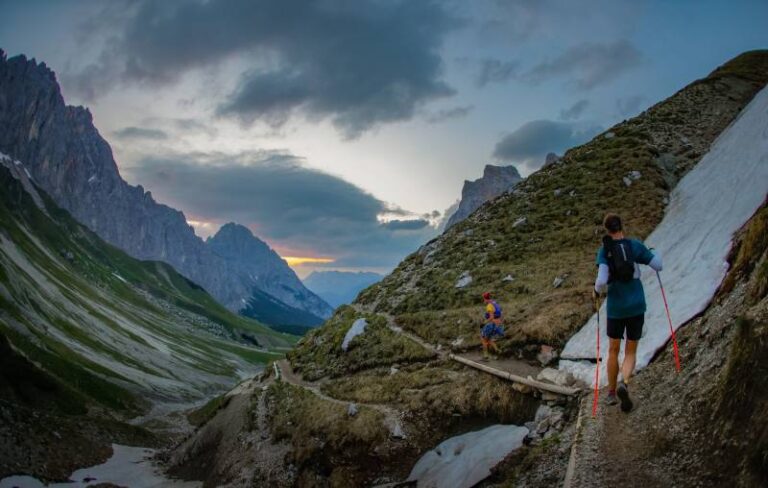
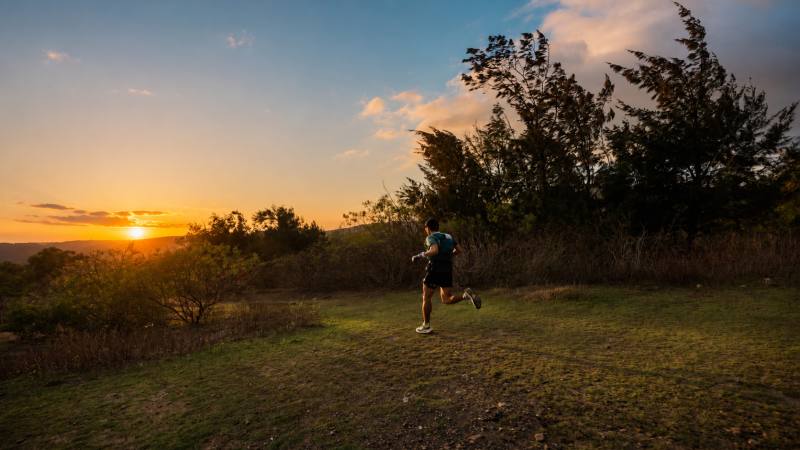
The 100K crosses coral plateaus, tropical hills and wind-swept ridges on the Hengchun Peninsula. The organisers describe seaside starts, grasslands, dense forest, river valleys, stony riverbeds and gorges carved into coral limestone, and mention the Luoshan-Feng, the strong downslope wind that sweeps the peninsula. Altitude is modest: the difficulty comes from heat, humidity, wind and terrain that can be rough despite the runnable profile.
What makes Xtrail Kenting demanding
On paper, 3291 m of gain over 98 km looks reasonable. But a runnable course means running almost all the time: your muscles don’t get the break of a long hiked climb, and the cumulative impact shows in the second half. Add tropical heat and humidity, and your race pace needs to be more conservative than in a temperate climate, especially if you are arriving from a northern winter.
Terrain changes constantly, from grassland to forest, coral rock and riverbeds, which calls for good proprioception. Wind on the ridges can slow you down and chill you even while you feel hot. And the 100K’s pre-dawn start means a few hours by headlamp.
How long should you train?
Xtrail 10K and 25K: 6 to 12 weeks depending on your level, with three runs a week. The 25K suits a regular runner with some off-road experience.
Xtrail 50K: 12 to 14 weeks, after a well-managed trail race or half marathon.
Xtrail 100K: 18 to 22 weeks, with at least one 50K finished. If that is a step up, read our guide on increasing trail distance without injury.
The phases of your training plan
Base. For an early-March race, your base phase falls in autumn and early winter. Easy aerobic volume, one quality session a week and two strength sessions. On Xtrail, aerobic speed and threshold pace matter more than on a very vertical race, so keep some interval work.
Specific. Over eight to ten weeks, extend your long runs on varied, rolling terrain, running most of the time. Add tempo work and moderate hills. If you train in the cold, gradually include warm sessions. Keep a lighter week every three or four weeks. Our article on what makes a trail training plan different explains the balance.
Taper. Two weeks for the shorter races and the 50K, two to three for the 100K. Arriving a few days early helps you adjust to the climate.
Key workouts for Xtrail Kenting
Runnable long run. 2.5 to 5 hours on varied terrain, running almost the whole time at an easy effort. The key session to get your legs used to continuous impact.
Tempo. 2 to 3 blocks of 10 to 20 minutes at a strong effort close to threshold (roughly what you could hold for an hour). It improves your ability to run fast for long on flatter sections.
Moderate hills. 8 to 12 reps of 1 to 2 minutes uphill with an easy jog down. They build strength without breaking you.
Heat training and hydration tests. In the final weeks, a few easy runs with extra layers or indoors in warm conditions, plus long runs where you test your water, sodium and carb intake. Our guide on how to fuel for a trail or ultra will help you build your plan.
Want a plan matched to your level and adjusted every week? The RunMotion Coach app, the official online coach of the UTMB World Series, builds your trail or ultra preparation and adapts it to your completed sessions and availability. Try it free for 7 days.
Build your race plan with Race Strategy
In the heat, fuelling and hydration are as decisive as pacing. Race Strategy by RunMotion builds a kilometre-by-kilometre plan with pace adjusted for gradient, altitude and technicality, estimates your split times at key points and gives you a section-by-section fuelling and hydration plan (carbs, water, sodium). Import the official GPX of your race, then adjust the plan to race-day weather.
Running Stones and the UTMB World Series
Xtrail Kenting awards 3 Running Stones for the 100K, 2 for the 50K and 1 for the 25K. To fit it into your season, read our guide to training for UTMB World Series races and our tips on planning your trail running season.
FAQ
Are poles allowed at Xtrail Kenting?
Check the official mandatory equipment list. On such a runnable course many runners go without, except perhaps on the 100K.
How do you prepare for the heat coming from a cold country?
A few easy sessions in warm conditions in the final weeks, arriving early if possible and a cautious starting pace. If you have a history of heat illness, talk to a health professional before you travel.
What level do you need for the Xtrail 100K?
A 50K finished in good shape and a solid running base. The moderate climbing makes it a realistic first 100K, provided you respect the heat.
Final thoughts
Train for Xtrail Kenting like a runnable tropical race: lots of continuous running, real heat management and a tested hydration plan. RunMotion founders Guillaume and Romain Adam are twin brothers from the Alps, so mountains and ultras are home ground, but the app is just as good at preparing runnable courses. Start your 7-day free trial.
Article updated by the RunMotion Coach team.
Sources
- xtrail.utmb.world (races, distances, elevation gain, Running Stones, course description)
- Xtrail 100K official page