A TDS training plan has to get you ready for 145 km and 9500 m of elevation gain from the Aosta Valley to Savoie, starting from Courmayeur in the middle of the night. The organisers describe the TDS as beautiful, technical, wild and demanding, and every word counts. Here is how to train for the TDS, from base building to race-specific sessions.
The short answer
- Plan 9 to 12 months of preparation if you have already finished a mountain ultra of around 100 km; the TDS is not a first ultra.
- At peak, intermediate runners often train 9 to 14 hours a week with 3000 to 4500 m of weekly elevation gain. These are guidelines, not targets.
- Key sessions: long threshold hill repeats, long hike-run days with poles, night back-to-backs, technical descents.
- The defining challenge: technical, remote terrain and a 23:50 start that has you running at night from the very first kilometre.
Contents
TDS distance and elevation gain
| Race | Distance | Elevation gain | Profile / notes |
|---|---|---|---|
| TDS® | 145 km | 9500 m | 4 Running Stones. Starts in Courmayeur at 23:50, early in UTMB week. Time limit: 44 h 55. Finish: Chamonix. |
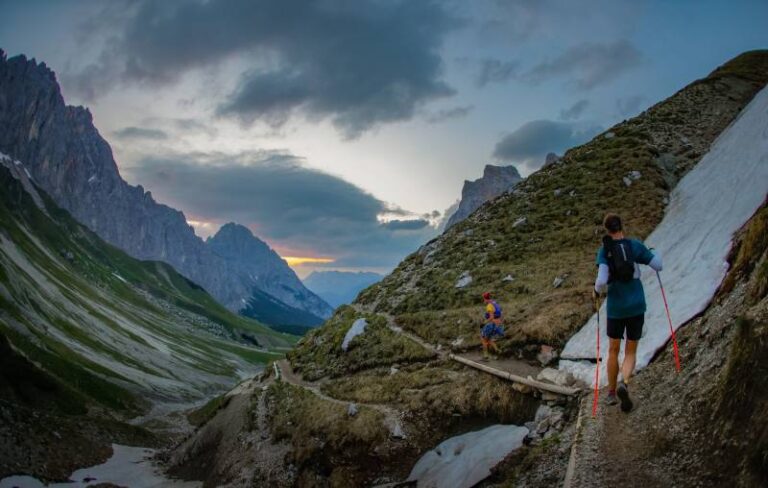
The TDS links the Aosta Valley to Savoie. The route crosses the Beaufortain, including the Pas d’Outray with its views of the Pierra Menta and the Grand Mont, then Hauteluce and its hamlets facing Mont-Blanc. It takes place in late August, when mountain weather can change quickly between valley floors and high passes. Official details are on the TDS race page.
The other races of HOKA UTMB Mont-Blanc week:
| Race | Distance | Elevation gain | Category |
|---|---|---|---|
| UTMB® | 174 km | 9700 m | 100M Final |
| CCC® | 108 km | 6200 m | 100K Final |
| OCC® | 60 km | 3500 m | 50K Final |
| MCC® | 40 km | 2350 m | 2 Running Stones |
| ETC® | 15 km | 1200 m | 1 Running Stone |
| YCC® | 15 km | 1200 m | Youth race, 1 Running Stone |
| PTL® | 300 km | 25000 m | Teams of 2 or 3, no ranking |
What makes the TDS so tough
The numbers speak for themselves: 9500 m over 145 km is more than 65 m of climbing per kilometre on average, a steeper ratio than the UTMB. Trails are narrower, steeper and more technical than the classic Tour du Mont-Blanc, and the remote sections demand real self-sufficiency between aid stations.
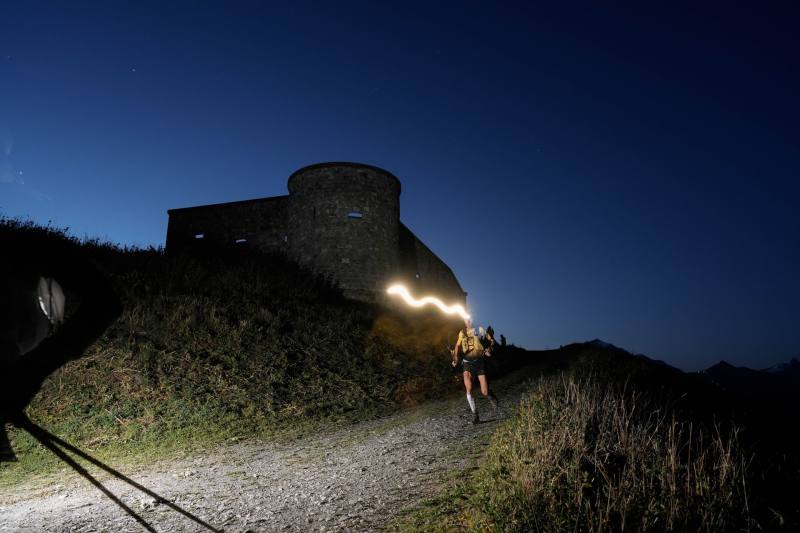
Then there is the schedule. A 23:50 start means tackling the first climbs by headlamp after a day when sleep is hard to come by. With a 44 h 55 time limit, much of the field also spends a second night out on the course. Sleep management, night-time fueling and clear thinking on technical ground: the TDS is trained in the head as much as in the legs.
How long should you train for the TDS?
The TDS calls for a real mountain ultra background. Ideally, you have already finished at least one ultra of around 100 km with big elevation and spent a full night racing. With that experience, allow 9 to 12 months, including a spring season with an intermediate ultra. If you have never gone beyond 60 or 80 km, consider the OCC or CCC first. Our guide on increasing your trail distance explains how to build up safely.
The phases of your TDS training plan
Base phase. From autumn to spring, build volume gradually with plenty of easy running, one or two quality sessions a week and regular strength work, especially for quads and ankles to handle technical ground.
Specific phase. Over the last three months before your taper, prioritise elevation, time on feet and terrain. Seek out steep, rocky trails where foot placement matters. Alternate loading and recovery weeks and test all your kit, headlamps included, at night.
Taper. Cut volume clearly three weeks out. In the final days, sleep is the priority: arriving rested at a midnight start is worth more than one last session.
Key sessions for the TDS
Long threshold hill repeats. For example 3 to 4 × 12 to 20 minutes uphill at threshold, the intensity you could hold for about an hour in a race. They make long climbs more economical.
Long hike-run days with poles. Five to eight hours in the mountains, alternating running and power hiking. This is where you find your cruising rhythm and validate your fueling.
Night back-to-backs. A long run starting late in the day and continuing by headlamp, followed by another run the next morning. You learn to move tired and in the dark, two realities of the TDS.
Technical descents. Descents on rough ground, cautious at first and then more fluid, to build confidence and muscular resilience. Scale everything to your level, and if pain sets in, reduce the load and see a health professional.
For a plan that adapts every week to your completed sessions, form and schedule, the RunMotion Coach app, the official online coach of the UTMB World Series, combines elevation, strength, recovery and mental preparation. Try it free for 7 days.
Plan your race with Race Strategy
In a race this long, pacing and fueling are decisive. Race Strategy by RunMotion builds your plan kilometre by kilometre, with pace adjusted for elevation, altitude and terrain technicality, estimated split times at key points and a section-by-section fueling and hydration plan (carbs, water, sodium). Import the official TDS GPX, then adjust the plan to race-day weather.
Running Stones and the UTMB World Series
The official website lists the TDS at 4 Running Stones. To understand how the circuit works and build your season around Chamonix week, read our UTMB World Series training guide. If the TDS is a step towards the UTMB itself, our UTMB training plan shows what comes next.
FAQ
Is the TDS harder than the UTMB?
It is shorter (145 km versus 174 km), but its elevation gain is close (9500 m versus 9700 m) and its terrain is known for being more technical and remote. In many respects it is at least as demanding: it is not a “mini UTMB”.
Should you use poles on the TDS?
With this much climbing, poles are a real asset uphill, but you also need to stow them quickly on technical sections. Practise with them from the specific phase and check the official regulations.
How many hours a week should you train for the TDS?
At peak, 9 to 14 hours a week is a common range for intermediate runners, with regular recovery weeks. Consistency over several months and time on similar terrain matter most.
Final thoughts
The TDS is built over the long term: a solid ultra base, technical terrain, rehearsed sleepless nights and a tested fueling plan. RunMotion’s founders, twin brothers Guillaume and Romain Adam, come from the Alps and Chamonix is their playground; that mountain culture drives our ultra plans. To build your TDS preparation with a plan that adapts to you, start your 7-day free trial.
Article updated by the RunMotion Coach team.
Sources
- HOKA UTMB Mont-Blanc – TDS®
- HOKA UTMB Mont-Blanc – Races
- Official UTMB®, CCC®, OCC®, MCC®, ETC®, YCC® and PTL® pages on montblanc.utmb.world