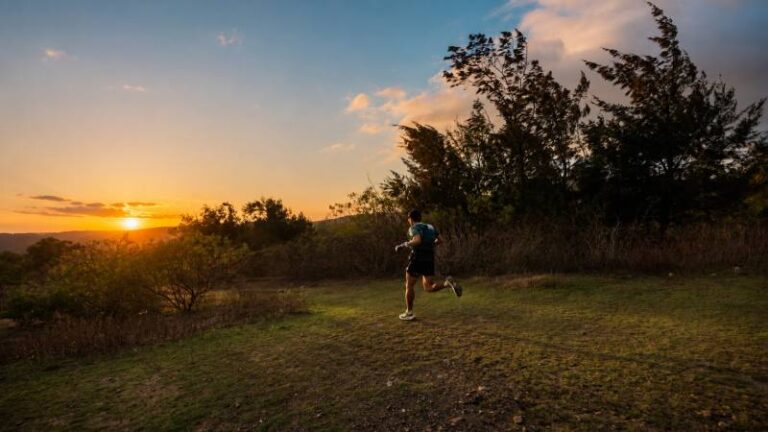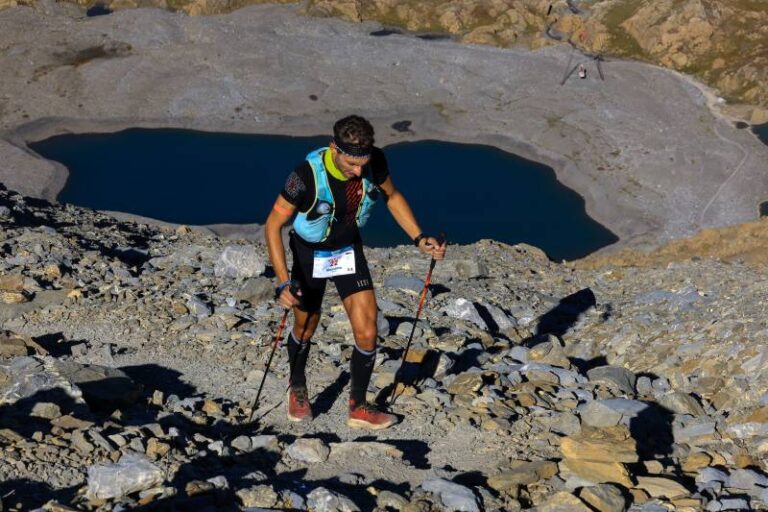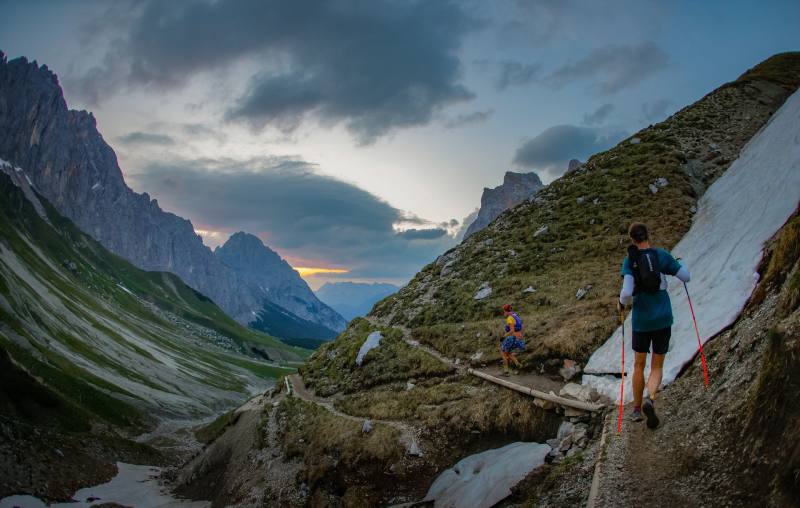
A Zugspitz Ultra Trail training plan prepares you to circle Germany’s highest mountain, from Garmisch-Partenkirchen through the neighbouring Tyrolean valleys. Zugspitz Ultra Trail by UTMB offers seven races, from 16 km up to the 167 km ZUT100, with evening starts on the longest ones. Here is how to train for the Zugspitz Ultratrail, with the official figures for every race.
The short answer
- Grainau Trail and Garmisch-Partenkirchen Trail: 8 to 12 weeks; Mittenwald and Leutasch Trail: 12 to 16 weeks; Ehrwald Trail and Ultratrail: 5 to 8 months; ZUT100: a full season with several ultras behind you.
- Rough guide in the specific phase for the Ultratrail: 8 to 13 hours a week and 1500 to 3000 m of elevation gain, depending on your level.
- Key sessions: long hill repeats, night long runs, technical descents, back-to-back weekends.
- The main challenge: the two longest races start in the evening (8 p.m. for the ZUT100, 10 p.m. for the Ultratrail), so a large part is run at night on technical ground.
Contents
Zugspitz Ultra Trail distances and elevation gain
Figures from the official Zugspitz Ultra Trail by UTMB website.
| Race | Distance | Elevation gain | Profile/notes |
|---|---|---|---|
| ZUT100 | 167 km | 8205 m | 100M category, 4 Running Stones. 8 p.m. start in Garmisch-Partenkirchen, 42 h 30 limit. |
| Ultratrail | 107 km | 5280 m | 100K category, 3 Running Stones. Loop from Garmisch-Partenkirchen, 10 p.m. start, 27-hour limit |
| Ehrwald Trail | 86 km | 4295 m | 100K category |
| Leutasch Trail | 68.5 km | 3100 m | 50K category |
| Mittenwald Trail | 44 km | 2110 m | 50K category |
| Garmisch-Partenkirchen Trail | 29 km | 1565 m | 20K category |
| Grainau Trail | 16 km | 760 m | 20K category |
The courses loop around the Zugspitze massif on both sides of the German-Austrian border. The official site describes steep climbs, technical trails and aid stations in mountain huts and alpine pastures, some of them reachable only on foot. The event takes place in June, so your specific training falls in spring, sometimes before high trails are free of snow.
What makes the Zugspitz Ultratrail demanding
Night is the first challenge on the long races. The ZUT100 starts in the evening and, for most runners, lasts a full night and a day, sometimes a second night within the 42 h 30 limit. The Ultratrail starts at 10 p.m., so you begin climbing just when your body wants to sleep.
Technical terrain comes next. The site stresses steep climbs and technical paths, which demand strong ankles and confidence on descents, especially by headlamp.
Logistics matter as well. Several aid stations sit in remote huts where crews may not have access, so what you carry has to get you from one point to the next. A clear fuelling strategy is part of the training, and our guide on how to fuel for a trail or ultra covers the basics.
How long do you need to train?
For the Grainau Trail and Garmisch-Partenkirchen Trail, 8 to 12 weeks is enough if you run regularly. The latter, with 1565 m over 29 km, is already a proper mountain race.
For the Mittenwald and Leutasch Trail, allow 12 to 16 weeks, ideally after a first 25 to 40 km race with real climbing. For the Ehrwald Trail and Ultratrail, plan 5 to 8 months including 12 to 16 specific weeks, with a 50 to 70 km race already completed.
The ZUT100 is a full-season project after at least one successful 80 to 100 km ultra. Our 100-mile training plan sets out the progression. These durations are benchmarks, not guarantees.
The phases of your training plan
Base building
Easy aerobic volume, strength work twice a week and one quality session such as hills or short intervals. Add balance and ankle work: on a technical course, strong ankles prevent many DNFs.
Specific phase
Over the last 10 to 12 weeks, increase elevation gain and long-run duration gradually. For the ZUT100 and Ultratrail, include at least two or three night long runs with your headlamp and race nutrition.
Taper
Two to three weeks of reduced volume (30 to 50 %), a few short efforts, and real attention to sleep since the long races start in the evening.
Key workouts for the Zugspitz Ultratrail
Long hill repeats: 3 to 5 climbs of 10 to 15 minutes at a strong but controlled effort, running when the slope allows and power hiking when it doesn’t.
Night long runs: 3 to 5 hours starting late in the evening on a trail you know, to practise eating and staying sharp while short on sleep.
Technical descents: one session a week in the specific phase, repeating descents on rocky or rooty ground, ideally once by headlamp.
Back-to-back weekends: a long run on Saturday and a shorter one on Sunday, to stack hours on tired legs without overloading a single session.
The RunMotion Coach app builds a tailored plan and adjusts it every week based on your completed sessions, level and availability, with elevation, strength and recovery included. RunMotion Coach is the official online coach of the UTMB World Series, and its founders, twin brothers Guillaume and Romain Adam, come from the Alps: mountains and ultras are their home ground. Try the app free for 7 days.
Plan your race strategy with Race Strategy
Race Strategy by RunMotion calculates your race plan kilometre by kilometre, with pace adjusted for elevation, altitude and technical terrain. You get estimated split times at key points, which also helps your crew know when to expect you, plus a fuelling and hydration plan per section (carbohydrates, water, sodium). Import the official course GPX from the race website and adjust for race-day weather.
Running Stones and the UTMB World Series
The Zugspitz Ultratrail is part of the UTMB World Series. According to the official site, the ZUT100 earns 4 Running Stones and the Ultratrail 3; the other races are classed 100K, 50K or 20K. Running Stones improve your chances in the lottery for the Finals in Chamonix. For season planning, see our UTMB World Series training plan hub and how to plan your trail running season.
FAQ
Are poles allowed at the Zugspitz Ultratrail?
Check the official race regulations. On the long races, poles are a real help on steep climbs if you have trained with them.
What level do you need for the ZUT100?
Ideally you have finished one or more 80 to 100 km mountain ultras, including some night running. The 42 h 30 limit leaves margin, but running through two nights takes real experience.
How many hours a week to train for the Ultratrail?
In the specific phase, 8 to 13 hours a week with 1500 to 3000 m of climbing is a common benchmark, with a lighter week every three or four weeks.
Conclusion
The Zugspitz Ultratrail calls for endurance, technical confidence and, on the long races, real night experience. Pick your race according to your background and build towards it over time. For a plan that adapts to you every week, start your free RunMotion Coach trial.
Article updated by the RunMotion Coach team.
Sources: