To start running, a simple GPS watch costing between €150 and €300 is all you need. It should measure your distance, pace and heart rate accurately, be easy to read on the move and last at least a week between charges. There is no point buying an ultra-runner’s watch: consistency, not the amount of data, is what will make you progress.
The short answer
- Tight budget (around €160): Garmin Forerunner 55 or Polar Pacer, simple and reliable.
- Best value (€210 to €270): Garmin Forerunner 165, Coros Pace 3 or Coros Pace 4.
- If you want a recent model with an AMOLED screen: Garmin Forerunner 70.
- If you have an iPhone and want one watch for everything: Apple Watch SE 3 or Series 12, accepting a shorter battery life.
- All of these watches connect to RunMotion Coach: your runs sync automatically to the app.
Contents
Do you really need a GPS watch to start running?
No, not for your first runs. Your phone, with an app, already records distance and pace. And at the very beginning, the best indicator is free: if you can speak in full sentences while running, you are at the right intensity. Most beginners run too fast, and a watch will not fix that on its own.
A watch becomes worthwhile once you run two or three times a week. It frees you from your phone, shows your pace in real time, guides you through interval sessions (alternating running and recovery) and measures your heart rate. Above all, it records everything automatically, which is what lets you track your progress and adjust your training week after week.
If your routine is not set yet, start with our tips for getting started with running. The watch will then reinforce a habit that is already in place.
Preparing for your first race? We have also answered the question: do you need a GPS watch for your first 10K?
The 5 criteria that really matter
1. GPS accuracy
All the watches in this selection measure distance accurately enough for a beginner. “Multi-GNSS” or “dual-frequency” models use several satellite constellations and cope better in cities, between buildings or under trees. It is a plus, not a must.
2. Battery life
Aim for at least a week of everyday use and around ten hours of GPS. You will run 2 to 4 hours a week at first: with those figures, you will charge your watch once a week or less. A watch that needs charging every night often ends up forgotten in a drawer.
3. Readability and simplicity
While running, you glance at your wrist for half a second. Pace and time need to be readable instantly. AMOLED screens are brighter and more pleasant; MIP (transflective) screens use less power and stay very readable in full sunlight. Physical buttons are invaluable in the rain or with gloves on.
4. Wrist heart rate
The optical sensor on the wrist is reliable for easy runs, the comfortable pace that should make up most of your training. It is less accurate during sudden changes of pace. For a beginner, it is more than enough; a chest strap can come later if you want very detailed data.
5. Compatibility with your training app
A watch does not replace a plan. Check that it syncs with the app you use to train, ideally both ways: importing your runs and receiving your scheduled workouts.
Comparison table: GPS watches for beginners
| Model | Approx. price* | GPS battery | Smartwatch battery | Screen | Best for |
|---|---|---|---|---|---|
| Garmin Forerunner 55 | €159 | up to 20 h | up to 2 weeks | MIP | First purchase, small budget |
| Polar Pacer | €159 | up to 35 h | up to 6.5 days | MIP | Heart rate fans |
| Suunto Run | €199 | up to 30 h (20 h dual-frequency) | up to 12 days | AMOLED | A great screen at a low price |
| Garmin Forerunner 165 | €209 | up to 19 h | up to 11 days | AMOLED | The all-rounder |
| Coros Pace 3 | €219.90 | up to 25 h | up to 17 days | MIP | Battery and low weight |
| Garmin Forerunner 70 | €249 | up to 23 h (GPS only) | up to 13 days | AMOLED | The newest beginner model |
| Coros Pace 4 | €269.90 | up to 41 h | up to 19 days | AMOLED | Already aiming for a half or full marathon |
| Apple Watch SE 3 | from €249 (Apple) | up to 7 h | up to 18 h | OLED | iPhone users, everyday wear |
*Prices checked in October 2026. Battery figures from the manufacturers, in optimal conditions: in practice, expect a little less.
Our verdict on each model
Garmin Forerunner 55: the safe choice to get started
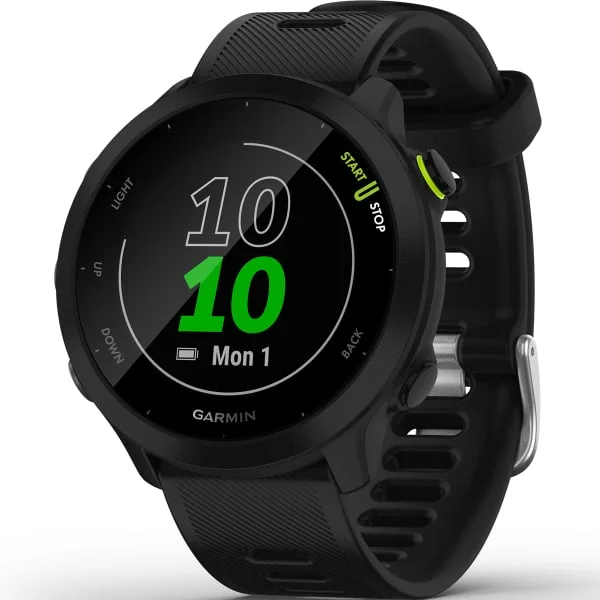
This is the watch we have been recommending to beginners for years. It does the essentials without ever complicating things: GPS, wrist heart rate, pace, intervals and phone notifications. Garmin Coach, included for free, offers guided programmes. Its MIP screen is less flattering than an AMOLED, but it stays readable in full sunlight and helps its good battery life. At €159 on Ekosport, it is the most sensible way into the Garmin ecosystem.
See the Garmin Forerunner 55 on Ekosport
Polar Pacer: the longest-lasting budget watch
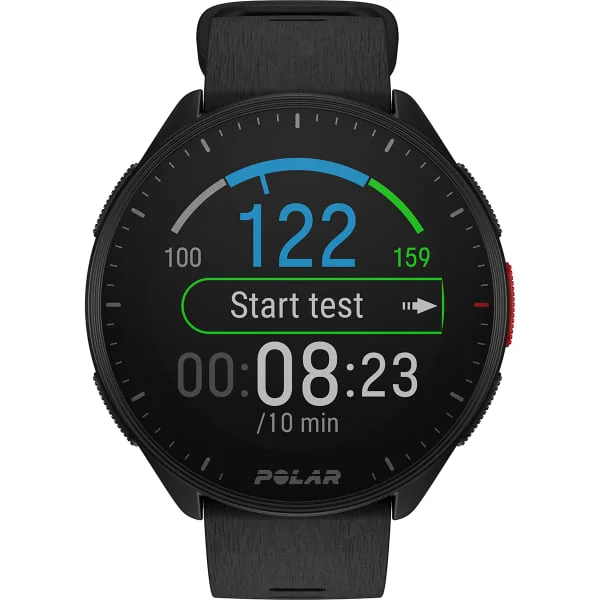
The Pacer gets straight to the point: pace, distance, laps and intervals, with non-slip buttons that are easy to use while running. Its strength is battery life, up to 35 hours of training with GPS and heart rate, which is rare at this price. Polar also has a long tradition in heart rate measurement. One caveat: with RunMotion Coach, Polar runs sync to the app, but Polar does not yet allow scheduled workouts to be sent automatically to the watch.
See the Polar Pacer on Ekosport
Suunto Run: an AMOLED screen for under €200
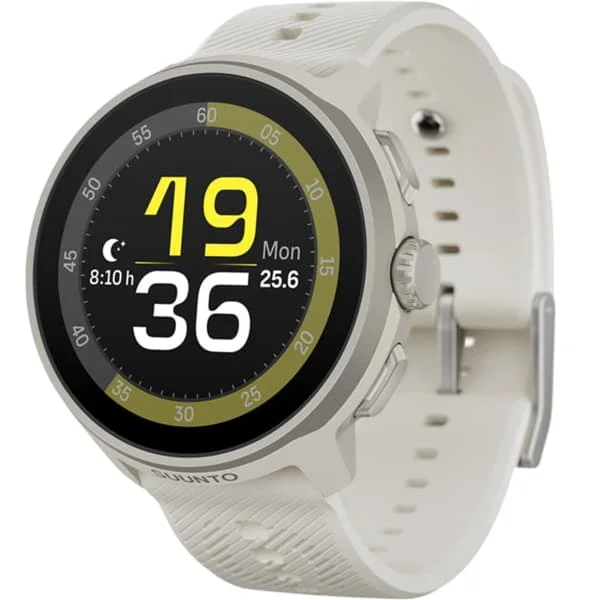
The Suunto Run stands out with its AMOLED touchscreen protected by Gorilla glass, rare at this price. It offers useful modes such as track running or “Ghost Runner” (running against a target pace), plus sleep and recovery tracking. Suunto claims up to 12 days of smartwatch use and up to 30 hours of GPS. A good alternative if you find entry-level Garmin watches a bit austere.
See the Suunto Run on the Suunto website
Garmin Forerunner 165: the best all-round compromise
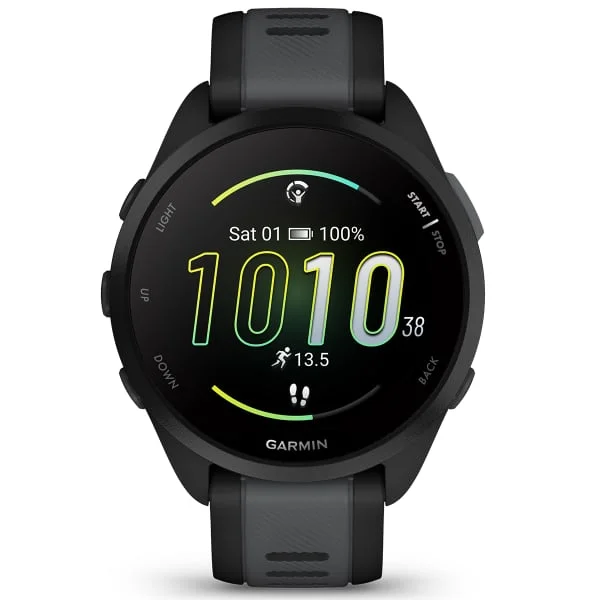
Light, with a lovely AMOLED touchscreen and physical buttons, the Forerunner 165 ticks almost every box. On top of the basics, it adds a morning report (sleep, recovery), more than 25 sport profiles and LiveTrack, which lets someone follow your position in real time. At €209 on Ekosport, it is probably the most balanced watch for a beginner who plans to stick with it.
See the Garmin Forerunner 165 on Ekosport
Coros Pace 3: the featherweight that lasts two weeks
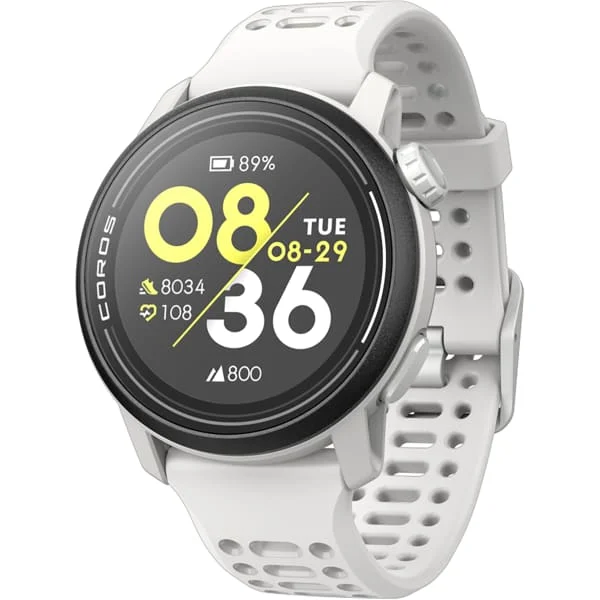
The Pace 3 has become a benchmark for runners who want efficiency without frills. Very light (39 g with a silicone strap), it offers remarkable battery life: around 25 hours of all-systems GPS and 17 days of everyday use. Its MIP screen is less vivid than the Pace 4’s, but if you are after the best battery-to-price ratio, this is the one.
See the Coros Pace 3 on Ekosport
Garmin Forerunner 70: Garmin’s new entry point
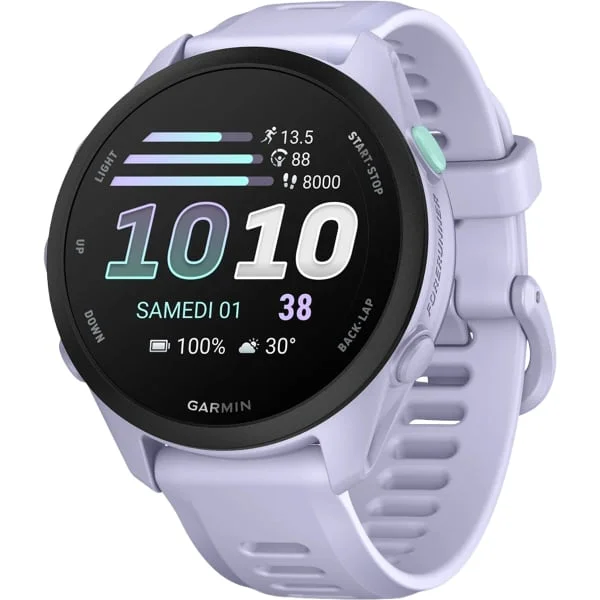
Released in May 2026, the Forerunner 70 is explicitly aimed at beginner and intermediate runners. It weighs 40 g and has a 1.2-inch AMOLED screen, touch control plus 5 buttons, and multi-GNSS GPS. Garmin claims 13 days of smartwatch use and up to 23 hours of GPS only (16 hours in all-systems mode). It also brings wrist-based running power, previously reserved for higher-end models, and Garmin Coach plans with run-walk intervals. If you also run in the hills, look instead at the Forerunner 170 (€299), which adds a barometric altimeter to measure elevation.
See the Garmin Forerunner 70 on Ekosport
Coros Pace 4: for those already looking further ahead
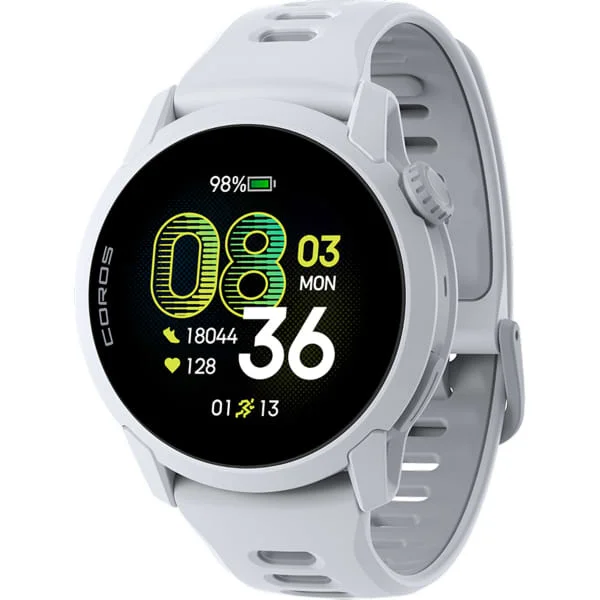
The Pace 4 keeps the Pace 3’s low weight (around 40 g) and adds a 1.2-inch AMOLED screen, a digital crown and even better battery life: around 41 hours of all-systems GPS and 19 days of everyday use. That is more than a beginner needs, but if you already know you will train for a half marathon or a marathon this year, it will go the distance without you having to upgrade.
See the Coros Pace 4 on Ekosport
What about the Apple Watch for running?
If you have an iPhone and want one watch for daily life and sport, the Apple Watch is a perfectly valid option for beginners. Its GPS is accurate, the heart rate sensor is good and the Workout app can follow structured sessions.
In the current range, the Apple Watch SE 3 (from €249 at Apple) is enough for running. The Apple Watch Series 12 (from €449) brings a larger screen and more complete sensors. Battery life remains the limit: Apple claims up to 18 hours of normal use and up to 7 hours of outdoor workout for the SE 3, and around 24 hours of normal use for the Series 12, which means charging almost every day. For one-hour runs, that is not a problem; for long runs, or if you often forget to charge it, a dedicated sports watch will be more comfortable.
Discover the Apple Watch range
Using your watch with RunMotion Coach
A watch measures, a plan tells you what to do. The two go hand in hand. RunMotion Coach connects with Apple Watch, Garmin, Polar, Suunto and Coros: once you grant permission, your runs sync automatically to the app, which analyses what you actually did and adjusts the rest of your plan.
With a Garmin, an Apple Watch, a Coros or a compatible Suunto, you can also send your scheduled workouts to your watch: it then guides you through the warm-up, the intervals and the recoveries, with pace or heart rate alerts. With Polar, only activity import is available for now. Details are in our guide to syncing watches and partner apps.
To start well, get to know your paces: a maximal aerobic speed test (MAS, the speed at which you reach your maximum oxygen uptake) gives you a solid basis for setting your sessions.
Your watch is ready, but you need a plan? RunMotion Coach builds a programme tailored to your level, your availability and your goal, and sends it to your watch. Try the app free for 7 days.
Mistakes to avoid
Buying too high-end. A €600 watch will not make you run faster than a €200 one. Advanced features (maps, running power, in-depth training metrics) make sense after several months of running. Start simple, and you will know exactly what you are missing.
Running with your eyes glued to your pace. At first, your pace varies with terrain, fatigue and heat. Rely first on how you feel and on heart rate during easy runs. Pace becomes a valuable guide in quality sessions.
Believing every number. Estimates of VO2max, “recovery time” or predicted race times are indications, not truths. They are even less reliable when the watch has only known you for a short time.
Forgetting comfort. If a watch is too heavy or the strap rubs, you will end up not wearing it. If you have a small wrist, go for models around 40 g.
FAQ
How much should I spend on a first GPS running watch?
Between €150 and €300, you will find complete and reliable watches, such as the Garmin Forerunner 55, Polar Pacer, Coros Pace 3 or Garmin Forerunner 165. Beyond that, you mostly pay for features that beginners rarely use.
GPS watch or phone to start running?
Your phone is enough for the first few weeks. A watch becomes really useful when you run regularly: more comfort, real-time pace on your wrist, heart rate and guidance during interval sessions.
Is wrist heart rate reliable?
Yes for steady runs, which make up most of your training. It can lag behind during short accelerations. For very precise measurements, a chest strap remains the reference.
Garmin, Coros, Polar or Suunto: which brand should I choose?
All four make very good watches. Garmin has the widest ecosystem, Coros focuses on battery life and low weight, Polar on heart rate, Suunto on design and the outdoors. All of them sync with RunMotion Coach.
Do I need a watch with an altimeter as a beginner?
No, unless you often run hills or trails. A barometric altimeter measures elevation far more accurately than GPS. In that case, look at the Garmin Forerunner 170 or, to go further, our selection of GPS watches for ultra trail running.
Key takeaways
To start running, choose a simple, light and readable watch with at least a week of battery life. The Garmin Forerunner 165 and Coros Pace 3 offer the best balance, the Forerunner 55 and Polar Pacer suit small budgets, and the Coros Pace 4 and Forerunner 70 suit runners who want a recent model. With an iPhone, the Apple Watch does the job if you accept charging it often.
After that, what matters most is what you do with the data. Start gently, run mostly at an easy pace, build up gradually. If you need some structure, our page on running for fitness and making progress is a good place to start.
Ready to turn your runs into progress? Connect your watch to RunMotion Coach and get a plan that adapts to you. Start your 7-day free trial.