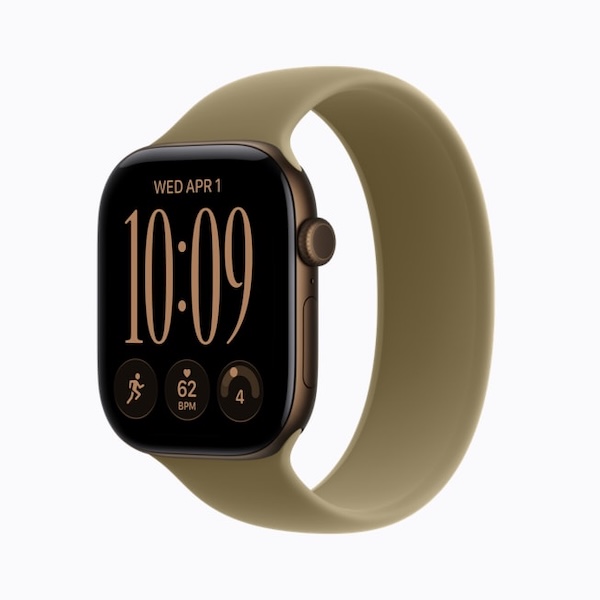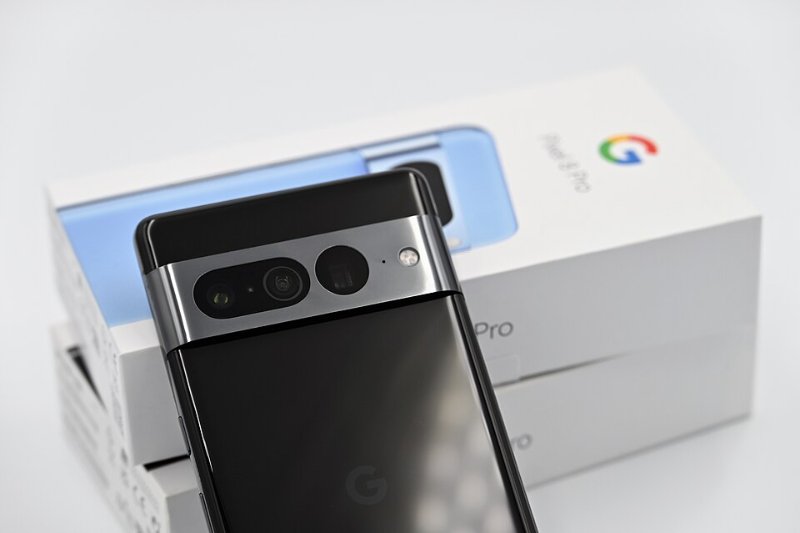
A pedometer counts your steps by detecting the small jolt that each foot strike sends through your body. At a normal walking pace, most pedometers, phones and watches get it right to within a few percent. The distance and especially the calories they display, however, are much rougher estimates.
In this guide, we look at how a pedometer works, what research says about its accuracy, which device to choose and how to use one as a runner or when you are getting back into exercise.
The short answer
- A pedometer detects each step with a swinging lever (mechanical models) or an accelerometer (phones, watches, fitness trackers).
- Step counts are accurate at a normal walking pace but underestimated when you walk very slowly.
- Distance depends on the stride length the device assumes, and calories are only a rough estimate.
- For runners, a step counter is mostly useful to track activity on rest days and your cadence; for pace and distance on the run, GPS remains the reference.
- Around 7,000 steps a day already brings clear health benefits: 10,000 is not a magic threshold.
Contents
What is a pedometer?
A pedometer is a step counter. For a long time, it was a small box you clipped to your belt. Today, the function is mostly built into your phone, your GPS watch or your fitness tracker: you probably already own a pedometer without ever buying one.
From your step count, most devices then calculate a distance, an energy expenditure and sometimes active minutes. These numbers are not equally reliable, and that is where the accuracy question really lies.
How does a pedometer work?
The spring-lever pedometer
Traditional pedometers contain a small metal arm mounted on a spring. Each time your foot hits the ground, the jolt makes this lever swing and close an electrical contact: one step is counted. The spring tension sets the sensitivity. Too loose, and it counts random movements; too stiff, and it misses the softest steps.
This kind of pedometer needs to be worn upright on your hip. Tilted in a pocket or at the bottom of a bag, it quickly loses accuracy.
The accelerometer in phones and watches
Phones, watches and fitness trackers use an electronic accelerometer that measures acceleration in three directions. An algorithm then looks for the regular pattern of walking or running in that signal. It usually ignores isolated movements and only validates steps when they follow each other at a consistent rhythm.
These sensors work in any position, which is why your phone counts steps from your pocket. On the wrist, a watch infers your steps from your arm swing: convenient, but also the source of some errors, as we will see below.
Steps, distance, calories: measured vs estimated
Only steps are actually measured. Distance is calculated by multiplying your steps by a stride length, usually estimated from your height. Calories are derived from your weight, your steps and sometimes your heart rate. Each step adds uncertainty: steps are reliable, distance less so, and calories even less.
How accurate are pedometers?
For counting steps at a normal walking pace, yes. One study tested 21 devices on 258 adults walking on a treadmill: between 4 and 6.4 km/h (2.5 to 4 mph), the average error was 7%, and 15 devices stayed under 5%. Between 0.8 and 3.2 km/h (0.5 to 2 mph), it rose to 40% on average. Placement matters too: at normal speeds, the error was about 1% at the ankle or thigh, 3% at the waist and 15% at the wrist (Mora-Gonzalez et al., 2022).
In real life, the picture is less clear-cut. Over three days of everyday life, two pedometer apps installed on an Android smartphone differed by 14% and 32% from a research-grade sensor (Adamakis, 2023). As for calories, a review of 65 studies on wristbands and smartwatches found errors above 30% for every brand (Germini et al., 2022).
Situations that throw off the count
Very slow walking is the main source of error. Next come situations where the sensor does not move like your legs: a watch undercounts when you push a stroller or a shopping cart, because your arm stays still. Conversely, repeated arm movements (cooking, clapping, talking with your hands) can add a few phantom steps. And a phone left on a desk or in a bag counts nothing at all.
Test your step counter in two minutes
Note the step count on the screen, walk 100 steps at your usual pace while counting them yourself, then compare. Repeat while walking slowly and jogging. If the gap stays within a few steps per 100, your device is accurate enough for your needs. If it is larger, change its position (front pocket rather than bag, non-dominant wrist for a watch) and check the height or stride length entered in the settings.
Phone, watch or classic pedometer: which one to choose?
If your goal is simply to move more, your phone is enough, as long as you carry it. A watch or fitness tracker counts your steps all day, even when the phone stays on the table, and adds heart rate. A classic pedometer still makes sense if you want a simple device, with no screen to charge every day and no notifications.
| Device | Strengths | Limits |
|---|---|---|
| Phone | Free, already in your pocket | Counts nothing when you don’t carry it |
| Watch or fitness tracker | Counts all day, adds heart rate and GPS depending on the model | Errors when your arm doesn’t move, regular charging |
| Classic pedometer | Simple, cheap, long battery life | Must be worn upright on the hip, no training data |
If you are thinking about getting a running watch, our guide to choosing a GPS running watch as a beginner will help you find a simple model. If you already have an Apple Watch, here is how to set it up for running.
How can a pedometer help you as a runner?
Keep an eye on your activity on non-training days
Running three times a week does not fully make up for entire days spent sitting. Your step count shows what happens between sessions: walking commutes, stairs, active breaks. It is also useful the other way around. If your recovery days look like 20,000 steps of city sightseeing, they are no longer really recovery days.
Track your cadence
When running, the number of steps per minute is called cadence. Your watch displays it using the same accelerometer. There is no ideal cadence that suits everyone: it depends on your height, your pace and your running style. However, a meta-analysis of 37 studies shows that increasing your cadence generally reduces the load on the knee and hip, although the evidence is still insufficient to draw conclusions about injury prevention (Anderson et al., 2022). If you want to change it, do it gradually, during short sections of easy runs. If pain persists, see a health professional rather than relying on your stride alone.
Measure distance without GPS
On a treadmill, indoors or on an indoor track, your watch has no GPS signal: it estimates distance from your steps. The estimate improves if you have already run outdoors with it, because it has been able to learn your stride length. Outdoors, however, stick with GPS: your stride length changes with pace, slope and fatigue, and a step counter cannot see that. To guide your workouts, pace is what matters, and our guide on running at the right pace explains how to choose it.
Start or return to running gradually
If you are starting from scratch, your daily step count is a good first benchmark. Walking more every day for a few weeks, then moving to walk-run intervals, prepares your tendons and joints without rushing things. A pedometer makes that progress visible, which helps you stick with it.
When you want to move from being active to actually training, you need structured workouts and the right paces. That is what RunMotion Coach does: a personalized plan that adapts to your level, your schedule and how you feel. Try RunMotion Coach free for 7 days.
How many steps a day should you aim for?
The famous 10,000-step goal was never a threshold set by science, and recent data paint a more nuanced picture. A 2025 meta-analysis found that, compared with 2,000 steps a day, 7,000 steps a day was associated with a 47% lower risk of all-cause mortality, and that for several health outcomes the benefits rise mostly up to 5,000 to 7,000 steps (Ding et al., 2025). The authors note that 10,000 steps remains a valid target for more active people.
For runners, these thresholds are easily reached on training days. For example, at 170 steps per minute, a one-hour easy run alone adds up to just over 10,000 steps. The useful goal is rather to stay active on the other days.
Pedometer FAQ
What is the most accurate pedometer?
There is no universal winner. At a normal walking pace, most recent pedometers, phones and watches count steps with a small error. Accuracy depends mainly on how you wear the device and how fast you walk: the 100-step test is still the best way to check yours.
Does a phone count steps when it is in a bag?
Poorly, in general. In a handbag or backpack, the phone does not follow your body’s movement directly and misses some steps. A trouser or jacket pocket close to your body gives better results.
Does a pedometer count steps when running?
Yes. Running steps are actually easier to detect than slow walking steps, because the impacts are sharper. A basic pedometer does not tell walking from running; a sports watch does, and it also calculates your cadence.
Does a pedometer work when cycling?
No, or very poorly. On a bike, there is no ground impact: depending on the device and where it is worn, it counts almost nothing or adds phantom steps. For cycling, record a dedicated activity on your watch or phone instead.
Summary
A pedometer is a simple and reliable tool for counting steps, as long as you wear it properly and don’t walk too slowly. Trust the step count, take the distance with caution and largely ignore the calories. For runners, its real value is tracking activity between sessions and, through a watch, cadence.
If you want to turn those steps into progress, follow a plan built around your goal: browse our running training plans, or try RunMotion Coach free for 7 days.
Sources
- Adamakis M. Validity of wearable monitors and smartphone applications for measuring steps in semi-structured and free-living settings. Technologies. 2023;11(1):29. doi:10.3390/technologies11010029
- Anderson LM, Martin JF, Barton CJ, Bonanno DR. What is the effect of changing running step rate on injury, performance and biomechanics? A systematic review and meta-analysis. Sports Med Open. 2022;8(1):112. doi:10.1186/s40798-022-00504-0
- Ding D, Nguyen B, Nau T, et al. Daily steps and health outcomes in adults: a systematic review and dose-response meta-analysis. Lancet Public Health. 2025;10(8):e668-e681. doi:10.1016/S2468-2667(25)00164-1
- Germini F, Noronha N, Borg Debono V, et al. Accuracy and acceptability of wrist-wearable activity-tracking devices: systematic review of the literature. J Med Internet Res. 2022;24(1):e30791. doi:10.2196/30791
- Mora-Gonzalez J, Gould ZR, Moore CC, et al. A catalog of validity indices for step counting wearable technologies during treadmill walking: the CADENCE-adults study. Int J Behav Nutr Phys Act. 2022;19(1):117. doi:10.1186/s12966-022-01350-9
Photo: Google Pixel © SimonWaldherr, CC BY-SA 4.0, via Wikimedia Commons.
Updated on 14 November 2026.