Are you training for your first 10K and wondering whether a GPS watch is essential?
It is a question many beginner runners ask. When you look at the other athletes on the start line, it can quickly feel as though you need the right gear to succeed. But the answer is simple: no, you do not need a GPS watch to run a 10K.
That said, it can be a real help in certain situations. As is often the case in running, it all comes down to how you like to run, and what makes you feel confident.
Contents
You can complete your first 10K without a watch
Let us take away some unnecessary pressure right away: your watch will not get you to the finish line of your first 10K.
What really matters is following a training plan that suits you, staying consistent in your preparation, and starting at a pace you can maintain all the way to the finish.
Plenty of runners complete their first 10K without a GPS watch. Some simply use their phone, while others do not look at their time at all during the race. If your main goal is to enjoy a great first race experience, this approach makes perfect sense.
When can a GPS watch really help?
Avoid starting too fast on race day
This is probably the most common mistake in a first 10K.
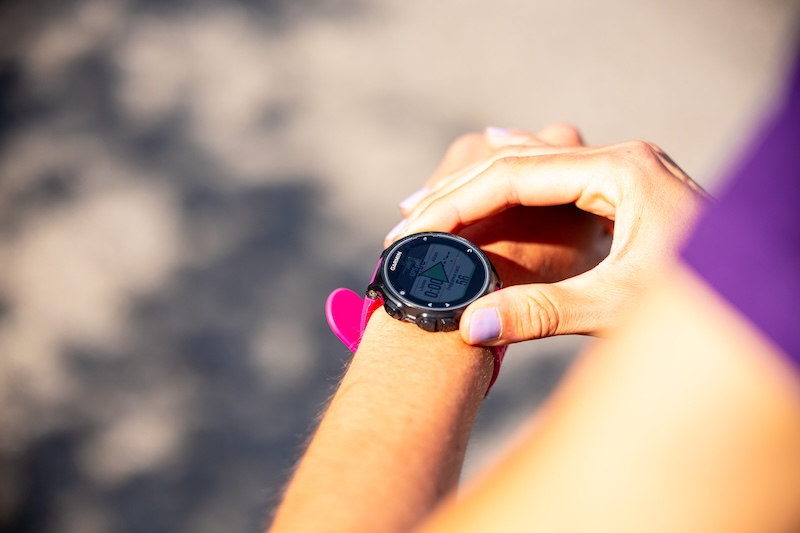
The start is exciting, there are runners all around you, the atmosphere is incredible, and before you know it, you are running much faster than planned. A watch lets you take a quick look at your pace and think: “Oops, I went out a little too hard, I’ll ease off slightly.”
That one simple adjustment can save you from suffering through the final miles.
Track your progress during training
Over the weeks, a watch automatically records your runs, including distance, duration, pace and sometimes heart rate. It is not about collecting statistics. Above all, it is a way to see that your training efforts are paying off.
The route that felt tough a month ago becomes easier, you can run a little longer without stopping, and your pace improves naturally. These small breakthroughs are often hugely motivating.
Get guidance during workouts
When you are following a training plan, a compatible GPS watch can also guide you through your workouts.
For example, if your plan includes pickups or pace changes, you do not need to count the minutes or check your phone. The watch simply tells you when to speed up and when to recover with a vibration and/or an audible alert.
With RunMotion Coach, workouts can be synced directly from your app to your GPS watch. You can then let the watch guide you through your training and focus on what really matters: running and enjoying the feeling.
Be careful not to become dependent on your watch
A watch is still only a tool, and especially when you are starting out, the risk is wanting to control everything. You check your pace every 10 seconds. You worry because you are five seconds slower per kilometre. You almost forget to enjoy your run.
To improve as a runner, it is also important to learn to listen to your body. Can you still talk while running? Is your breathing comfortable? Do you feel relaxed, or are you already tense? This information can sometimes be more useful than a number on a screen.
Running without a watch is training too
Doing some runs without a watch is an excellent habit. It helps you develop what coaches call perceived effort. Little by little, you learn to recognise an easy pace, a steady pace, or the pace you can hold throughout an entire race.
This feel for effort becomes invaluable on the day your GPS loses signal, or when you simply decide to run for pleasure. Many experienced runners alternate between both approaches: some workouts are guided by their watch, while others are done entirely by feel.
So, should you buy one before your first 10K?
If you already own a GPS watch, make the most of it. It can help you manage your pace better and track your progress.
If you do not have one, do not think it is essential. It is often better to invest time in consistent training than to search for the perfect piece of running gear.
And if you are unsure about getting one, there is nothing stopping you from waiting until after your first 10K. By then, you will have a much clearer idea of which features would actually be useful to you.
FAQ: GPS watches and your first 10K
Can I run my first 10K with my phone instead of a watch?
Yes, absolutely. Your phone can help you record your runs and track your progress. You can carry it in your hand, a running belt or an armband. The main advantage of a GPS watch is convenience: it is easier to check while running and can guide you through certain workouts without needing to look at it.
Will it actually help me run faster?
Not directly. A watch will never replace consistent training and solid preparation. However, it can help you manage your pace better, avoid starting too fast, and track your progress week after week.
Is a GPS watch useful for beginner runners?
Yes, if you use it as a helpful tool rather than a constraint. It can reassure you, help you understand your paces, and keep you motivated as you see your progress. But you can also improve perfectly well by running more by feel.
Do I need a GPS watch to follow a training plan?
No, it is not essential. You can follow a training plan with a phone or simply a stopwatch, but a compatible watch can make workouts easier by showing you the work and recovery intervals directly.
Which watch should a beginner runner choose?
You do not need to choose the most advanced model. To train for a first 10K, a comfortable watch with the essential features, such as distance, pace and workout tracking, will usually be enough. If you would like more data, you can choose a higher-end model with heart rate monitoring, an altimeter, music and more.