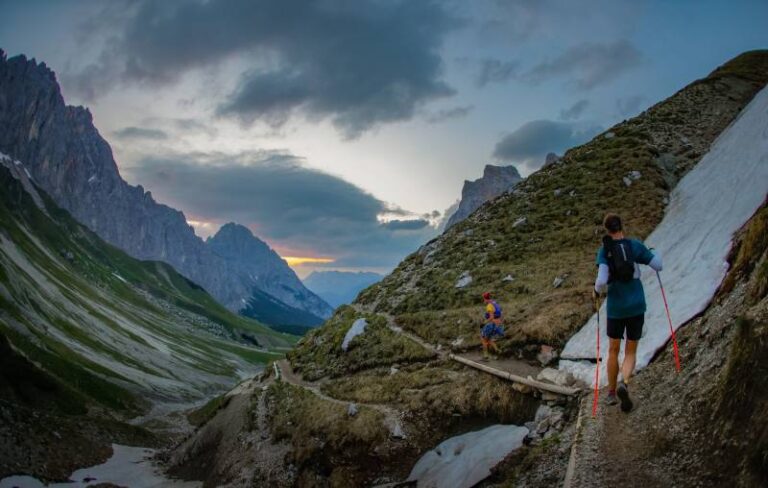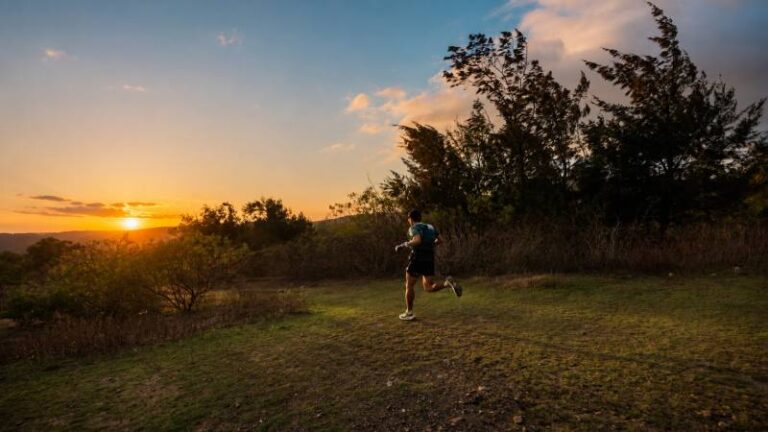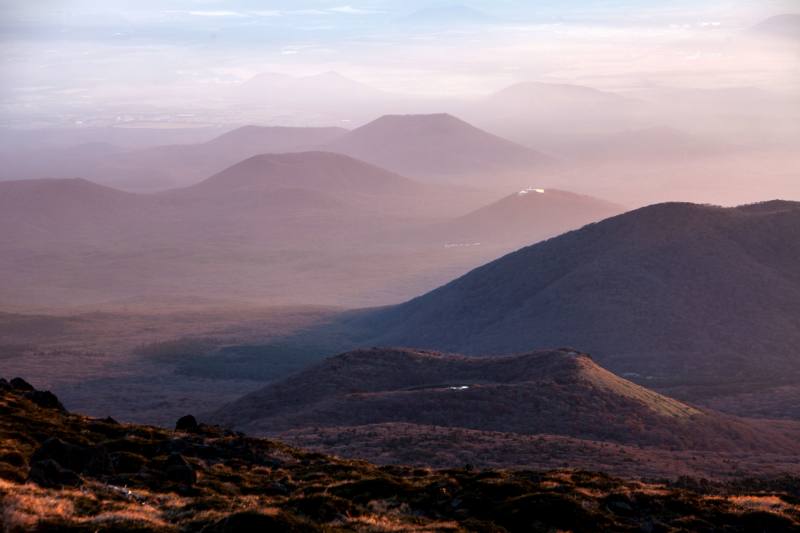
A TransJeju by UTMB training plan prepares you to cross the volcanic island of Jeju, South Korea, with the climb to the summit of Mt Halla, the country’s highest peak, as the highlight of the longest race. The event offers four races from 20 to 148 km in early autumn. Here are the official figures and how to train for TransJeju, whatever your distance.
The short answer
- Allow 8 to 10 weeks for Jeju20K, 12 to 14 for Jeju60K, 20 to 24 for Jeju100K and 6 to 8 months for Jeju100M if you have an ultra base.
- Indicative peak weeks: 50 to 70 km and 1200 to 2000 m of climbing for the 60K, 70 to 100 km and 2500 to 4000 m for the 100K and 100M.
- Key sessions: runnable long runs, long climbs, back-to-back days and night running for the 100M.
- The defining feature: moderate climbing per kilometre (about 34 m per km on the 100M), which rewards runners who can keep running for hours, not just climb.
Contents
TransJeju distances and elevation gain
TransJeju takes place in early October. Figures come from the official TransJeju website.
| Race | Distance | Elevation gain | Profile / notes |
|---|---|---|---|
| Jeju100M | 148 km | 5000 m | 100M category, 4 Running Stones; reaches the summit of Mt Halla, 37 h limit |
| Jeju100K | 104 km | 4000 m | 100K category, 3 Running Stones |
| Jeju60K | 60 km | 1400 m | 50K category, 2 Running Stones; Hallasan National Park, 15 h limit |
| Jeju20K | 20 km | 508 m | 20K category, 1 Running Stone |
The long race carries the circuit’s 100M label but measures 148 km, a little short of 100 miles, which doesn’t make it easy. The courses use trails in Hallasan National Park on this volcanic island, and Jeju100M climbs all the way to the summit of Mt Halla. The official site doesn’t detail altitude or terrain type, so study your race profile and GPX before planning sessions. In October, expect generally mild autumn conditions near the coast, cooler and windier higher up.
What makes TransJeju demanding
Compared with other races on the circuit, TransJeju is less vertical: around 23 m of gain per kilometre on the 60K and 38 m on the 100K. Much of the course is genuinely runnable, and that is where the difficulty lies. You need a runner’s endurance to hold a steady rhythm for hours, on top of climbing ability.
On Jeju100M, sheer length dominates. With a 37-hour limit you will spend at least one night out, and the climb to the island’s summit demands that you keep something in reserve for a long ascent in conditions that can change quickly. How you pace the first hours, often too fast on runnable ground, will shape everything after.
How long should you train?
Jeju20K: 8 to 10 weeks if you already run regularly. A good way to discover the circuit.
Jeju60K: 12 to 14 weeks, after a trail race of around 30 km. Low climbing doesn’t mean you can skip long runs: 60 km is still 60 km.
Jeju100K: 20 to 24 weeks, with at least one 50 to 60 km trail race finished.
Jeju100M: six to eight months of structured training, ideally after a 100K. Our 100-mile training plan guide explains the overall approach, to adapt to a slightly shorter, more runnable course.
The phases of your training plan
Base. For an early-October race, your base is built in spring. Gradually increase easy aerobic volume, keep one quality session a week (intervals or tempo) and two strength sessions. On TransJeju, a solid base on road or runnable paths is a real asset.
Specific. Summer becomes your specific phase: longer long runs on rolling terrain, long climbs to prepare for Mt Halla, and back-to-back weekends for the ultras. Use the summer heat to test your hydration, and keep a lighter week every three or four weeks. If you are stepping up in distance, read our guide on increasing trail distance safely.
Taper. Two weeks for the 20K and 60K, three for the 100K and 100M, with a few touches of race pace to keep your legs sharp.
Key workouts for TransJeju
Runnable long run at ultra effort. 2.5 to 5 hours on rolling terrain, running most of the time at an easy to moderate effort. It is the session that most resembles the course.
Long climbs. Once a week, 3 to 4 reps of 10 to 15 minutes uphill, mixing running and power hiking, to prepare for the big ascent.
Gentle-gradient tempo. 20 to 40 minutes at a strong, steady effort on a gradual incline: ideal for the runnable sections where you need to hold a good rhythm.
Back-to-back weekends. For the 100K and 100M, two long runs on consecutive days (for example 4 h then 3 h), with some night running for the 100M.
For a plan built around your level and adjusted every week to the sessions you complete, the RunMotion Coach app, the official online coach of the UTMB World Series, handles it all, strength and recovery included. Try it free for 7 days.
Build your race plan with Race Strategy
On a runnable course, the number one risk is starting too fast. Race Strategy by RunMotion calculates a kilometre-by-kilometre plan with pace adjusted for gradient, altitude and terrain, and estimates your split times at key points. Import the official GPX of your race to also get a section-by-section fuelling and hydration plan (carbs, water, sodium), adjusted to race-day weather.
Running Stones and the UTMB World Series
TransJeju awards 4 Running Stones for Jeju100M, 3 for Jeju100K, 2 for Jeju60K and 1 for Jeju20K. To build a season around the circuit, see our UTMB World Series training guide and, for the final goal, our advice to succeed at UTMB with a personalised plan.
FAQ
Are poles allowed at TransJeju?
Check the rules for your race. On a fairly runnable course they are mostly useful on the 100M for the Mt Halla climb, if you know how to use them.
Is Jeju100M really 100 miles?
No: the official site lists 148 km and 5000 m of gain, in the circuit’s 100M category. Train for it as a very long ultra with at least one night out.
What level do you need for Jeju60K?
A comfortable 30 km trail finish and long runs of 3 to 4 hours in your legs. The climbing is moderate, but the distance demands real endurance.
Final thoughts
TransJeju rewards endurance and pacing as much as climbing strength. Mountains, vertical gain and ultras are home ground for RunMotion: our founders, twin brothers Guillaume and Romain Adam, come from the Alps, and that experience shapes the app. Start your free trial.
Article updated by the RunMotion Coach team.
Sources
- transjeju.utmb.world (races, distances, elevation gain, Running Stones)
- Jeju100M official page
- Jeju60K official page