Pinpoint pain on a bone, in your shin or on top of your foot, that gets worse run after run until it bothers you even when walking: it could be a stress fracture. It heals well when caught early, but it means a proper break from running and a very gradual comeback. Here’s how to recognise it, how long it lasts and, above all, how to return to running without it coming back.
The short answer
- A stress fracture is bone damage caused by repeated impacts, when load increases faster than the bone can adapt.
- The typical sign: pain localised on the bone that you can point to with a finger, which gets worse with running and then with walking.
- Stop running and see a doctor: they will confirm the diagnosis, often with an MRI, as X-rays are often normal early on.
- Return to sport takes from about 6 to 8 weeks (tibia, fibula) to 3 or 4 months (femoral neck, navicular bone in the foot).
- You can start running again once the bone is no longer tender to the touch and walking is pain-free, alternating walking and running and increasing distance before speed.
Contents
- What is a stress fracture?
- The most commonly affected areas
- How do you recognise a stress fracture?
- Why stress fractures happen
- What to do if you suspect a stress fracture
- How long does a stress fracture take to heal?
- How to return to running after a stress fracture
- How to avoid it coming back
- FAQ: stress fractures and running
What is a stress fracture?
A stress fracture is damage to a bone caused by repeated stress rather than a single impact. With every stride, your bone picks up tiny microcracks that it normally repairs. When load increases too quickly, these microcracks build up faster than they can be repaired.
It’s a continuum: it starts as a simple bone stress reaction, which can progress to a stress fracture and then, if you keep pushing, to a complete fracture (Warden et al., 2014). That’s why it’s best to act at the first signs.
In runners, stress fractures account for 15 to 20% of all injuries (Wright et al., 2015). And they tend to recur: one more reason to treat the first one properly.
The most commonly affected areas
In runners, stress fractures mostly affect the lower limbs. Doctors distinguish “low-risk” sites, which heal well with simple activity modification, from “high-risk” sites, where healing is trickier and specific treatment may be needed (Hoenig et al., 2022).
- Low-risk sites: the inner side of the tibia, the fibula, most metatarsals (the long bones of the forefoot), the pelvis.
- High-risk sites: the femoral neck (pain in the groin or hip), the front of the tibia, the navicular bone (on top of the midfoot), the base of the 5th metatarsal (outer edge of the foot).
Groin pain that gets worse when running, or pain on top of the midfoot, should prompt you to see a doctor quickly: these are locations where you shouldn’t wait.
How do you recognise a stress fracture?
Symptoms usually build up gradually, over a few days or weeks:
- pain localised on the bone, which you can often point to with one finger;
- sharp pain when pressing on that exact spot;
- pain that comes on while running, then earlier and earlier in the run, then when walking;
- sometimes slight swelling, and pain that lingers at rest or at night as the injury progresses.
That’s what sets it apart from shin splints, where the pain is more diffuse, spread over several centimetres along the inner edge of the tibia, and often eases once you’re warmed up.
Diagnosis is based on your history and a doctor’s examination, then on imaging to confirm it (Hoenig et al., 2022). X-rays are often normal in the first few weeks: MRI is the reference test to spot an early stress fracture.
Why stress fractures happen
A stress fracture occurs when the load applied to the bone exceeds its ability to adapt. Two levers are involved: the load you put on the bone, and the bone’s ability to withstand it (Warden et al., 2014).
- Load that increases too quickly: a sudden jump in mileage, added fast sessions, preparing for a first marathon, a change of surface or shoes.
- A previous stress fracture: this is the most clearly established risk factor, with roughly a 5 times higher risk of another one (Wright et al., 2015).
- Being female: female runners have roughly a 2 times higher risk (Wright et al., 2015).
- Not enough energy: eating too little for what you burn weakens bone and increases the risk of stress fracture, in women and men alike (Mountjoy et al., 2023). This is known as RED-S.
- Muscles that don’t absorb shock well: tired or weak calf or foot muscles pass more stress on to the bone.
If you’ve had a stress fracture, especially more than once, talk to your doctor: a check of your food intake and bone health can be useful.
What to do if you suspect a stress fracture
- Stop running as soon as you have localised bone pain that is getting worse: carrying on risks turning a stress reaction into a complete fracture.
- See a doctor to confirm the diagnosis and find out whether the site is low or high risk.
- Adjust your daily activity so that walking is pain-free. If walking hurts, your doctor may suggest crutches or a walking boot for a few days or weeks.
- For high-risk sites, treatment can be stricter: no weight-bearing, immobilisation, or even surgery in some cases (Hoenig et al., 2022).
In the meantime, you can maintain your fitness with activities that don’t hurt and don’t load the injured bone: cycling, swimming, aqua jogging, upper-body and core strength work. Our article on managing a running injury gives you more ideas to stay active.
How long does a stress fracture take to heal?
It all depends on the location. A meta-analysis of nearly 3,000 stress fractures in athletes found these average return-to-sport times (Hoenig et al., 2023):
- inner side of the tibia: about 44 days;
- fibula: about 56 days;
- femoral neck: about 107 days;
- navicular bone in the foot: about 127 days.
The good news: more than 90% of athletes return to their sport. These times are averages: your doctor will adjust them to the severity of the injury and how your symptoms evolve.
How to return to running after a stress fracture
This is the most important step, and the one where many runners get injured again by rushing. A review of 50 studies on returning to running after a tibial stress fracture suggests checking five points before you start running again (George et al., 2024):
- the bone is no longer tender when you press on it;
- walking is completely pain-free, including for long periods;
- for high-risk sites, imaging shows the bone has healed;
- you can pass strength and loading tests without pain, for example single-leg hops, cleared with your physio or doctor;
- the causes of the injury have been identified: progressing too fast, not enough energy, shoes, technique.

A gradual return, step by step
The same review recommends an individualised return, often starting with walk-run intervals and increasing distance before speed and intensity (George et al., 2024). Here’s an example progression, to adapt with your doctor or physio:
- Brisk walking: 30 to 45 minutes with no pain at all, several days in a row.
- Walk-run intervals: for example 1 minute running and 1 minute walking, repeated 10 times, every other day, on flat, soft ground.
- Lengthen the running sections: 2 minutes running for 1 minute walking, then 3 for 1, then 5 for 1, only moving on to the next step if everything goes well.
- Continuous running: 20 to 30 minutes at an easy pace, still every other day at first.
- Increase duration and frequency before bringing back fast sessions, hills and descents, last of all.
The golden rule: no bone pain during the run or the next day. With a stress fracture, you need to be stricter than with a tendon problem: if the bone pain comes back, go back to the previous step for a few days, and see your doctor if it persists.
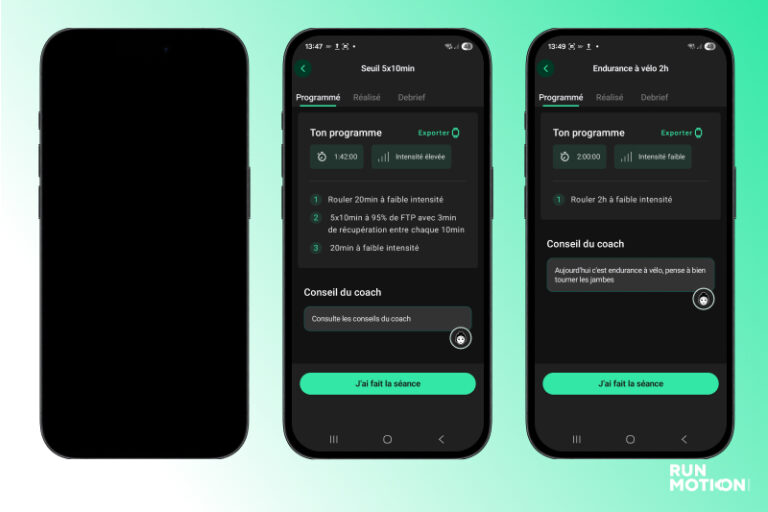
Our return-to-running programs help you structure this progression. And if you want a plan that increases your load step by step and adapts to how you feel, you can try RunMotion Coach free for 7 days.
How to avoid it coming back
- Increase your load gradually, in both volume and intensity: managing your training load is the first line of prevention.
- Strengthen the muscles that absorb shock: your calves to protect the tibia, your foot muscles for the metatarsals (Warden et al., 2014). Our strength and conditioning workouts for runners give you useful exercises.
- Run a little “lighter”: a slightly higher cadence reduces the impact of each stride (Warden et al., 2014).
- Eat enough to cover what you burn, especially during high-volume periods.
- Change shoes or surfaces gradually, and remember to replace your running shoes when they’re worn out.
To go further, check out all our tips to prevent running injuries.
FAQ: stress fractures and running
Can you run with a stress fracture?
No. Running on a stress fracture risks making the injury worse, up to a complete fracture. Stop running as soon as you have localised bone pain that is getting worse, and see a doctor.
When can you run again after a stress fracture?
When the bone is no longer tender to the touch, walking is pain-free and your doctor has given the go-ahead. The average time ranges from about 6 weeks for the inner side of the tibia to 3 or 4 months for the femoral neck or navicular bone.
How can you tell a stress fracture from shin splints?
A stress fracture causes pain on one precise spot of the bone, which gets worse with effort and can persist at rest. Shin splints cause more diffuse pain along the tibia, which often eases once you’re warmed up. Only a doctor can tell for sure, often with an MRI.
Does a stress fracture show up on an X-ray?
Not always. X-rays are often normal in the first few weeks. MRI is the reference test to detect an early stress fracture.
A stress fracture is a sign that your bone has taken more load than it could handle. Stop at the first signs, get the diagnosis confirmed, then come back step by step, increasing distance before speed. To return with a plan that manages your load and includes strength work, try RunMotion Coach free for 7 days.
This advice is not a substitute for the opinion of a healthcare professional: if in doubt, get checked out.
Sources: Warden et al., J Orthop Sports Phys Ther, 2014 · Wright et al., Br J Sports Med, 2015 · Hoenig et al., Nat Rev Dis Primers, 2022 · Mountjoy et al., Br J Sports Med, 2023 · Hoenig et al., Br J Sports Med, 2023 · George et al., Sports Med, 2024.