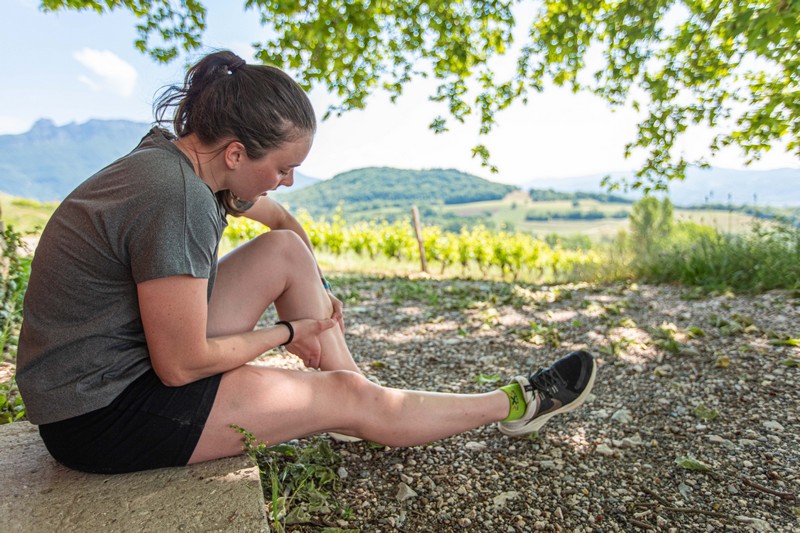
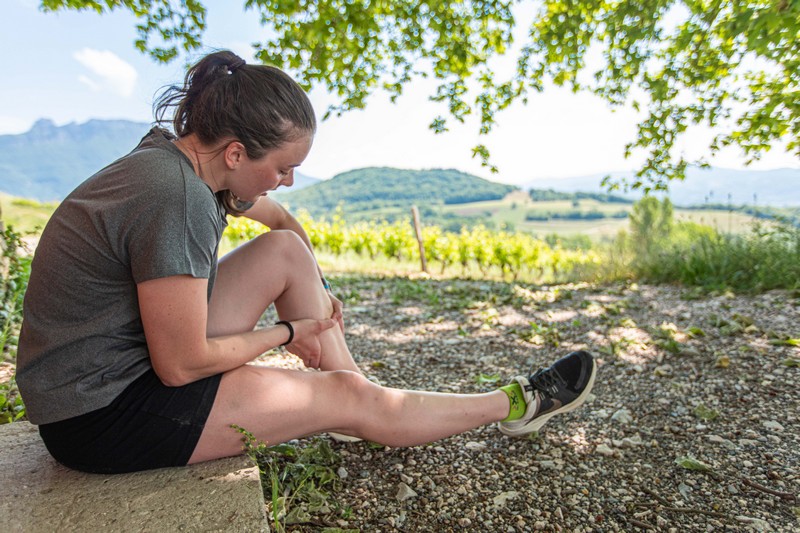
Shin splints, also known as medial tibial stress syndrome, is an inflammation of the periosteum, the thin membrane that covers the tibia. It is a painful condition and one of the most common running injuries. It often hits road runners, especially after a recent jump in weekly mileage or training load. The pain is usually diffuse and spreads along the inside edge of the shin (the inner length of the tibia).
Contents
How do I know if I have shin splints?
This is not an injury to shrug off because it is a clear sign of lower-leg overload. It typically shows up when the stress placed on the tibia and the surrounding muscles becomes too abrupt or too repetitive.
Most of the time, the inflammation appears the evening of a workout or the day after. If you don’t address it, you may start to feel it even when walking or going up stairs. Shin splints are usually easy to recognize, symptoms tend to flare when you press on the irritated area.
Shin splints: the causes
For runners, this type of injury is very common. It can happen for several reasons. You might develop shin splints because you increased your training load. Your calves, tibialis muscles, and other lower-leg structures then take a beating until your body adapts to the new frequency and volume.
Your running shoes can also be part of the problem. Contrary to popular belief, shoes don’t absorb every impact. However, worn-out or damaged shoes can strongly increase the risk of shin splints and other inflammatory pain.
Switching from soft ground to hard surfaces is another classic trigger. On softer terrain (grass, dirt trails, park paths, track infield), impact is lower. Running on asphalt is more stressful for your muscles, tendons, and joints.
Autumn and winter are often peak seasons for shin splints. It’s usually the time of year when you end up running more frequently on a track or other hard surfaces.
If the pain is extremely intense and you notice swelling or edema, book an appointment with a sports doctor or physical therapist. It could be a stress fracture, and you’ll need a proper clinical assessment.
How to treat shin splints
There are several ways to treat or relieve shin splints. It’s very individual, some options may work well for you while others may not change your pain much.
The first step is to ease off and reduce your running. An inflamed area calms down when you unload it as much as possible. That doesn’t mean you have to stop training completely. Swimming or cycling are great cross-training options that can temporarily replace running while you maintain endurance and fitness.
Sessions with a physical therapist can help relieve stress on the periosteum and relax the surrounding muscles, which reduces the inflamed area. Some physios use shockwave therapy for inflammation, although not all clinics offer it. Others may apply kinesiology tape (those colorful elastic strips).
You can ice the painful area to reduce inflammation or for short-term relief. Don’t hesitate to do it several times a day in 20-minute sessions.
Use the back of a spoon and arnica oil on the lower part of your tibia. With the back of the spoon, massage upward along the shin to help the oil penetrate. It can be quite painful.
At night, you can apply green clay along the length of the tibia. Green clay is known for its anti-inflammatory properties.
Preventing shin splints for runners
Once your shin splints have settled, you can return to running gradually. This progressive approach is essential because inflammation can come back fast if you rush it. For a while, avoid intense hill sessions and hard speed workouts. Focus on easy runs (not too long) and keep alternating running with cycling or swimming.
Try to run on softer surfaces. Grass and dirt trails are ideal for getting back into running safely.
When you get back from training, you can do self-massage to improve recovery and relax tight muscles.
Check that your shoes aren’t too worn. Sometimes it’s better to invest in a new pair than to end up at the physio 30 times. If you have the chance, get a gait analysis and identify your running gait and pronation type. The way your foot lands can directly affect how much stress your lower-leg muscles have to handle.
Most importantly, listen to your body. Backing off for a few days is often the smartest move to avoid a bigger injury that takes much longer to heal. That’s true for shin splints and for many other overuse injuries.
It’s essential that your training plan accounts for how your training load evolves over time. If you want a tailored training program, you can download RunMotion Coach.