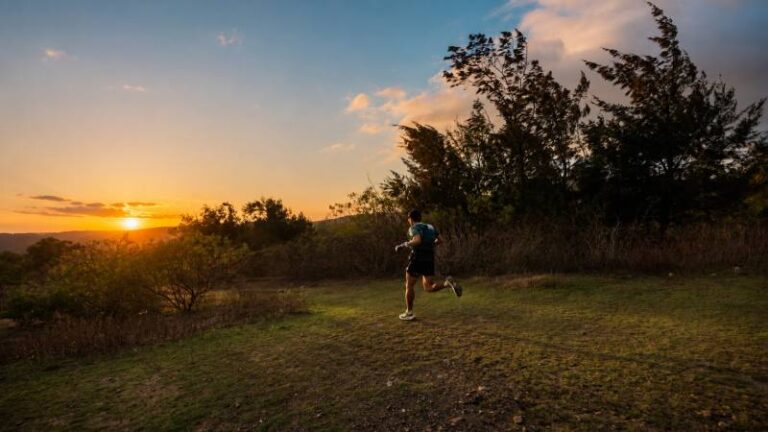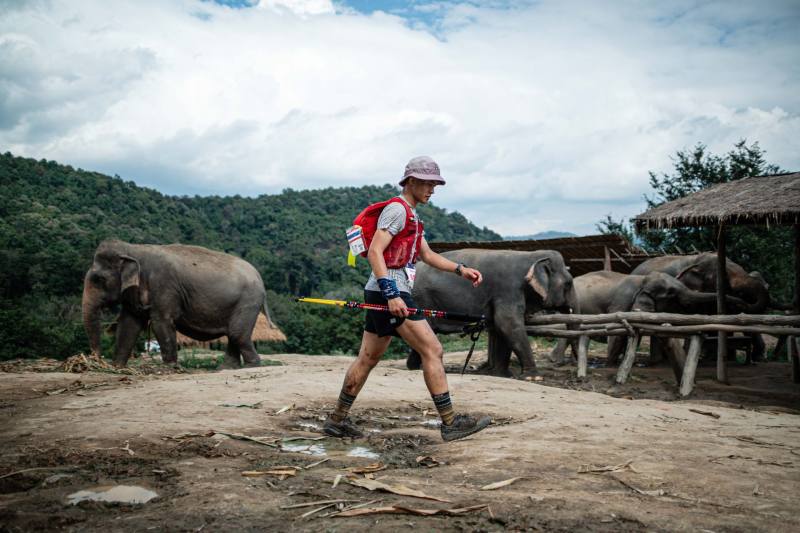
A solid HOKA Chiang Mai Thailand by UTMB training plan starts with one fact: this is the Asia-Pacific Major of the UTMB World Series, with races from 5 to 173 km through the national parks of northern Thailand, steep jungle climbs and several night formats. This page covers every official distance and explains how to train for Chiang Mai, from the 20K to the 100-mile race.
The short answer
- Plan around 10 weeks of specific training for a 20K, 14 to 16 for a 50K, 20 to 24 for ELEPHANT 100 and 6 to 9 months for CHIANG DAO 160 if you already have an ultra base.
- Indicative peak weeks: 40 to 60 km and 1500 to 2500 m of climbing for a 50K, 70 to 100 km and 3000 to 5000 m for the 100K and 100-mile races.
- Key sessions: long uphill intervals, power hiking, technical descents, back-to-back long runs and heat training.
- The defining feature: very dense climbing (up to 9800 m over 173 km) on jungle trails, in hot and humid daytime conditions.
Contents
Chiang Mai Thailand by UTMB distances and elevation gain
The event runs over two weekends, from late November into early December. Several courses come in a day and a night version: same route, very different race management. All figures come from the official race website.
| Race | Distance | Elevation gain | Profile / notes |
|---|---|---|---|
| CHIANG DAO 160 | 173 km | 9800 m | 100M category, 8 Running Stones; starts at Wat Tham Chiang Dao, 48 h time limit |
| ELEPHANT 100 | 100 km | 5500 m | 100K category, 6 Running Stones; point-to-point to Chiang Mai PAO Park, 28 h limit |
| HMONG 50 (DAY / NIGHT) | 63 km | 3000 m | 50K category, 4 Running Stones; day and night versions |
| PAGODA 50 (DAY / NIGHT) | 57 km | 3600 m | 50K category, 4 Running Stones; the steepest of the 50Ks |
| SUTHEP 20 (DAY / NIGHT) | 26 km | 1100 m | 20K category, 2 Running Stones; Doi Suthep-Pui area |
| INTHANON 20 | 20 km | 800 m | 20K category, 2 Running Stones |
| CHEDI 20 | 17 km | 700 m | 20K category, 2 Running Stones |
| WARM UP RUN – INTHANON | 5 km | 240 m | Fun run, no category |
| WARM UP RUN – PAO PARK | 3 km | 100 m | Fun run, no category |
The courses cross Doi Inthanon National Park (home to Thailand’s highest peak), Doi Suthep-Pui and Ob Khan, with the main finish at Chiang Mai PAO Park. CHIANG DAO 160 climbs towards San Pa Kia and Doi Pha Sam Liam, while ELEPHANT 100 links temples, the Hmong village of Ban Doi Pui, Doi Mon Jam and Mae Sa Elephant Camp. Late November and early December usually fall in northern Thailand’s cooler dry season, but days stay warm and humid under the forest canopy, and nights can feel cool higher up.
What makes Chiang Mai so demanding
Climbing density comes first. PAGODA 50 packs more than 60 m of gain per kilometre, and CHIANG DAO 160 more than 55 m per kilometre over 173 km. That is an alpine-style ratio, but delivered through short, repeated climbs in thick vegetation. Expect to spend a lot of time power hiking, and build that skill on purpose.
Then there is the terrain: jungle singletrack, roots, steps and dirt that can turn slick. Descents demand strong quads and confident footwork, especially at night under a headlamp. Finally, daytime humidity drives up heart rate, sweat rate and sodium losses, so your fluid plan matters as much as your fitness.
How long should you train?
These are guidelines for runners who already train regularly. Add time if you are starting from a lower base.
Short races (CHEDI 20, INTHANON 20, SUTHEP 20): 8 to 12 weeks if you run three times a week and have some trail experience. SUTHEP 20 needs noticeably more climbing work than CHEDI 20.
50K races (PAGODA 50, HMONG 50): 14 to 16 weeks, ideally after finishing a 30 to 40 km trail race. PAGODA is shorter but steeper, so bias your training towards climbing.
ELEPHANT 100: 20 to 24 weeks, with one or more 50K finishes behind you.
CHIANG DAO 160: six to nine months of structured training, ideally after a 100K finish. With a 48-hour cut-off, you may spend one or two nights on course. Our 100-mile training plan guide explains the overall structure.
The phases of your training plan
Base. Build easy aerobic volume gradually, with one quality session a week (short intervals or short hills) and two strength sessions. This is the time to add core work and eccentric quad exercises for the downhills. If you are stepping up in distance, our guide on increasing trail distance safely will help.
Specific. Over eight to twelve weeks depending on your race, raise weekly climbing, extend long runs and move them onto hilly, technical terrain. Long runs become dress rehearsals: same pack, same fuel, same headlamp if you are racing at night. Alternate loading weeks with lighter ones.
Taper. Two weeks of reduced volume for a 50K, three for the 100K and 100-mile races, keeping a little intensity. If you live in a cooler climate, arrive a few days early to adapt to the heat without tiring yourself.
Key workouts for Chiang Mai
Long threshold hills. Repeats of 6 to 10 minutes uphill at a hard but controlled effort (threshold is roughly what you could sustain for an hour). They teach you to climb fast without redlining.
Power hiking. Mix running and brisk walking on steep grades, with or without poles depending on the rules and your habits. On this course, efficient hiking saves hours.
Technical descents. Once a week, include downhills on uneven ground and stay relaxed. Add the occasional evening run to practise descending by headlamp, especially for the night versions.
Back-to-back weekends. For ELEPHANT 100 and CHIANG DAO 160, stack two long runs on consecutive days (for example 4 h then 3 h with climbing) to learn to run on tired legs.
Heat training. In the final weeks, a few easy sessions in warmer conditions or with extra layers can help your body cope with heat. Progress carefully and stay hydrated.
Want all of this built around your level and schedule? The RunMotion Coach app, the official online coach of the UTMB World Series, creates a personalised trail or ultra plan and adapts it every week based on the sessions you complete, including strength and recovery. Try it free for 7 days.
Build your race plan with Race Strategy
On a course this broken, flat pace targets mean little. Race Strategy by RunMotion calculates a kilometre-by-kilometre plan with pace adjusted for gradient, altitude and terrain technicality, and estimates your split times at key points. Import the official GPX of your race and you also get a section-by-section fuelling and hydration plan (carbs, water, sodium), adjusted to race-day weather.
Running Stones and the UTMB World Series
As a Major, Chiang Mai awards more Running Stones than most events: 8 for CHIANG DAO 160, 6 for ELEPHANT 100, 4 for the 50Ks and 2 for the 20Ks. To plan a full season around the circuit, read our UTMB World Series training guide, and if Chamonix is the end goal, see how to prepare for UTMB with a personalised plan.
FAQ
Are poles allowed at Chiang Mai?
Check the official mandatory gear list for your race. On a course this steep, poles often help on the longer formats, provided you have trained with them.
What level do you need for CHIANG DAO 160?
Real ultra experience: at least one 100K finished in good shape, comfort running through the night and a tested fuelling strategy.
How many kilometres a week for ELEPHANT 100?
Many amateur runners peak between 70 and 90 km with 3000 to 4500 m of climbing, but your history and available time matter more than any single number. Consistency over months beats one record week.
Day or night version of the 50K?
Same route. The night version avoids the midday heat but requires a reliable headlamp, technical confidence in the dark and a fuelling plan adapted to the shifted rhythm.
Final thoughts
Chiang Mai rewards runners who can climb for hours, descend without breaking down and manage heat. Mountains, vertical gain and ultra distances are home ground for RunMotion: founders Guillaume and Romain Adam are twin brothers from the Alps, and that culture shapes the app. Start your 7-day free trial.
Article updated by the RunMotion Coach team.
Sources
- chiangmai.utmb.world (races, distances, elevation gain, Running Stones)
- CHIANG DAO 160 official page
- ELEPHANT 100 official page
- UTMB World Series Majors