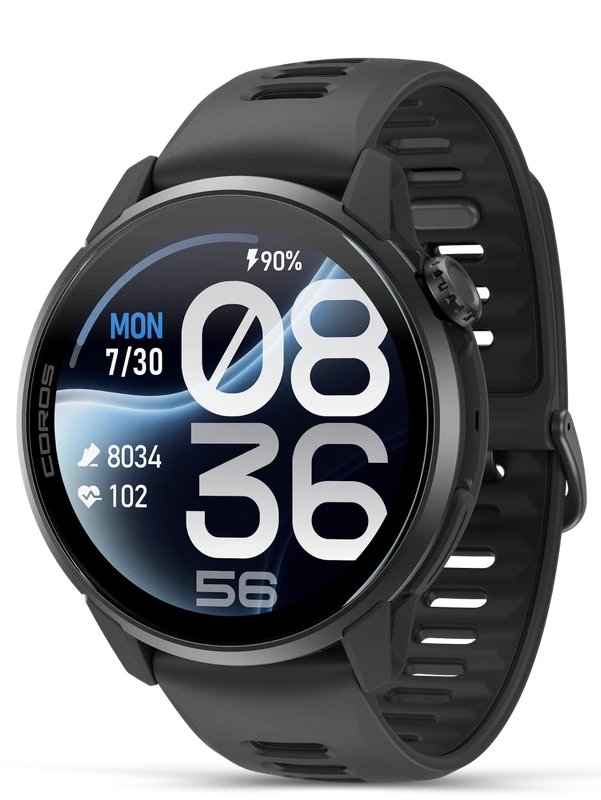
You’ve picked COROS for its battery life and value, but the lineup has five watches from $249 to $699. The best COROS watch for running depends on how you run: on the road, the Pace 4 is all most runners need; on the trails, the Apex 4 takes over; for ultras and long self-supported days, the Vertix 2S is still the benchmark.
The short answer
- You’re new to running or on a tight budget: COROS Pace 4 ($249 / £229).
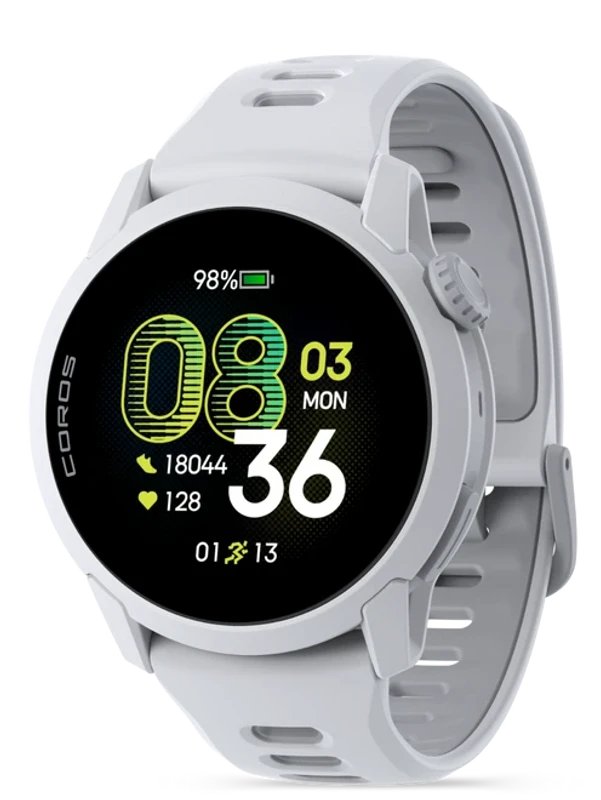
- You run on the road and want a big screen and premium materials: COROS Pace 4 Pro ($449 / £389).
- You mostly run trails in the mountains: COROS Apex 4 (from $429 / £389).
- You want full maps at a fair price: COROS Nomad ($349 / £319).
- You’re training for ultras or multi-day races: COROS Vertix 2S ($699 / £599).
Contents
The COROS lineup at a glance
| Model | Price | Display | Claimed GPS battery life | Weight (nylon band) | Best for |
|---|---|---|---|---|---|
| Pace 4 | $249 / £229 | AMOLED 1.2″ | 41 h (all systems) | 32 g | Road running, beginners, triathlon |
| Pace 4 Pro | $449 / £389 | AMOLED 1.47″ | 60 h (Accuracy mode) / 40 h (Max mode) | 43 g | Road running, demanding runners |
| Nomad | $349 / £319 | MIP 1.3″ | 50 h (all systems) / 34 h (dual-frequency) | 49 g | Trail, hiking, outdoors |
| Apex 4 | $429 / £389 (42 mm), $479 / £429 (46 mm) | MIP 1.2″ / 1.3″ | 41 h / 65 h (all systems) | 44 g / 51 g | Trail, mountains |
| Vertix 2S | $699 / £599 | Sapphire 1.4″ | 118 h (full GPS) | not listed | Ultra-trail, expeditions |
Prices and specs taken from the official COROS website on November 9, 2026.
The 5 criteria that really matter
Every current COROS watch tracks your heart rate at the wrist, displays structured workouts and offers maps. What sets the models apart comes down to five things.
Battery life: give yourself a margin
Claimed battery life is measured in ideal conditions. On race day, cold weather, map navigation, an always-on display or a connected sensor all drain it faster. Aim for battery life well above the length of your longest race, in the GPS mode you’ll actually use. For a 4-hour marathon, any COROS will do. For a 100 km ultra lasting 15 to 20 hours, a 46 mm Apex 4 or a Vertix 2S gives you peace of mind.
Display: AMOLED or MIP
The Pace 4 and Pace 4 Pro have an AMOLED display: bright colors, very readable, pleasant to wear every day. The Apex 4 and Nomad keep a MIP (transflective) display: less flashy, but always on and easy to read in direct sunlight. In the mountains, on very long outings, many trail runners prefer it.
Dual-frequency GPS
Dual-frequency GPS picks up two signals per satellite and improves accuracy where the signal bounces around: between tall buildings, in dense forest or at the bottom of a valley. It uses more battery, which is why you should check battery life in that mode rather than the headline figure.
Maps and navigation
To follow a trail race route, a GPX track is often enough: you can upload a GPX file to your watch before the race. Offline maps become useful when you explore on your own or need a bail-out route. The Pace 4 offers landscape and topographic maps; the Pace 4 Pro, Apex 4 and Nomad also show street and trail names.
Weight and wrist size
A 32 g watch disappears on your wrist; one over 50 g is more noticeable during intervals. If you have a slim wrist, the Pace 4 or the 42 mm Apex 4 will be more comfortable than the bulkier outdoor models.
Which COROS watch for your running profile
New to running or on a tight budget: COROS Pace 4
The COROS Pace 4 is the entry point to the lineup and covers the essentials: a 1.2-inch AMOLED display, 32 g with the nylon band, 11.8 mm thick, 41 hours of GPS and 19 days of daily use. It has a built-in microphone for voice notes and offline maps. Its featherweight build also makes it a good pick for triathletes.
If you’re still weighing up several brands, our guide to choosing a GPS running watch for beginners compares the options.
You run regularly on the road: Pace 4 or Pace 4 Pro?
This is the real dilemma for marathon runners. The COROS Pace 4 Pro adds a large 1.47-inch AMOLED display (466 × 466 pixels, up to 3,500 nits), sapphire glass, a titanium bezel, a speaker and 32 GB of storage for detailed maps. It claims 60 hours in GPS Accuracy mode and 40 hours in GPS Max mode, for 43 g.
Put simply, the Pace 4 Pro won’t make you run faster. It’s easier to read mid-effort, tougher, and the speaker reads your pace alerts out loud. If readability matters to you, or you want one watch for both running and everyday life, it’s worth the extra $200. Otherwise, the Pace 4 is more than enough.
You mostly run trails: COROS Apex 4 or Nomad
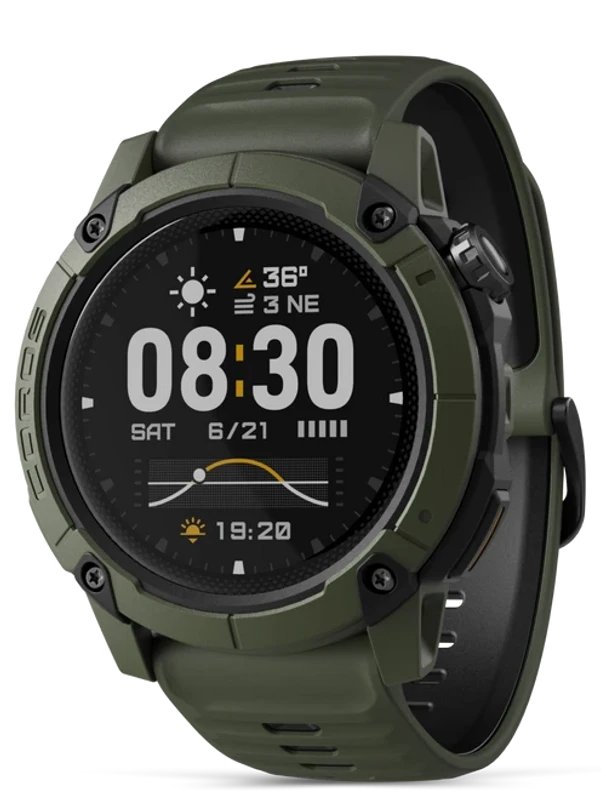
The COROS Apex 4 is built for the mountains: grade 5 titanium bezel, sapphire glass, a MIP display that’s readable in the sun, dual-frequency GPS with vertical algorithms, a speaker and a microphone. It comes in 42 mm (41 hours of all-systems GPS, 44 g) and 46 mm (65 hours, 51 g). The larger model mainly adds battery life, which matters as soon as your runs last more than a few hours.
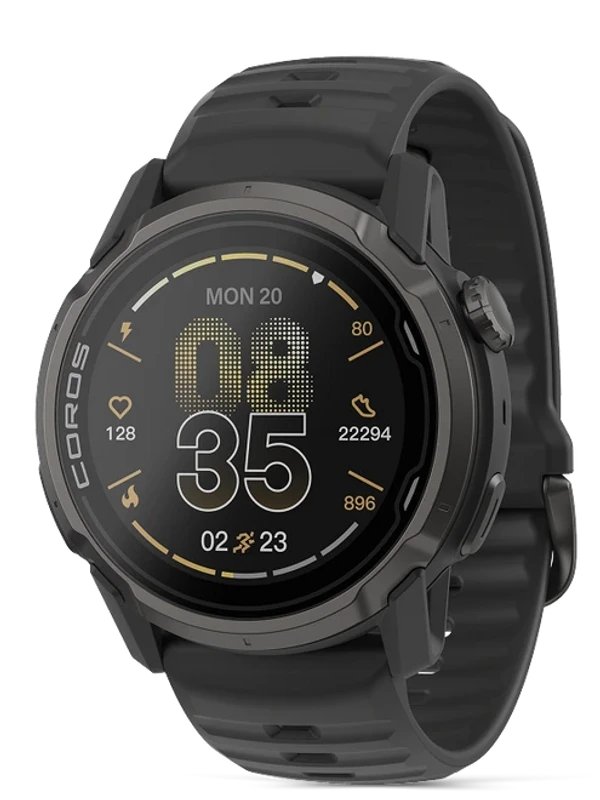
The COROS Nomad, at $349 / £319, targets hiking and the outdoors in general: 50 hours of all-systems GPS, 34 hours in dual-frequency, 22 days of daily use and global maps with street names. Its hardened mineral glass and polymer bezel make it less premium than the Apex 4, but it’s a good compromise if you run in nature without needing high-end materials.
Want a plan that syncs with your watch? RunMotion Coach builds your plan around your level and your goal, then sends your workouts to your COROS. Try the app free for 7 days.
You’re training for an ultra: COROS Vertix 2S
The COROS Vertix 2S is the COROS for very long distances: 118 hours in full GPS mode, 36 days of daily use, a titanium bezel, sapphire glass and 10 ATM water resistance. It works from -30 °C to 50 °C (-22 °F to 122 °F). It’s made for runners who race through the night or head out for several days on their own.
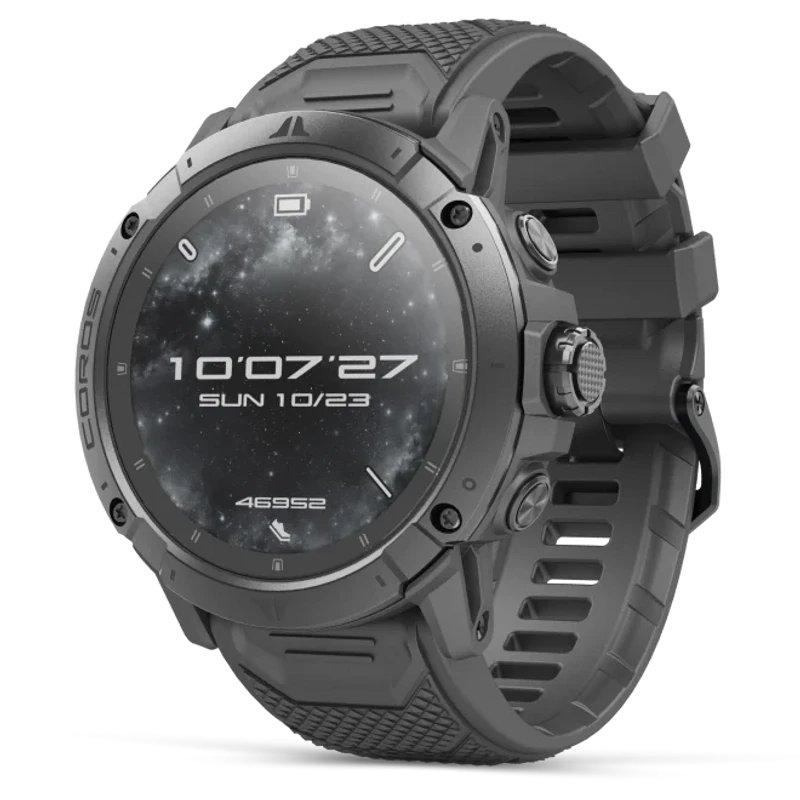
The downside: at $699 / £599 it’s the most expensive watch in the lineup, and the bulkiest. If you run one or two ultras a year and shorter races the rest of the time, the 46 mm Apex 4 is often the better choice. For the training itself, our 100 km trail running training guide covers the key points.
The COROS armband heart rate monitor: an alternative to the chest strap
Wrist-based heart rate is fine for easy runs and long runs. It becomes less reliable when your heart rate changes quickly or your wrist moves a lot, during intervals or on technical descents. The classic fix is a chest strap, but many runners find it uncomfortable or prone to chafing over long distances.
The COROS Heart Rate Monitor is worn as an armband on your upper arm. COROS explains that the arm gives the optical sensor better blood flow than the wrist, and presents it as easier to wear than a chest strap. The fabric band is easy to wash, the sensor lasts 38 hours in use and 80 days on standby, and it connects via Bluetooth to three devices at once, including watches from other brands. It costs $89 / £79.
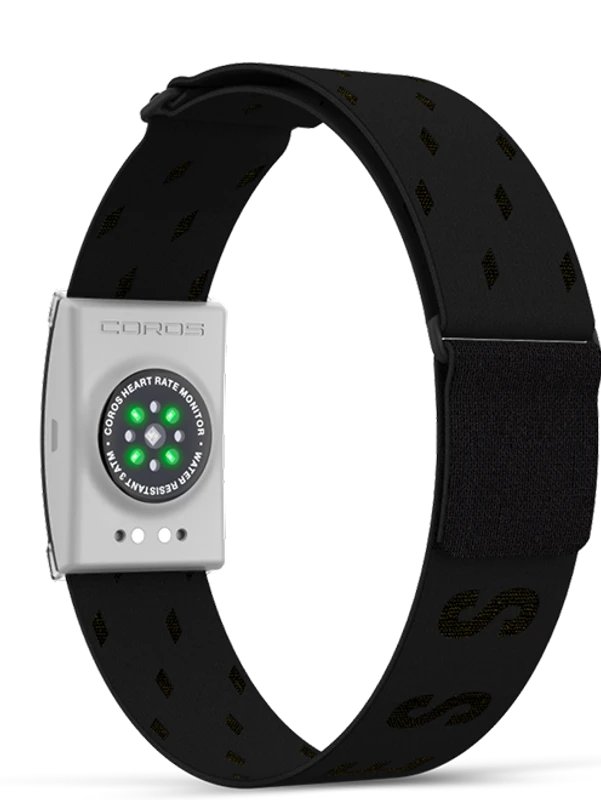
For trail and ultra runners, it’s a solid alternative: no chafing on the chest, and enough battery for a 100 km race.
What about older models on sale?
COROS still sells some previous models at reduced prices on its website: the Pace Pro at $299 / £299 and the Apex 2 / Apex 2 Pro from $279 / £259. These deals can be worth it on a tight budget, but compare them with the Pace 4 at $249 / £229 before you decide.
Mistakes to avoid
The first mistake is buying for your dream race rather than your everyday running. A Vertix 2S for three 45-minute runs a week is a lot of watch on your wrist for nothing. The second is thinking the watch makes you improve: it measures, it doesn’t plan. What makes you progress is gradual training at paces suited to your level. To get the most out of your purchase, also take the time to learn how to make the most of your running watch.
FAQ: choosing a COROS watch for running
What is the best COROS watch for running?
For most road runners, the Pace 4 offers the best value. The Pace 4 Pro is easier to read and more premium, without changing the essentials for training.
COROS Pace 4 or Apex 4 for trail running?
The Pace 4 suits short and medium trail races and runners who also hit the road. The Apex 4 becomes more appealing as soon as you spend long hours in the mountains.
| COROS Pace 4 | COROS Apex 4 | |
|---|---|---|
| Price | $249 / £229 | $429 / £389 (42 mm), $479 / £429 (46 mm) |
| Display | AMOLED 1.2″ | MIP 1.2″ / 1.3″, readable in sunlight |
| All-systems GPS battery life | 41 h | 41 h (42 mm) / 65 h (46 mm) |
| Weight (nylon band) | 32 g | 44 g / 51 g |
| Materials | Polymer bezel | Grade 5 titanium bezel, sapphire glass |
| Maps | Landscape and topographic | Topographic, street and trail names, turn-by-turn navigation |
| GPS | Multi-system | Dual-frequency with vertical algorithms |
| Audio | Microphone | Microphone and speaker |
| Best for | Short trails, road and trail | Long trails, mountains, ultras |
Do I need a chest strap with a COROS watch?
Not necessarily. The wrist sensor is enough for easy runs. For more stable readings during intervals, the COROS armband monitor is a more comfortable alternative to a chest strap.
Does my COROS work with RunMotion Coach?
Yes. You can send the workouts from your plan to your COROS watch; the steps are explained in our help center.
Summary
Choose your COROS based on how you actually run: the Pace 4 for road running and getting started, the Pace 4 Pro for a bigger screen and more durability, the Apex 4 for trails, the Vertix 2S for ultras. Once the watch is on your wrist, it still needs a plan to follow. Try RunMotion Coach free for 7 days and get your workouts straight on your COROS.
Article updated on November 9, 2026.