A Western States training plan has to prepare you for something unusual: 100.2 miles (161 km) from Olympic Valley to Auburn, California, with far more descent than climbing and temperature swings that can span the whole thermometer in a single day. Getting in is hard, finishing inside 30 hours is harder. This page breaks down the course, how long to train, and the sessions that actually move the needle.
The short answer
- Plan 6 to 12 months of focused training, built on several 50- to 100-km ultras (you already need an official qualifier to enter the lottery).
- During the specific block, 8 to 15 hours a week is a common range depending on your level; prioritise time on feet and downhill running over raw vertical.
- Key sessions: long runs with sustained runnable descents, back-to-back weekends, eccentric quad strength and heat acclimation.
- The defining challenge: canyon heat combined with roughly 7,000 m (23,000 ft) of descent.
Contents
Western States distance and elevation
Unlike the multi-race “by UTMB” festivals, Western States is a single race held on the last full weekend of June. Figures below come from the official course description.
| Race | Distance | Elevation gain | Profile / notes |
|---|---|---|---|
| Western States 100-Mile Endurance Run | 161 km (100.2 mi) | about 5,500 m (18,090 ft); about 7,000 m (22,970 ft) of descent | Point to point, Olympic Valley to Auburn; start at 1,890 m (6,200 ft), high point 2,667 m (8,750 ft) at Emigrant Pass; 30-hour limit; 4 Running Stones |
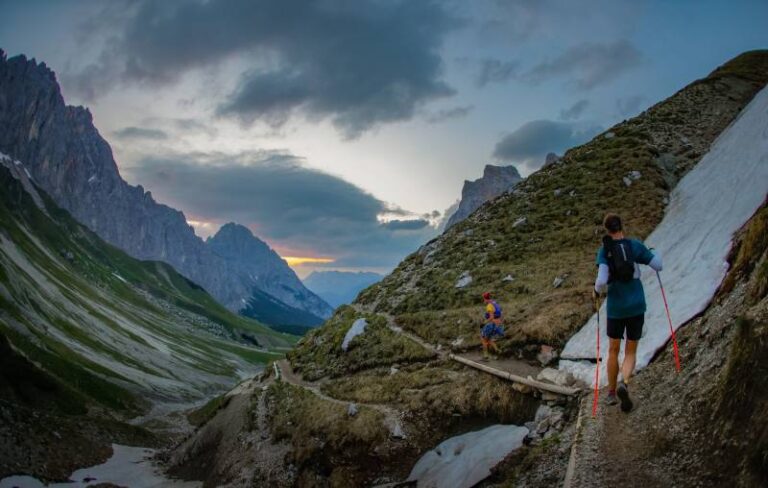
The race starts at 5 a.m. with a 2,550 ft (777 m) climb in the first 4.5 miles to Emigrant Pass. From there it crosses the Sierra high country, drops through a series of deep canyons, and fords the American River at mile 78 (Rucky Chucky) on a guide rope, or by raft in high-water years. The organisers warn that temperatures can range from 20°F to above 110°F, and nearly half the trail is run in the dark. Full details are on wser.org.
What makes Western States so tough
On paper, 18,000 ft of gain over 100 miles looks gentle compared with an alpine 100-miler. That is the trap. The course is runnable, so you run a lot, and much of it downhill. Nearly 23,000 ft of descent means thousands of eccentric quad contractions, and the bill usually arrives after Foresthill (mile 62), exactly where the trail invites you to keep running.
Heat is the second variable. The canyons can be brutally hot while the high country may still hold snow (the route is altered when snow conditions require it). Add strict cutoffs at every aid station, dry stretches of more than 8 miles, and you can see why early pacing discipline matters more than raw fitness.
Entry is the first hurdle. The field is capped at 369 runners by the US Forest Service permit, and most spots go through a lottery where your tickets double with each unsuccessful application (2^(n-1)). You also need to finish a race from the official qualifier list within its time limit. In practice, your build-up starts a year or more before race day.
How long should you train for Western States?
If you have finished one or more 100-milers, a 5- to 6-month specific block on top of solid year-round running is a reasonable benchmark. If your qualifier was your first 100 km, think 9 to 12 months, and extend your long runs gradually. Our guide to increasing distance safely explains how. The lottery is drawn in winter and the race is in late June, so you get roughly six months once you know you are in. These are guidelines, not guarantees: your history, injuries and available time all matter.
The phases of your training plan
Base: build the engine and the legs
Over winter, grow your easy aerobic volume, keep one quality session a week (short intervals or hill repeats) and add two strength sessions. Squats, lunges, step-downs and slow eccentric work are not optional here: they are what protects your quads on the long descents.
Specific: run long, descend a lot
In the 10 to 12 weeks before your taper, long runs become the priority, on routes mixing hiked climbs and long runnable descents. Every other weekend, stack a back-to-back. Test your race nutrition and night gear, and start heat training in the final weeks. Insert a lighter week every three to four weeks so the work can sink in.
Taper: arrive fresh
Cut volume progressively over the last two to three weeks while keeping a little intensity. You cannot gain fitness now, but you can still lose your race by showing up tired.
Key workouts for Western States
The downhill long run. Pick a route with long, runnable descents and run them at a controlled effort late in the session, on tired legs. It is the closest thing to the final third of the race.
Back-to-back weekends. A long run on Saturday, a shorter one on Sunday. You learn to move on accumulated fatigue without the injury risk of one oversized run.
Long hill repeats at threshold. Reps of 8 to 15 minutes uphill, close to your threshold effort (roughly what you could hold for an hour), to make both hiking and running climbs more economical.
Heat acclimation. The official participant guide recommends training in the heat for at least two weeks before the race. Hot-hour runs, extra layers or post-run sauna all work if you progress gradually and stay hydrated. If you have any medical concern, check with a health professional first.
Want a plan that adapts every week to the sessions you actually complete, your level and your schedule? The RunMotion Coach app, official online coach of the UTMB World Series, builds elevation, strength and recovery into your preparation. Try it free for 7 days.
Plan your race strategy with Race Strategy
With cutoffs this strict, knowing where you need to be and when is half the battle. Race Strategy by RunMotion builds a kilometre-by-kilometre pacing plan adjusted for gradient, altitude and terrain, estimates your split times at key points such as Robinson Flat, Foresthill and Rucky Chucky, and gives you a nutrition and hydration plan per section (carbs, water, sodium) adjusted to race-day weather. Just import the official course GPX.
Running Stones and the UTMB World Series
Western States remains an independent organisation, but it partners with the UTMB World Series: according to its website, finishers earn 4 Running Stones for the UTMB Finals lottery in Chamonix. To fit it into a wider season, see our UTMB World Series training plan hub and our guide to planning your trail running season. RunMotion’s founders, twin brothers Guillaume and Romain Adam, come from the Alps: mountains, vertical and ultra distance are home turf.
FAQ
Are trekking poles allowed at Western States?
Yes, anywhere on the course according to the participant guide, and you can drop or pick them up at crew-access or drop-bag aid stations. Many runners skip them on such a runnable course, so train with and without to decide.
When can I have a pacer?
One pacer at a time from Foresthill (mile 62), or from Michigan Bluff (mile 56) if you leave after 8 p.m. Pacers may not carry your water, food or gear.
How many miles a week do I need?
Think in hours rather than miles: 8 to 15 hours a week in the specific phase is a common range. Consistency over months and the quality of your long runs matter more than one big peak week.
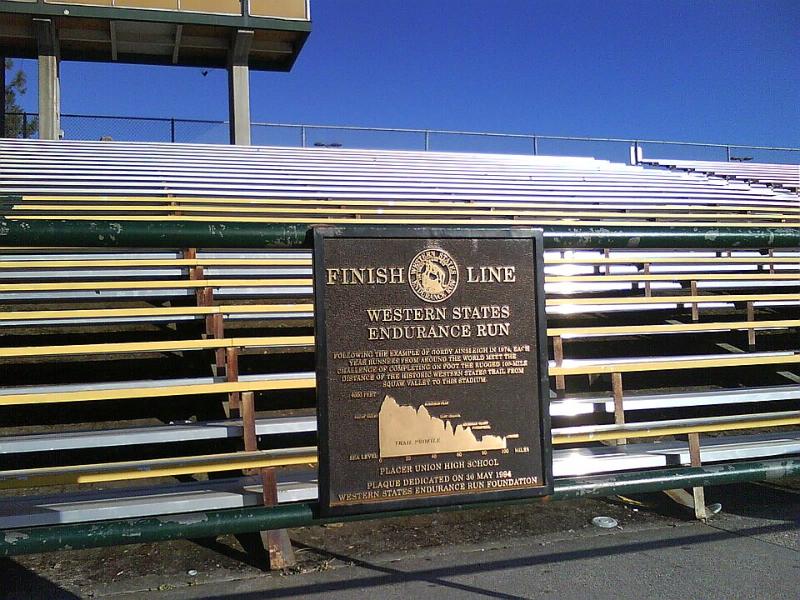
Western States rewards runners who respect the descent and the heat as much as the climbing. Build a solid base, train your quads, acclimate seriously, and you give yourself the best shot at the Placer High School track. For a plan that adapts to you week after week, start your free 7-day RunMotion Coach trial.
Article updated by the RunMotion Coach team.
Sources