A solid Val d’Aran training plan starts with one number: 10000 m of climbing over 163 km on the VDA, the flagship race of HOKA Val d’Aran by UTMB, the European Major of the UTMB World Series. Held in the Spanish Pyrenees in early July, the event offers formats from 10 km upwards, and almost all of them are steep. Here are the official figures, what makes this race so hard, and how to structure your training.
The short answer
- Allow 10 to 14 weeks for the SKY races, 14 to 20 for PDA and EXP, 20 to 24 for TDL and CDH, and 24 weeks or more for VDA.
- Rough peak-week guide: 2500 to 4000 m of climbing for the 50K formats, 4500 to 7000 m for the ultras, depending on your level and experience.
- Key sessions: long power-hiking climbs, technical descents, long mountain days, back-to-back weekends with night running.
- The defining feature: a huge climbing ratio (around 60 m per km on VDA) on technical Pyrenean terrain.
Contents
HOKA Val d’Aran distances and elevation
| Format | Distance | Elevation gain | Profile/notes |
|---|---|---|---|
| Torn dera Val d’Aran (VDA) – 100M | 163 km | 10000 m | Starts and finishes in Vielha; wild valleys, old mines, lake cirques; 8 Running Stones |
| Camins d’Hèr (CDH) – 100K | 110 km | 6400 m | Starts in Les; tunnels, mines, lakes and waterfalls; 6 Running Stones |
| Termières dera Libertat (TDL) – 100K | 75 km | 5100 m | 100K category despite 75 km, very steep; 6 Running Stones |
| Peades d’Aigua (PDA) – 50K | 55 km | 3300 m | Mountain format; 4 Running Stones |
| Experiència d’Aran (EXP) – 50K | 32 km | 2100 m | 4 Running Stones |
| SKY – Baqueira Beret – 20K | 18 km | 900 m | Short sky-style race; 2 Running Stones |
| SKY 18K Promesas – 20K | 18 km | 900 m | “Promesas” version of the SKY; 2 Running Stones |
| Vielha 10K | 10 km | 500 m | Entry-level race, no category shown |
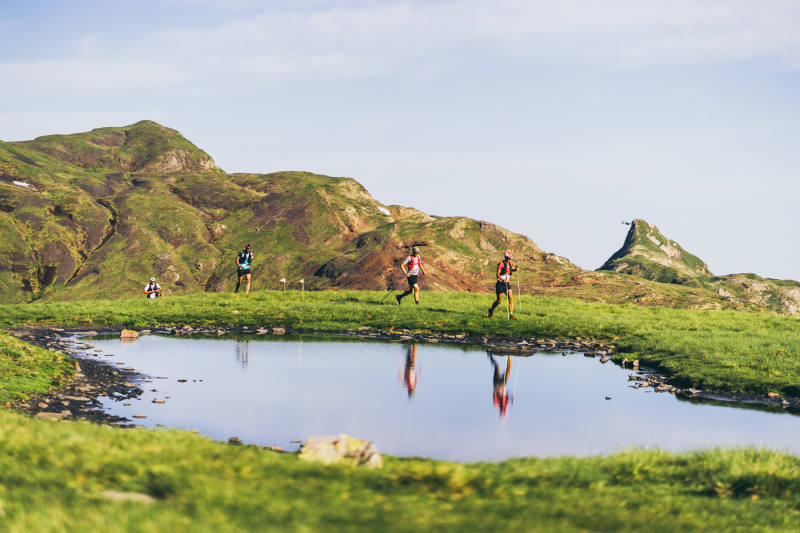
These figures come from the official HOKA Val d’Aran by UTMB website and can change from one edition to the next, so double-check them before you lock in your plan. As a Major, the event awards twice the Running Stones of a standard World Series race. Expect classic Pyrenean terrain: long steep climbs, ridges, high lakes and technical descents. Early July can mean hot valleys, cool nights up high and afternoon thunderstorms.
What makes Val d’Aran so demanding
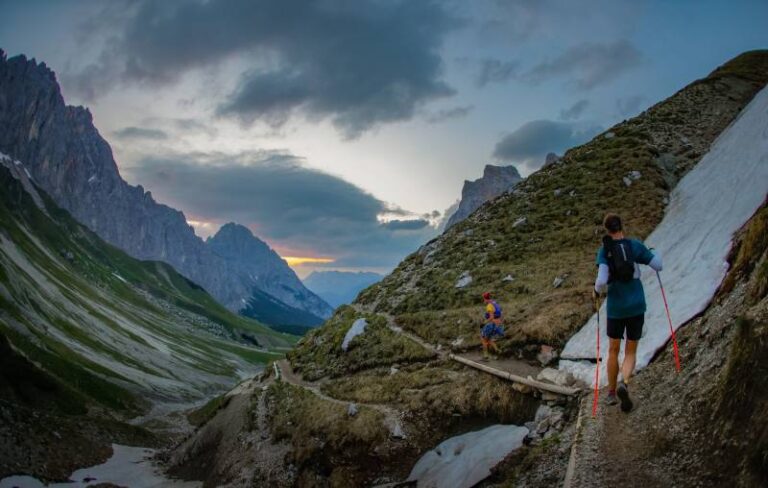
Ten thousand metres of climbing over 163 km. Even TDL packs 5100 m into 75 km. You will spend a large share of the race power-hiking uphill or picking your way down terrain that punishes lapses in focus. What matters most is climbing power, quad durability and staying clear-headed after many hours on your feet.
According to the official site, VDA starts in Vielha at 16:00 with a 48-hour cut-off, so many runners will see two nights. CDH starts in Les at 06:00 with a 28-hour limit. The field is also strong: as a Major, the event gives the top 10 men and women on VDA, CDH and PDA direct entry to the Finals in Chamonix, which draws a deep elite field.
How long do you need to train?
For the Vielha 10K and the two 18 km SKY races, 10 to 14 weeks is a sensible window if you already trail run regularly: 900 m over 18 km is steep. For EXP and PDA, aim for 14 to 20 weeks with at least one mountain trail race behind you. Our 50K trail training plan is a good starting framework.
For TDL and CDH, plan 20 to 24 weeks of structured training after finishing at least a 50 km mountain race. For VDA, give yourself 24 weeks or more, with a 100 km mountain ultra and some night racing already under your belt. Our 100-mile training plan guide covers the typical progression. Treat these as guidelines: your history and available time matter more than any rule.
The phases of your training plan
Base: winter
Build volume gradually at easy aerobic effort, with one quality session a week and regular strength work for quads, glutes and calves. Bodyweight is a fine place to start; adding load later can help you progress. Ski touring and incline treadmill hiking make excellent complements.
Specific: April to mid-June
Stack long climbs, technical descents and multi-hour mountain days as soon as snow allows. For the ultras, include two or three back-to-back weekends and a hilly tune-up race about six weeks out.
Taper: the final weeks
Two to three weeks of reduced volume with a few short uphill efforts to stay sharp. Prioritise sleep and check your mandatory kit.
Key sessions for Val d’Aran
Long power-hiking climbs. 2 to 4 reps of 15 to 20 minutes on a steep slope at a strong but controlled effort. On this course, your vertical speed drives much of your finish time. See our tips on improving uphill performance.
Technical descents. One weekly session on steep, rocky trail to build eccentric quad strength and automate your foot placement. Focus on quick, light steps rather than speed.
Long mountain days. 5 to 8 hours for the ultras, chasing as much vertical as you can find. Use them to test fuelling, kit and hiking rhythm.
Night back-to-backs (VDA, CDH). A long run starting late afternoon and finishing by headlamp, followed by a medium run the next day on tired legs.
| Day | Sample specific week (CDH, experienced runner) |
|---|---|
| Monday | Rest |
| Tuesday | 3 × 15 minutes steep power-hiking |
| Wednesday | Easy 1-hour run + strength |
| Thursday | Technical downhill session, 1 h 15 |
| Friday | Rest |
| Saturday | Long mountain day, 6 to 7 hours |
| Sunday | 2 h 30 run-hike |
All that descending puts heavy stress on knees and tendons. If pain persists, back off and see a health professional.
If you would rather not build all of this yourself, the RunMotion Coach app, the official online coach of the UTMB World Series, creates a personalised plan that factors in elevation and adapts every week to the sessions you actually complete and the time you have. Try it free for 7 days: start my plan.
Build your race strategy with Race Strategy
On a course where pace swings wildly from one kilometre to the next, Race Strategy by RunMotion works out your plan kilometre by kilometre, adjusting pace for gradient, altitude and terrain technicality. You get estimated split times at key points, a fuelling and hydration plan for each section (carbs, water, sodium) and a race-day weather adjustment. Just import the official GPX of your race.
Running Stones and the UTMB World Series
According to the official site, VDA awards 8 Running Stones, CDH and TDL 6, PDA and EXP 4, and the SKY races 2. If you are building a season around several World Series events, our UTMB World Series training plan and our guide on preparing a UTMB World Series season will help you plan.
FAQ
What level do you need for VDA?
163 km and 10000 m of climbing within 48 hours is a serious mountain 100-miler. Having finished a 100 km mountain ultra is a reasonable prerequisite.
Is TDL easier than CDH?
It is shorter (75 km versus 110 km) but even steeper per kilometre, so it still demands excellent climbing and descending fitness.
Should you use poles at Val d’Aran?
With this much climbing, many runners find them very useful. Check the official rules for your race and train with them from the specific phase onwards.
Ready for the European Major
Val d’Aran rewards climbers and descenders: the more smart vertical you bank, the more you will enjoy it. RunMotion founders Guillaume and Romain Adam, twin brothers, come from the Alps: mountains, vertical and ultra distance are their home ground. To get a plan built for races like this and tuned to your level, try RunMotion Coach free for 7 days.
Article updated by the RunMotion Coach team.
Sources: