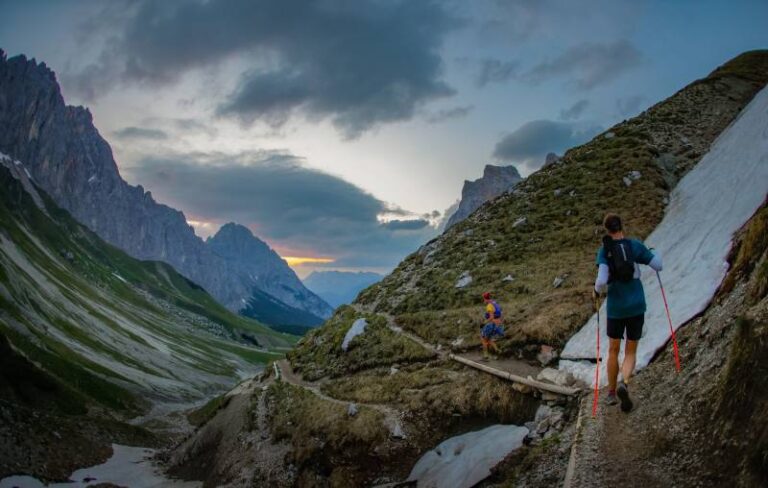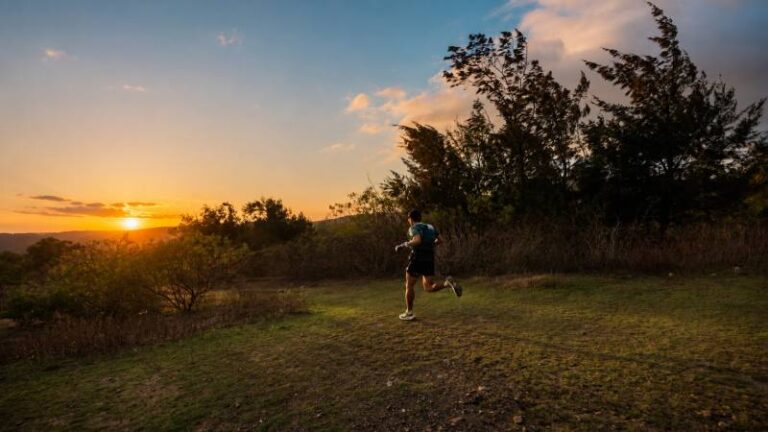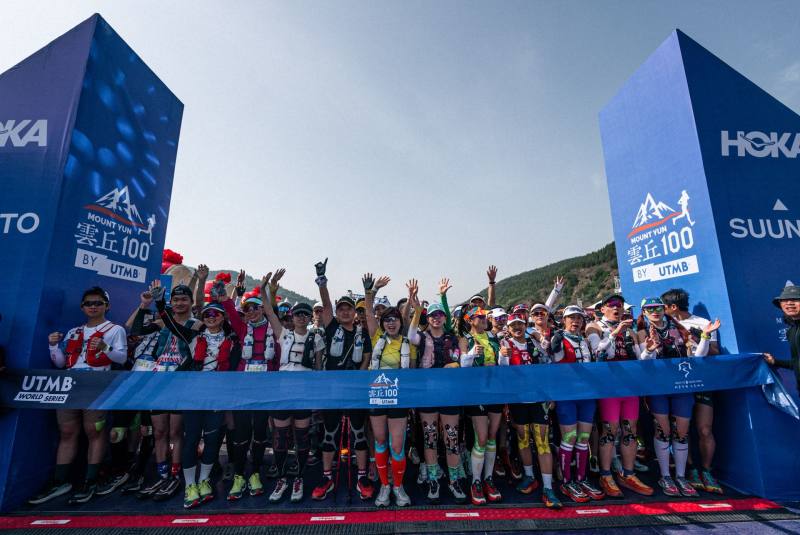
Your Ultra-Trail Mount Yun training plan has to prepare you for a true 100-miler, or one of three shorter races, through the hills and valleys of Mount Yun (Yunqiu Shan) in southern Shanxi province, China. With 166 km and 7400 m of elevation gain on the flagship race, preparation is a long game. Here are the official figures and how to train for each distance.
The short answer
- Indicative build-up: 10 to 12 weeks for the 20K, 16 to 20 weeks for the 50K, 6 to 8 months for the 100K, 9 to 12 months for the 100M.
- Peak weekly climbing as a rough guide: 1500 to 2500 m for the 50K, 3000 to 4000 m for the 100K, 3500 to 5000 m for the 100M.
- Key sessions: long climbs, long hike-run days, back-to-back weekends, night runs.
- The defining feature: a full 100-miler (up to 48 h) mixing runnable sections and climbs, with at least one night out.
Contents
Ultra-Trail Mount Yun distances and elevation
Figures come from each race page on the official Ultra-Trail Mount Yun by UTMB website.
| Race | Distance | Elevation gain | Profile / notes |
|---|---|---|---|
| UMY 100M (100M category) | 166 km | 7400 m | Hills, valleys, ancient villages and cultural sites of southern Shanxi; 3 p.m. start; 48 h cut-off |
| DMY 100K (100K category) | 97 km | 4300 m | 9 p.m. start from Zhonghe Square; 28 h cut-off |
| MMY 50K (50K category) | 48 km | 2400 m | Natural scenery and forests; 14 h cut-off |
| EMY 20K (20K category) | 22 km | 1400 m | Winding mountain trails; 7 h cut-off |
The event takes place in mid-October, at the peak of the autumn colours according to the organisers. The 100M crosses the hills and valleys of southern Shanxi, ancient villages and cultural landmarks, on a course the site describes as offering both challenge and runnability. The race pages give neither maximum altitude nor weather data, so check the forecast, especially for the night hours.
What makes Ultra-Trail Mount Yun hard
On the 100M, duration is the main challenge. With a 3 p.m. start and up to 48 hours to finish, most runners will spend at least one night on course, some two. Managing sleep, long-haul fuelling and low moments matters as much as fitness.
Climbing density, around 45 m per kilometre on the 100M and 100K, leaves room for running. That is an advantage if you can run economically for hours, and a trap if you start too fast. The shorter races are steeper: the EMY exceeds 60 m per kilometre.
The 100K starts at 9 p.m., so you go straight into a full night of racing after a day of waiting.
How long do you need to prepare?
20K: with 22 km and 1400 m of gain, the EMY needs 10 to 12 weeks and good climbing ability.
50K: allow 16 to 20 weeks, ideally after a 25 to 35 km trail race.
100K: plan 6 to 8 months, after at least one mountain 50K and ideally a first night race.
100M: a 166 km race takes 9 to 12 months of preparation, after at least one finished 100 km ultra. Adapt these guidelines to your history, recovery and available time.
The phases of your training plan
Base: for a 100M this phase can last several months. Build aerobic volume, strength and tolerance to climbing, with one short speed session a week and a lighter week every three or four weeks.
Specific: over the last 10 to 12 weeks, extend your long runs, add back-to-back weekends and train at night. Test your fuelling on efforts of several hours, along with your mandatory kit and head torch. A 50 to 80 km tune-up race can serve as a dress rehearsal.
Taper: two to three weeks with 30 to 50% less volume, a few short efforts and plenty of sleep.
Key sessions to train for Ultra-Trail Mount Yun
Long climbs. Three to five climbs of 10 to 15 minutes at a sustained effort, running or power hiking depending on gradient, to build the strength to absorb 7400 m of gain.
Long hike-run days. Four to seven hours for the 100M, running the runnable parts and power hiking the climbs.
Back-to-back weekends. Two long runs on consecutive days, to run on tired legs without the cost of a single oversized session.
Night runs. Several hours by head torch, ideally in the evening after a normal day, to mirror the 100K and the second half of the 100M.
A 100-miler is built patiently and methodically. RunMotion Coach, the official online coach of the UTMB World Series, lets you prepare up to 12 months ahead with a plan that adapts every week to the sessions you complete. Try it free for 7 days.
Build your race plan with Race Strategy
Over 166 km, an early pacing mistake costs you for hours. Race Strategy by RunMotion calculates your strategy kilometre by kilometre, adjusting pace for gradient, altitude and terrain technicality. You get estimated split times at key points, a section-by-section fuelling and hydration plan (carbs, water, sodium) and a race-day weather adjustment. Just import the official GPX of your race.
Running Stones and the UTMB World Series
Ultra-Trail Mount Yun is part of the UTMB World Series. According to the race pages, the 100M earns 4 Running Stones, the 100K 3, the 50K 2 and the 20K 1, improving your odds in the draw for the Chamonix finals. To plan your season, see our UTMB World Series training plan guide and, if Chamonix is the long-term goal, our UTMB Mont-Blanc guide and training tips.
FAQ
Are poles allowed at Ultra-Trail Mount Yun?
Check the official mandatory gear list. If allowed, they are valuable on a 100-miler to save your legs on climbs, provided you have trained with them.
What level do I need for the Mount Yun 100M?
With 166 km, 7400 m of gain and a 48 h cut-off, it is for runners who have finished at least one 100 km ultra and have night racing experience. Our guide to increasing your distance explains how to step up.
How many kilometres a week for the 100M?
Time on feet and climbing matter more than mileage. Many runners peak between 60 and 100 km a week, but consistency and recovery should guide your volume.
Final word
Ultra-Trail Mount Yun rewards patience: controlled pacing, steady fuelling and good night management. At RunMotion, mountains, vertical gain and ultras are home ground: our founders, twin brothers Guillaume and Romain Adam, come from the Alps. For a plan built around your race, start your free 7-day RunMotion Coach trial.
Article updated by the RunMotion Coach team.
Sources