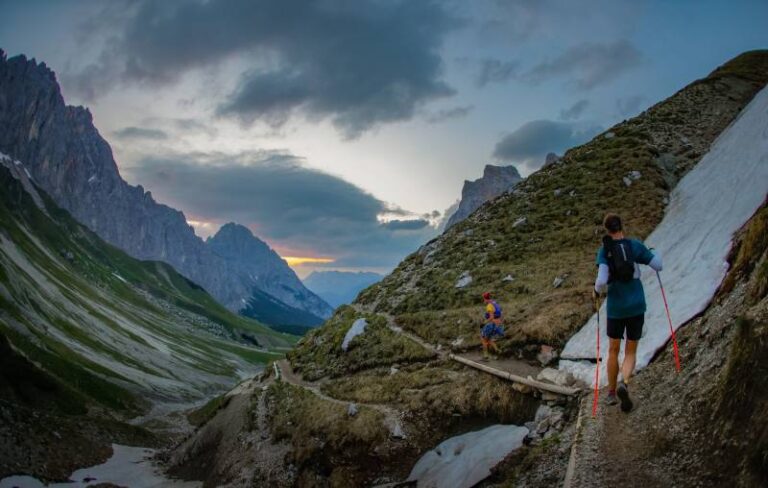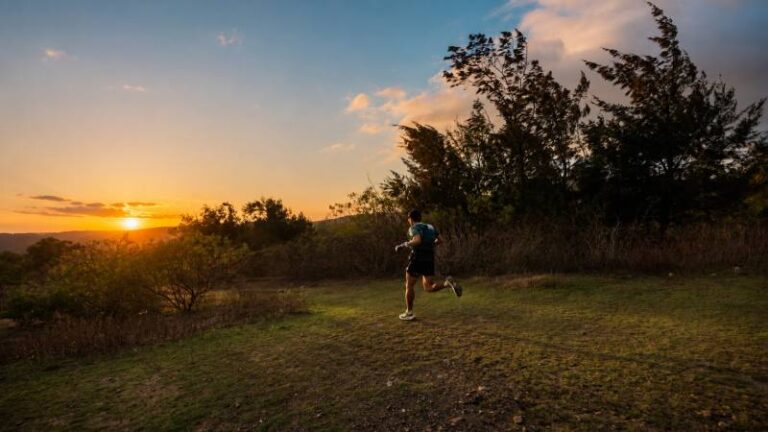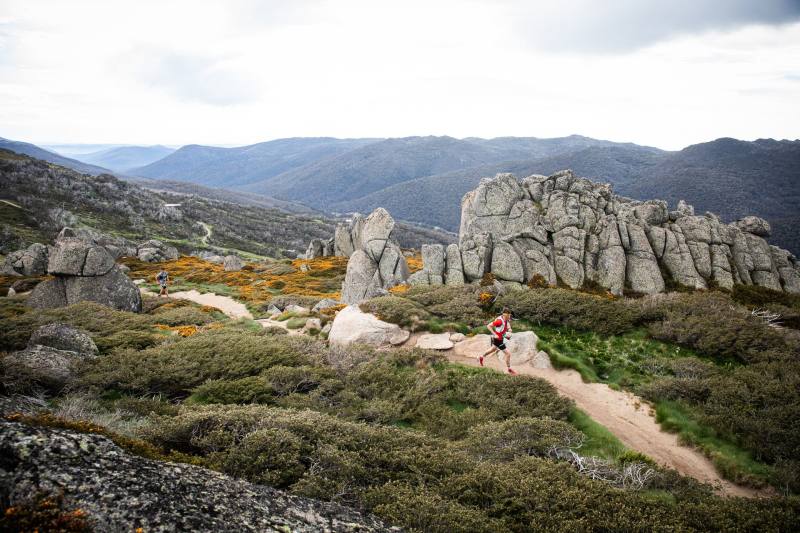
An Ultra-Trail Kosciuszko by UTMB training plan prepares you to race in the Snowy Mountains, Australia’s alps in New South Wales, with the two longest formats going over the summit of Mt Kosciuszko, the highest point on mainland Australia. The event takes place in late November, in the southern spring, with four formats from the Kosci30 to the 160 km KosciMiler. Here is how to train for Ultra-Trail Kosciuszko, with the official distances and elevation gain.
The short answer
- Allow 8–10 weeks for the Kosci30, 12–16 weeks for the Kosci50, 16–24 weeks for the Kosci100 and 6–12 months for the KosciMiler, with several ultras already completed.
- At peak, aim for roughly 1000–2000 m of weekly climbing for the Kosci50 and 1500–3000 m for the Kosci100 and KosciMiler, alongside solid continuous running.
- Key sessions: long runs on runnable terrain, long hill repeats, back-to-backs and long runs in cool or windy conditions with full kit.
- The defining challenge: a very runnable but exposed alpine ultra, with unpredictable mountain weather and sections that can carry snow.
Contents
Ultra-Trail Kosciuszko distances and elevation gain
Figures from the official Ultra-Trail Kosciuszko by UTMB website, with the Running Stones categories shown by the organisers.
| Format | Distance | Elevation gain | Profile/notes |
|---|---|---|---|
| KosciMiler | 160.5 km (100 miles) | 4731 m | 100M category, night start in Jindabyne, Mt Kosciuszko summit, finish in Thredbo |
| Kosci100 | 105.6 km | 2973 m | 100K category, starts at Perisher, Mt Kosciuszko summit, final loop of the Thredbo ski area |
| Kosci50 | 50.3 km | 1355 m | 50K category, starts at Perisher, alpine plateau, high point at Eagles Nest, finish at Friday Flat |
| Kosci30 | 33 km | 596 m | 20K category |
The terrain mixes alpine meadows, snow gum forest, granite outcrops, creeks, lakes and ski villages: Perisher, Charlotte Pass, Guthega, Smiggin Holes and Thredbo. The organisers describe the trails as “super runnable”, but also warn that Snowy Mountains weather is unpredictable and that cut-offs may be brought forward in bad conditions.
What makes Ultra-Trail Kosciuszko hard
On paper the climbing ratio is moderate: around 30 m per kilometre on the KosciMiler and 28 m on the Kosci100. But part of the race takes place on the exposed alpine plateau, where wind, cold and strong sun change your kit and energy needs completely. One day can bring a chilly start, high-altitude sunshine and a cold front.
Runnability is the other trap. As on any ultra where you run a lot, fatigue builds through impact rather than climbing, and going out too fast in the first hours is expensive. The KosciMiler starts in the middle of the night with a 36-hour maximum race time, according to the organisers, which means one or even two nights in the mountains for many runners.
How long to train for each format
For the Kosci30, 8–10 weeks is enough if you already run regularly. The Kosci50 needs 12–16 weeks, ideally after a trail race of 30 km or more. The Kosci100 takes 16–24 weeks with previous experience of at least 50 km. For the KosciMiler, plan 6–12 months and several ultras, including one of at least 100 km; our guide to preparing a UTMB 100-miler covers the key principles. These are guidelines that depend on your level, time and recovery. To build up safely, see our guide to increasing distance in trail running.
The phases of your training plan
Base
Easy running, consistency, strength work and a gradual increase in running volume. For a runnable ultra, that mileage base is essential.
Specific phase
Long runs, long climbs for strength, back-to-backs, fuelling and a full test of your mountain kit (warm layers, waterproof jacket). Add a lighter week every three or four weeks.
Taper
Two to three weeks of reduced volume with a few pace reminders, so you arrive in Jindabyne or Perisher well rested.
Key sessions for Ultra-Trail Kosciuszko
Long run on runnable terrain
Two and a half to five hours depending on format, on runnable trails, running as much as possible at endurance pace, with your race fuelling.
Long hill repeats at threshold
Climbs of 6–12 minutes at a controlled hard effort, close to threshold (what you could hold for about an hour), for the climbs up to the alpine plateau.
Back-to-backs (Kosci100 and KosciMiler)
Two consecutive long runs, for example 4 hours then 2–3 hours, to learn to run on tired legs.
Cool-weather long run with full kit
Use a cool or windy day for a long run with all your gear: test your layers, your jacket and your ability to eat with gloves on.
To get the dosage right, the RunMotion Coach app, the official online coach of the UTMB World Series, builds a personalised trail or ultra-trail plan, up to 12 months before race day, and adapts it every week to your completed sessions and availability. Try it free for 7 days.
Plan your race strategy with Race Strategy
On a runnable, exposed ultra, spreading your effort and fuelling well makes all the difference. Race Strategy by RunMotion builds a kilometre-by-kilometre strategy with pace adjusted for elevation, altitude and technical terrain, estimates your split times at key points, and gives you a nutrition and hydration plan per section (carbohydrates, water, sodium), adjusted to race-day weather. Import the official GPX of your format to base it on the real course.
Running Stones and the UTMB World Series
According to the official site, the KosciMiler earns 4 Running Stones, the Kosci100 3, the Kosci50 2 and the Kosci30 1. Running Stones improve your odds in the draw for the UTMB World Series Finals in Chamonix. To plan your season around the series, see our UTMB World Series training plan guide and our tips on planning your trail running season.
Mountains and ultras are home ground for RunMotion: founders Guillaume and Romain Adam, twin brothers, come from the Alps, and that experience of summits and long days shapes our plans.
FAQ
Do I need poles for Ultra-Trail Kosciuszko?
Given the runnable profile, they are not essential for everyone. Check the rules and mandatory gear page on the official site, and train with them if you decide to carry them.
What level do I need for the Kosci100?
Ideally you have finished an ultra of at least 50 km, are comfortable with more than 12 hours of effort and know how to manage your kit in the mountains.
How many kilometres per week for the KosciMiler?
It depends on your level and history. For a runnable 100-miler, running volume and consistency matter more than isolated big weeks.
Final thoughts
Ultra-Trail Kosciuszko by UTMB calls for pure endurance, pacing discipline and real respect for alpine weather. Choose your format based on experience, build volume gradually and test your kit. For a plan that adapts to you every week, start your free 7-day RunMotion Coach trial.
Article updated by the RunMotion Coach team.
Sources: