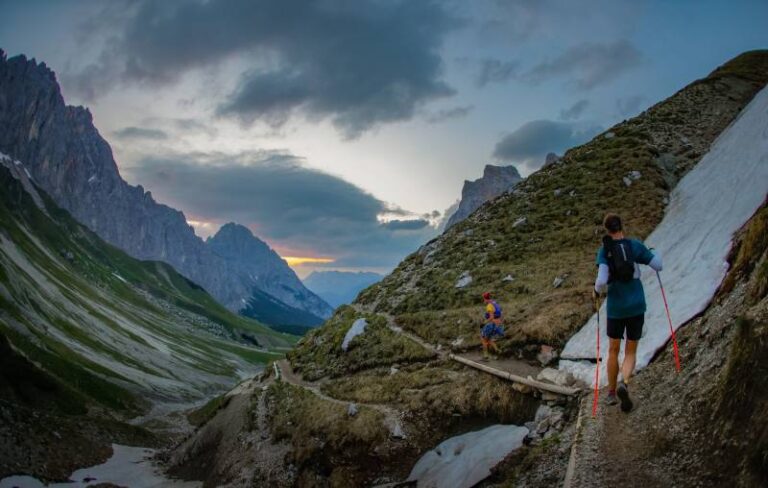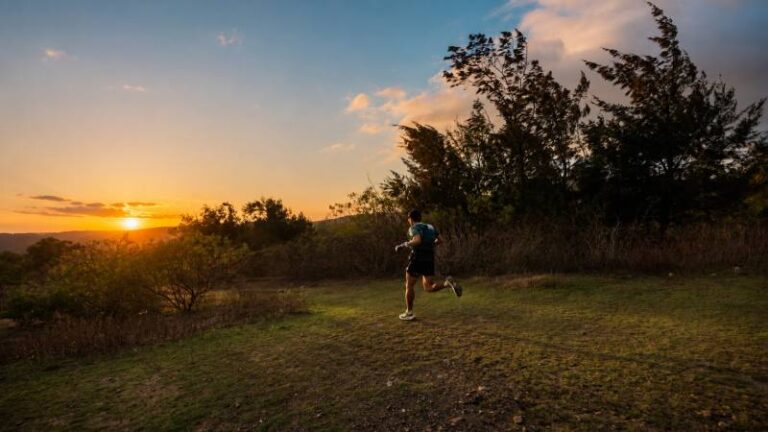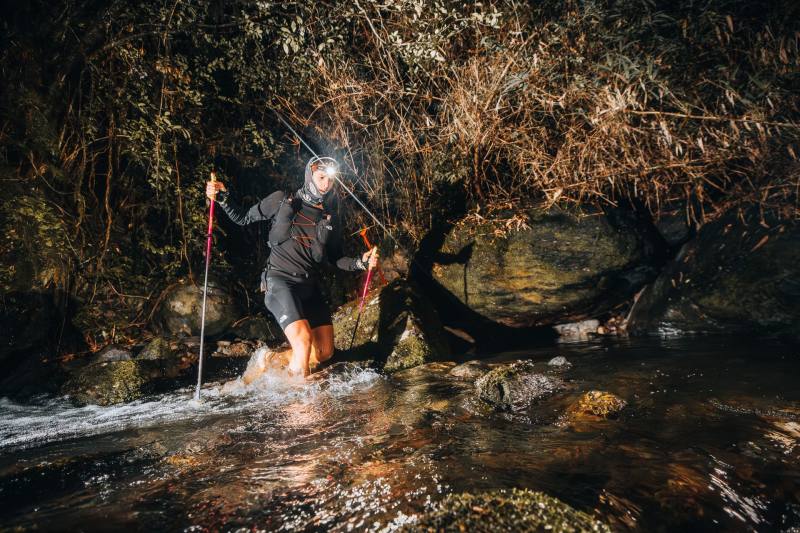
Your Torrencial Chile by UTMB training plan needs to prepare you for temperate rainforest in southern Chile, around Valdivia, where the courses link the Coastal Range to the Pacific Ocean. The event takes place in late June, in the southern winter, with six formats from 6 km to the PILOLCURA 100K. Here is how to train for Torrencial Chile by UTMB, with the official distances and elevation gain.
The short answer
- Allow 8–10 weeks for the COLLICO 20K, 10–14 weeks for the LLANCAHUE 45K, 12–16 weeks for the ONCOL 65K and 16–24 weeks for the PILOLCURA 100K, with previous ultra experience.
- At peak, aim for roughly 1000–2000 m of weekly climbing for the 45K and 65K, and 1500–3000 m for the 100K, depending on your history.
- Key sessions: long runs on muddy, slippery trails, technical descents, long climbs and night runs for the 100K.
- The defining challenge: rocky, slippery forest trails in winter conditions. Footing and kit matter as much as elevation gain.
Contents
Torrencial Chile by UTMB distances and elevation gain
Figures from the official Torrencial Chile by UTMB website, with the Running Stones categories shown by the organisers.
| Format | Distance | Elevation gain | Profile/notes |
|---|---|---|---|
| PILOLCURA 100K | 101 km | 4100 m | 100K category, evening start in Punucapa, finish in Valdivia |
| ONCOL 65K | 65 km | 2600 m | 50K category |
| LLANCAHUE 45K | 45 km | 1600 m | 50K category |
| COLLICO 20K | 20 km | 800 m | 20K category |
| CAU CAU 12K NOCTURNO | 12 km | 400 m | No category shown, night race |
| ISLA TEJA 6K | 6.5 km | 200 m | No category shown, discovery format |
The route runs from Oncol Hill to the Pacific coast through forest of canelo, ulmo, laurel and mañío trees. The organisers describe the trails as “rocky and slippery”, and Valdivia is known for its intense winter. Prepare for rain, mud and damp cold.
What makes Torrencial Chile by UTMB hard
On paper the climbing looks moderate, around 40 m per kilometre on the 100K and 65K. On the ground it is a different story. Wet roots, slick rock and mud force you to shorten your stride, stay braced and keep restarting. Stabilising every step costs energy, and your ankles and hips work constantly.
Damp cold is the other opponent. Running soaked for hours in winter drops your body temperature quickly as soon as you slow down, especially at night. The PILOLCURA 100K starts in the evening and, according to the organisers, finishes at dawn in Valdivia: a full night under a headlamp on slippery ground, with clothing choices to plan in advance.
How long to train for each format
For the COLLICO 20K, 8–10 weeks is enough if you already run regularly. The LLANCAHUE 45K needs 10–14 weeks and some long trail experience. For the ONCOL 65K, allow 12–16 weeks after finishing a 40 km or longer trail race. The PILOLCURA 100K takes 16–24 weeks, ideally after an ultra of 50–70 km and some night racing. Our guide to increasing distance in trail running explains how to step up. These are guidelines that depend on your level, time and recovery.
The phases of your training plan
Base
Easy running, consistency, and serious strength work: balance and proprioception drills, core, calves and ankles. On slippery terrain, that is your best insurance.
Specific phase
Long runs on technical ground, ideally in bad weather, descents, climbs and fuelling practice. Test your rain gear and shoes on long wet runs. Add a lighter week every three or four weeks.
Taper
Two to three weeks of reduced volume with a few short efforts, so you arrive fresh and confident in your footing.
Key sessions for Torrencial Chile by UTMB
All-terrain long run
Two and a half to five hours depending on your format, on the most technical, muddy trails you can find, ignoring pace. You learn to read the ground and stay sharp when every step needs attention.
Technical descents
Three to six descents of 5–10 minutes on muddy or rooty ground, short steps, eyes ahead.
Long hill repeats at threshold
Climbs of 6–10 minutes at a controlled hard effort close to threshold (what you could hold for about an hour), to build power without needing huge mountains.
Night run (100K and 12K Nocturno)
One or two evening runs of 2–3 hours with a headlamp, ideally in the rain, to test your lighting, jacket and ability to eat on the move.
To string these sessions together without getting hurt or burnt out, the RunMotion Coach app, the official online coach of the UTMB World Series, builds a personalised trail or ultra-trail plan and adjusts it every week to your sessions and availability. Try it free for 7 days.
Plan your race strategy with Race Strategy
On slippery ground, your usual paces stop meaning much. Race Strategy by RunMotion builds a kilometre-by-kilometre strategy with pace adjusted for elevation, altitude and technical terrain, estimates your split times at key points, and gives you a nutrition and hydration plan per section (carbohydrates, water, sodium), adjusted to race-day weather. Import the official GPX of your Torrencial Chile by UTMB format to base it on the real course.
Running Stones and the UTMB World Series
According to the official site, the PILOLCURA 100K earns 3 Running Stones, the ONCOL 65K and LLANCAHUE 45K 2 each, and the COLLICO 20K 1. Running Stones improve your chances in the draw for the UTMB World Series Finals in Chamonix. To build a season around several series races, see our UTMB World Series training plan guide and our tips on planning your trail running season.
Mountains and ultras are home ground for RunMotion: founders Guillaume and Romain Adam, twin brothers, come from the Alps, and that experience of big climbing days shapes our plans.
FAQ
What shoes for Torrencial Chile by UTMB?
On rocky, slippery trails, an outsole with strong grip in mud is a real asset. Test your pair on long wet runs before race day.
What level do I need for the PILOLCURA 100K?
Ideally you have finished an ultra of 50–70 km and raced at night. Slippery ground lengthens your time on feet, so expect a longer race than the elevation gain suggests.
Are poles allowed at Torrencial Chile by UTMB?
Check the official rules. On slippery ground they can help with stability, provided you have trained with them.
Final thoughts
Torrencial Chile by UTMB is won as much with your ankles and your head as with your engine. Train on muddy ground, get comfortable with damp cold and build up progressively. For a plan that adapts to you every week, start your free 7-day RunMotion Coach trial.
Article updated by the RunMotion Coach team.
Sources: