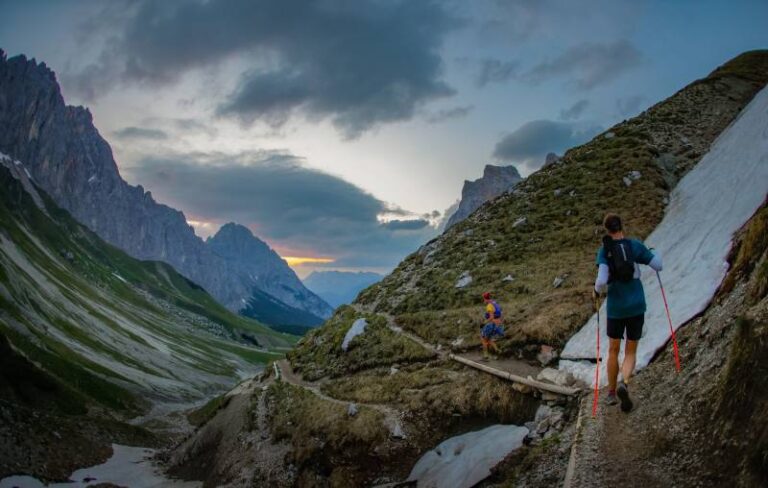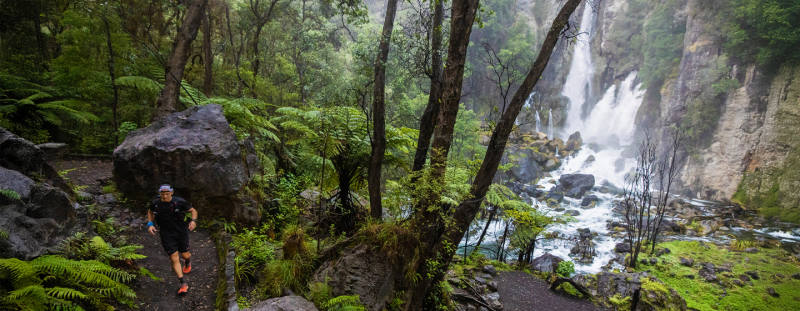
A Tarawera Ultra-Trail by UTMB training plan is about one thing more than any other: being able to keep running for a very long time. Raced around Rotorua, New Zealand, among lakes, redwoods, native bush and geothermal landscapes, Tarawera takes place in mid-February, in the southern summer, with five formats from the T14 to the 163 km TMiler. Here is how to train for Tarawera, with the official distances and elevation gain.
The short answer
- Allow 8–10 weeks for the T14 or T21, 12–16 weeks for the T50, 16–24 weeks for the T102 and 6–12 months for the TMiler, with several ultras already completed.
- Running volume matters more than climbing: as a rough guide, 1000–2000 m of weekly elevation gain at peak is enough for the T102 and TMiler, alongside solid continuous running.
- Key sessions: long runs on runnable terrain, race-pace blocks, back-to-backs and night runs for the TMiler.
- The defining challenge: a runnable course (single track, wide trails, forestry roads) where you run almost all the time, in the middle of the southern summer.
Contents
Tarawera Ultra-Trail by UTMB distances and elevation gain
Figures from the official Tarawera Ultra-Trail by UTMB website, with the Running Stones categories shown by the organisers.
| Format | Distance | Elevation gain | Profile/notes |
|---|---|---|---|
| TMiler | 163 km (100 miles) | 3800 m | 100M category, pre-dawn start at Te Puia (Rotorua), eight lakes, finish at the Village Green |
| T102 | 102 km | 2300 m | 100K category, starts in Kawerau, five lakes, finishes in Rotorua |
| T50 | 52 km | 1150 m | 50K category, very runnable |
| T21 | 23 km | 400 m | 20K category, accessible |
| T14 | 14 km | 161 m | No category shown, starts at Te Puia |
The courses combine single track, wide trails, forestry roads and some sealed sections, through native bush, conifer forest, giant redwoods and the thermal landscape of Sulphur Point, beneath Mount Tarawera, Ruawahia and Wahanga. The TMiler even includes a boat crossing of Lake Rotomahana. The organisers note that cut-offs can be brought forward in bad weather.
What makes Tarawera hard
At around 23 m of climbing per kilometre on the TMiler and T102, Tarawera is a running race. That is exactly what makes it tough: where a mountain race forces natural walking breaks, here your legs absorb dozens of kilometres of continuous running. Fatigue comes less from downhill quad damage than from the accumulation of impact, and runners who start too fast on the easy early kilometres usually pay later.
Summer heat can add to the load, especially on exposed sections. On the TMiler, a pre-dawn start, the 36-hour maximum race time and the minimum pace set by the organisers mean a night out for most runners, with fuelling and focus to rehearse beforehand.
How long to train for each format
For the T14 and T21, 8–10 weeks is enough if you already run regularly. The T50 needs 12–16 weeks, ideally after a first long trail race or half marathon. The T102 takes 16–24 weeks with previous experience of at least 50 km. For the TMiler, plan 6–12 months and several ultras, including one of at least 100 km. Our guide to increasing distance in trail running explains how to build up without injury. These are guidelines depending on your level, time and recovery.
The phases of your training plan
Base
Easy running, consistency, strength work and a very gradual increase in mileage. For Tarawera, this running base matters more than for a mountain race.
Specific phase
Long runs on runnable terrain, steady blocks at target pace, back-to-backs and fuelling practice. Keep some hills for strength, but continuous running is the priority. Add a lighter week every three or four weeks.
Taper
Two to three weeks of reduced volume, a few pace reminders, and close attention to sleep and hydration if you are travelling long-haul.
Key sessions for Tarawera
Long run on runnable terrain
Two and a half to five hours depending on format, on easy trails or forest roads, running as much as possible at endurance pace.
Race-pace blocks
Within a long run, two or three blocks of 20–40 minutes at your target race pace, so you learn to hold it without getting carried away.
Back-to-backs (T102 and TMiler)
Two consecutive long runs, for example 4 hours then 2–3 hours, to train running on tired legs.
Night run and fuelling (TMiler)
One or two night runs with a headlamp, testing exactly what you will eat in the race.
To get the dosage right, the RunMotion Coach app, the official online coach of the UTMB World Series, builds a personalised trail or ultra-trail plan, up to 12 months before race day, and adjusts it every week to your completed sessions and availability. Try it free for 7 days.
Plan your race strategy with Race Strategy
On a runnable ultra, the temptation to go out fast never goes away. Race Strategy by RunMotion builds a kilometre-by-kilometre strategy with pace adjusted for elevation, altitude and technical terrain, estimates your split times at key points, and gives you a nutrition and hydration plan per section (carbohydrates, water, sodium), adjusted to race-day weather. Import the official GPX of your Tarawera format to base it on the real course.
Running Stones and the UTMB World Series
According to the official site, the TMiler earns 4 Running Stones, the T102 3, the T50 2 and the T21 1. Running Stones improve your odds in the draw for the UTMB World Series Finals in Chamonix. To build your season around the series, see our UTMB World Series training plan guide, and for 100-mile preparation, our guide to succeeding at a UTMB 100-miler.
Tarawera is more runnable than the Alps, but ultra distance is still home ground for us: RunMotion founders Guillaume and Romain Adam, twin brothers, come from the Alps, where long days on the trail are part of everyday life.
FAQ
Do I need poles for Tarawera?
Given the runnable profile, many runners go without. Check the official rules before deciding.
What level do I need for the T102?
Ideally you have finished an ultra of at least 50 km and can run for long periods on easy terrain without walking.
How many kilometres per week for the TMiler?
It depends on your level and history. For a runnable 100-miler, running volume matters a lot; build it gradually and favour consistency over isolated big weeks.
Final thoughts
Tarawera Ultra-Trail by UTMB rewards patience and pure endurance: run smart, run long, and don’t get carried away. Choose your format based on experience, build volume gradually and dial in your fuelling. For a plan that adapts to you every week, start your free 7-day RunMotion Coach trial.
Article updated by the RunMotion Coach team.
Sources: