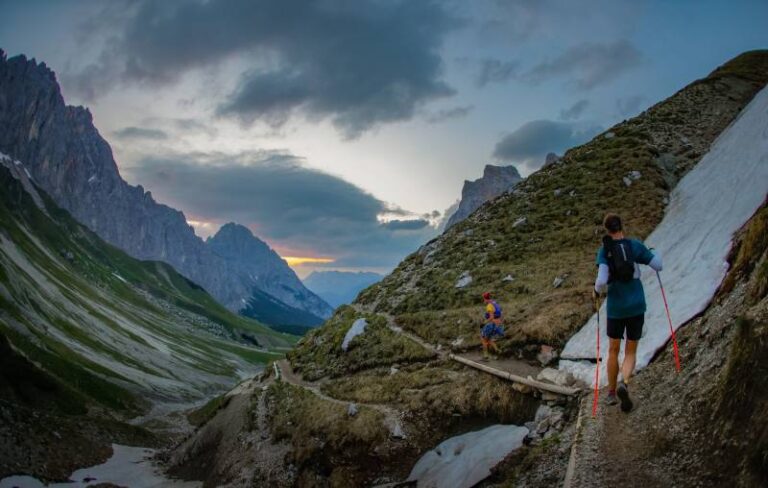
A Skyline Scotland training plan has to prepare you for the Highlands around Fort William: wild trails, rocky ridges and, on some races, the climb to the summit of Ben Nevis, the highest mountain in the UK. Races finish in the Nevis Range and range from a 100K to short pure climbing and pure descent events. Here is how to train for each of them.
The short answer
- Allow 10 to 12 weeks for the short races (21K and 30K), 14 to 16 weeks for the 50K and 5 to 6 months for the 100K, on top of an established trail base.
- Indicative peak volume: 40 to 60 km per week for the short races, 60 to 90 km for the 100K, with gradually increasing climbing.
- Key sessions: steep climbs with power hiking, technical rocky descents, long runs on wild terrain and, for the 30K, ridge terrain practice.
- Number one challenge: technical, exposed Scottish mountain terrain and changeable September weather.
Contents
Skyline Scotland distances and elevation
Skyline Scotland by UTMB takes place in September in Fort William, finishing at the Ultra-Trail Village in the Nevis Range. The official Skyline Scotland website lists the races below but, at the time of writing, does not publish elevation gain or all precise distances on its Races page. Missing figures are flagged.
| Race | Distance | Elevation gain | Profile/notes |
|---|---|---|---|
| Grand Tour of the Ben 100K | about 100 km | not published | Starts on Fort William High Street, West Highland Way to Kinlochleven, then wild terrain and a descent into the Nevis Range |
| Tour of the Ben 50K | about 50 km | not published | Starts in Kinlochleven, crosses remote Highland terrain, finishes in the Nevis Range |
| Ben Nevis Skyline 30K | about 30 km | not published | Starts in Fort William, summits Ben Nevis, traverses the Carn Mòr Dearg Arête |
| Aonach Mòr Anarchy | 21 km | not published | Loop from the Nevis Range on closed mountain bike trails, steep both ways |
| Nevis Ascent | not published | not published | Climbing race on a closed bike trail, finishing at the Snowgoose Restaurant |
| Nevis Avalanche | not published | not published | Timed descent of the Blue Doon trail |
Altitudes are modest, but slopes are steep, rocky and often wet, and Highland weather in September can bring rain, wind and hill fog at short notice.
What makes Skyline Scotland so demanding
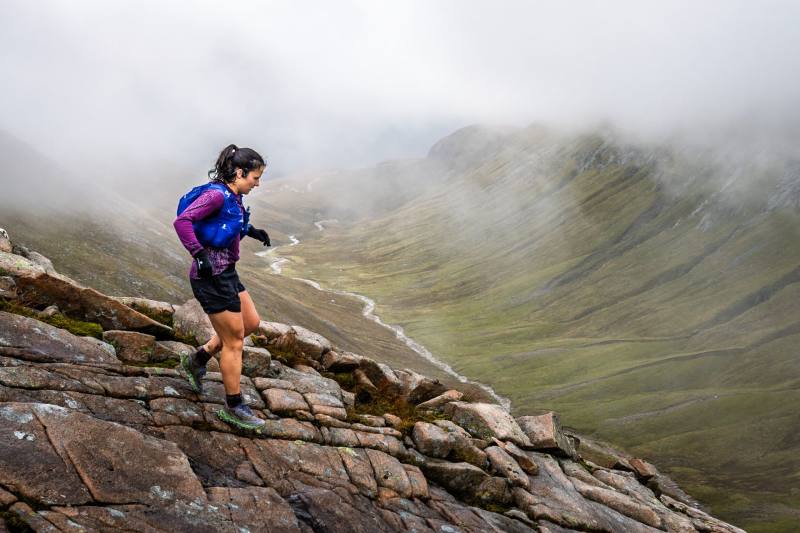
Terrain first. The Carn Mòr Dearg Arête on the 30K is a rocky, airy ridge that requires mountain confidence, and the wild sections of the 100K and 50K mix faint paths with boggy ground. Pace means little here: footwork and clear thinking matter. The other challenge is the gap between races. The 100K starts on the more runnable West Highland Way before switching to remote ground, so you need to run for a long time and still handle a mountain finish. Nevis Ascent and Nevis Avalanche, by contrast, are short and explosive.
How long do you need to prepare?
For Aonach Mòr Anarchy, Nevis Ascent or Nevis Avalanche, 8 to 12 weeks of targeted work is enough if you already run trails. The Ben Nevis Skyline 30K needs 12 weeks and real experience on rocky mountain terrain. The Tour of the Ben 50K takes 14 to 16 weeks, ideally after a 30 to 40 km trail race. The Grand Tour of the Ben 100K calls for 5 to 6 months and at least one finished ultra over 50 km; our guide to increasing distance in trail running will help you build up.
The phases of your training plan
Base phase. Mostly easy running, one quality session per week and two strength sessions (squats, lunges, box step-ups, core, ankle work). For the short races, strength is the priority.
Specific phase. Gradually add climbing, technical descents and long runs on varied terrain. For the 100K, add back-to-back weekends and runs that switch from runnable to technical ground. For the 30K, look for rocky terrain and, if you are used to it, easy ridges.
Taper. One to three weeks depending on the race, cutting volume by 30 to 50% and keeping a few short efforts.
Key sessions for Skyline Scotland
Steep power-hiking hills: for example 6 to 10 x 3′ to 5′ on a steep climb, mixing running and fast hiking with hands on thighs. Essential for Ben Nevis and Nevis Ascent.
Technical descents: repeated descents on stony trails, then longer descents at the end of a run on tired legs.
The two-terrain long run: for the 50K and 100K, start with a runnable section at easy pace, then finish in the mountains, learning to save energy for the end.
Downhill speed work: for Nevis Avalanche or Aonach Mòr Anarchy, a few short fast descents with full recovery on terrain you know well.
The RunMotion Coach app builds a personalised, adaptive plan that adjusts every week to your sessions, level and availability, including strength, recovery and mental preparation. RunMotion Coach is the official online coach of the UTMB World Series, and its founders, twin brothers Guillaume and Romain Adam, come from the Alps: mountains are their home ground. Try it free for 7 days.
Plan your race strategy with Race Strategy
Between the West Highland Way and a rocky ridge, your pace can vary threefold. Race Strategy by RunMotion calculates your strategy kilometre by kilometre, with pace adjusted for elevation, altitude and terrain technicality, estimated split times at key points, a nutrition and hydration plan per section (carbs, water, sodium) and a race-day weather adjustment. Import the official GPX for your race once it is available.
Running Stones and the UTMB World Series
Skyline Scotland is part of the UTMB World Series. Races earn Running Stones according to their category, improving your chances in the Finals draw; see the official website for the per-race detail. To plan your season, see our UTMB World Series training plan guide and our article on preparing a UTMB World Series season.
FAQ
Do you need poles for Skyline Scotland?
They can help on steep climbs, but on the Carn Mòr Dearg Arête, where you may use your hands, they get in the way. Check the rules for your race.
What level do you need for the Ben Nevis Skyline 30K?
You need to be comfortable on rocky, exposed ground and have experience of technical mountain races. The distance is short, but the terrain makes it a race for experienced mountain runners.
How many km per week for the Grand Tour of the Ben 100K?
At peak, 60 to 90 km per week depending on your level, with regular climbing and long runs of 5 to 7 hours. Time on feet matters more than raw mileage.
Conclusion
Skyline Scotland rewards complete runners: strong uphill, skilful downhill and able to adapt to Scottish weather. Pick your race according to your experience and train progressively. For a plan that evolves with you, start your 7-day free trial of RunMotion Coach.
Article updated by the RunMotion Coach team.
Sources: skylinescotland.utmb.world, races page.