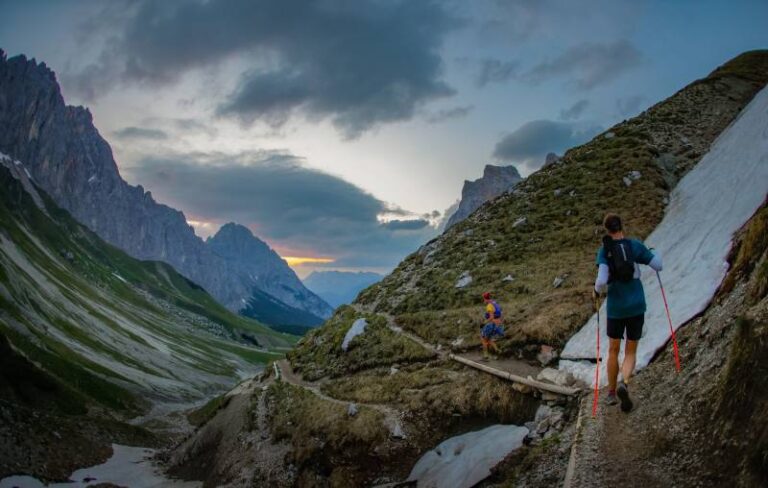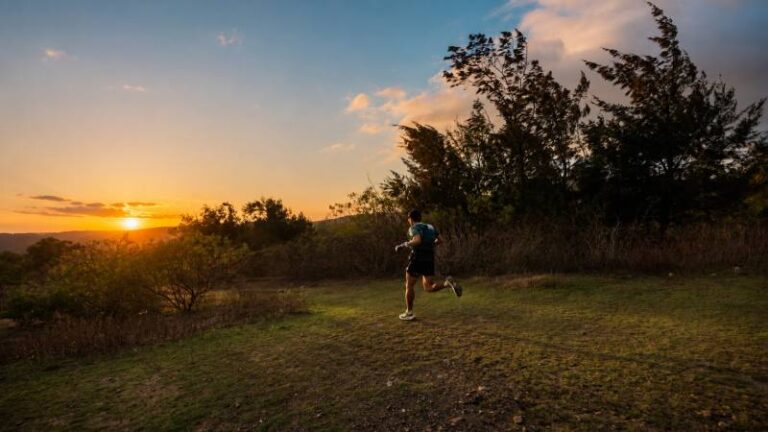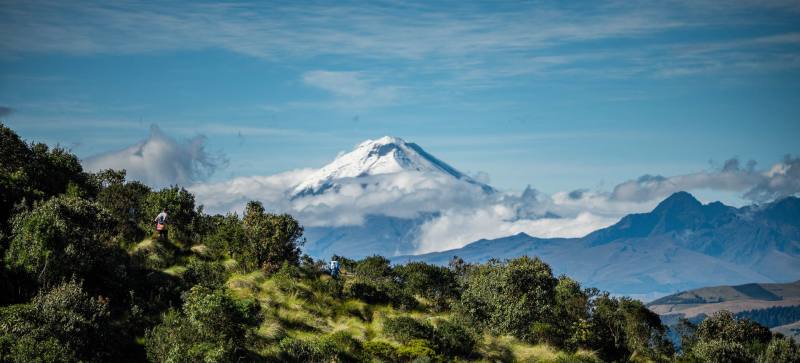
A Quito Trail by UTMB training plan has to prepare you for a race that links the cloud forest of the Andean Chocó to the slopes of Pichincha volcano, before dropping into Quito’s UNESCO-listed historic centre. The event takes place in late July or early August, with six formats from 6 km to the 80K Oso, and its defining feature is altitude. Here is how to train for Quito Trail by UTMB, with the official distances and elevation gain.
The short answer
- Allow 8–10 weeks for the 12K or 20K, 10–12 weeks for the 30K, 12–16 weeks for the 50K Nutria and 16–24 weeks for the 80K Oso, with previous mountain ultra experience.
- At peak, aim for roughly 1500–2500 m of weekly climbing for the 50K and 2500–3500 m for the 80K, depending on your history.
- Key sessions: long climbs run by feel, long hike-run outings, downhill work and, if possible, time at altitude.
- The defining challenge: altitude. Quito sits at around 2800 m, and the 12K starts from the cable car “above 3000 m”, according to the organisers.
Contents
Quito Trail by UTMB distances and elevation gain
Figures from the official Quito Trail by UTMB website, with the Running Stones categories shown by the organisers.
| Format | Distance | Elevation gain | Profile/notes |
|---|---|---|---|
| 80K Oso | 76 km | 4400 m | 100K category, middle-of-the-night start in Mindo, cloud forest, foot of Pichincha, descent to the historic centre |
| 50K Nutria | 53 km | 2800 m | 50K category, starts in Lloa, Las Palmas Río Blanco Reserve, climb to Cruz Loma |
| 30K Tucán | 31 km | 1600 m | 20K category |
| 20K Quinde | 20 km | 1000 m | 20K category |
| 12K Humboldt | 13 km | 850 m | Starts at the Quito cable car, finishes at Plaza San Francisco |
| 6K Rana | 6.5 km | 300 m | No category shown, discovery format |
The courses cross rivers and ravines in the cloud forest, skirt the base of Pichincha, pass the Chirincho waterfall and the old charcoal-carriers’ path, then descend into the city. The highest point of each course is not published on the official site.
What makes Quito Trail by UTMB hard
Most runners arrive from much lower ground. Above 2500 m, less oxygen is available: your heart rate rises faster for the same effort, you get out of breath sooner, and every surge costs more. On the 80K Oso, you also move from humid forest down low to the cooler, thinner air on the heights. If you have a medical history or doubts about altitude, see a health professional before committing.
The climbing ratio is steep too: close to 58 m per kilometre on the 80K Oso and 65 m per kilometre on the 12K Humboldt. Climbs are power-hiking territory, and the long descents into the city hammer your quads. The 80K starts in the middle of the night, so the first hours are run by headlamp on damp, slippery trails.
How long to train for each format
For the 12K and 20K, 8–10 weeks is enough if you already run regularly and take climbing seriously. The 30K Tucán needs 10–12 weeks and some mountain trail experience. For the 50K Nutria, allow 12–16 weeks after finishing a 30–40 km trail race. The 80K Oso takes 16–24 weeks, with previous experience of at least 50 km in the mountains and ideally a first race at altitude. These are guidelines; your level, training time and recovery matter more. To step up gradually, see our guide to increasing distance in trail running.
The phases of your training plan
Base
Easy running, consistency and strength work twice a week. Build elevation gain progressively, and start guiding some sessions by heart rate or feel rather than pace.
Specific phase
Long climbs, mountain long runs, descents, nutrition and kit testing. This is when weekends or a training camp at altitude pay off most.
Acclimatisation and taper
Arriving in Quito several days early helps most runners; the ideal timing varies, and a health professional can advise you. Over the last two to three weeks, cut volume clearly while keeping a few short efforts.
Key sessions for Quito Trail by UTMB
Long climbs by feel
Climbs of 6–12 minutes at a controlled hard effort, close to threshold (what you could hold for about an hour). Pace them by breathing and feel, exactly as you will at altitude.
Long hike-run outing
Three to six hours depending on format, mixing running and power hiking, with your race pack and fuelling. Keep the intensity low: duration is the goal.
Long descents
Three to six descents of 5–10 minutes, or one long continuous descent at the end of a long run, to prepare your legs for the final kilometres into the historic centre.
Altitude stay or weekend
If you can, two or three days above 2000 m with easy runs and one long outing teach you to pace when breathing becomes the limit.
To get these sessions right week after week, the RunMotion Coach app, the official online coach of the UTMB World Series, builds a personalised trail plan and adapts it every week to your completed sessions and availability. Try it free for 7 days.
Plan your race strategy with Race Strategy
In Quito, the same gradient cannot be run at the same pace as at sea level. Race Strategy by RunMotion builds a kilometre-by-kilometre strategy with pace adjusted for elevation, altitude and technical terrain, estimates your split times at key points, and gives you a nutrition and hydration plan per section (carbohydrates, water, sodium), adjusted to race-day weather. Import the official GPX of your Quito Trail by UTMB format to base it on the real profile.
Running Stones and the UTMB World Series
According to the official site, the 80K Oso earns 3 Running Stones, the 50K Nutria 2, and the 20K-category races 1 each. Running Stones improve your odds in the draw for the UTMB World Series Finals in Chamonix. To plan several series races, see our UTMB World Series training plan guide and our advice on planning your trail running season.
Altitude and big climbs are part of our culture: RunMotion founders Guillaume and Romain Adam, twin brothers, come from the Alps, where mountains and ultras are everyday terrain.
FAQ
Do I need to acclimatise for Quito Trail by UTMB?
Quito sits at around 2800 m, so arriving a few days early helps most runners. The ideal duration varies; if in doubt or if you have a medical history, ask a health professional.
What level do I need for the 80K Oso?
Ideally you have finished a mountain race of at least 50 km, with some experience of altitude and night running.
Are poles allowed at Quito Trail by UTMB?
Check the equipment page on the official site. On the long climbs of the 80K and 50K they are often useful, provided you have trained with them.
Final thoughts
Quito Trail by UTMB calls for respect for altitude, climbing power and strong quads for the final descent into the city. Choose your format based on experience, plan your acclimatisation and build up step by step. For a plan that adapts to you every week, start your free 7-day RunMotion Coach trial.
Article updated by the RunMotion Coach team.
Sources: