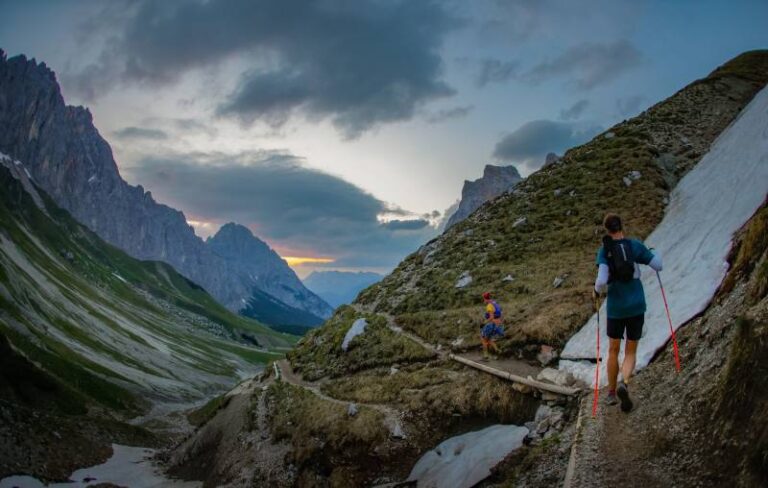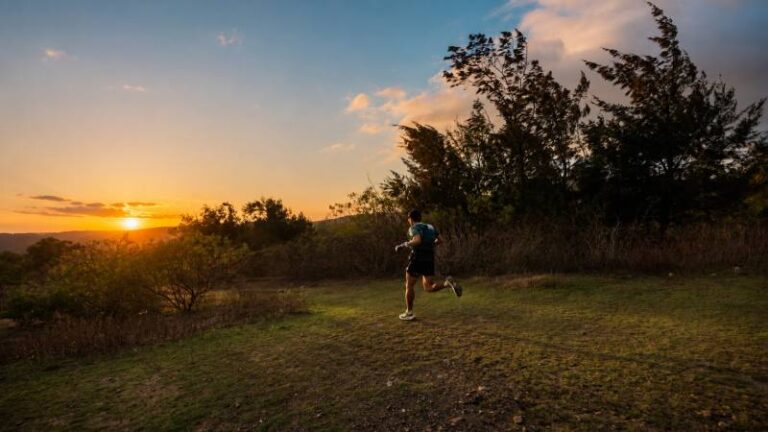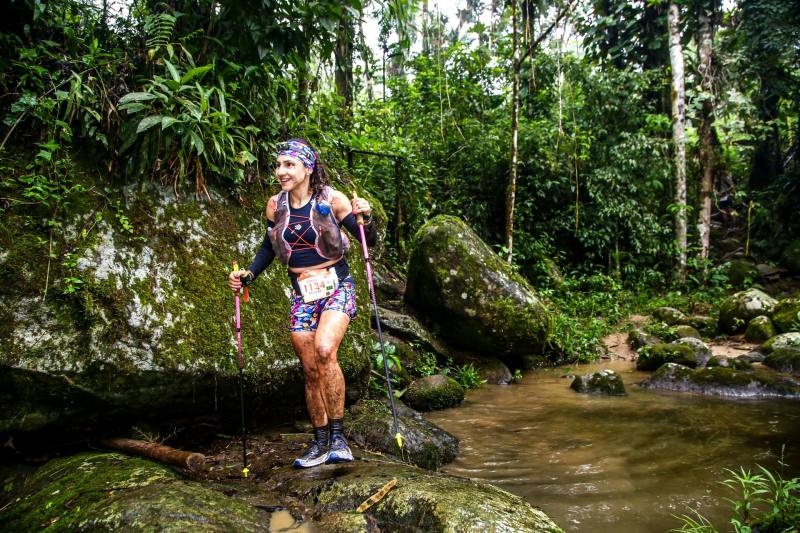
A Paraty Brazil by UTMB training plan needs to get you ready for steep trails through Brazil’s Atlantic Forest, the mountains around the town and Paraty’s historic centre. The event takes place in late September, with seven formats from 7 km to the PTR 100, a 100K with nearly 4900 m of climbing and an evening start. Here is how to train for Paraty Brazil by UTMB, with the official distances and elevation gain.
The short answer
- Allow 8–10 weeks for the PTR 17 or PTR 25, 10–12 weeks for the PTR 34, 12–16 weeks for the PTR 55 and 16–24 weeks for the PTR 100, with previous ultra experience.
- At peak, aim for roughly 1500–2500 m of weekly climbing for the PTR 55 and 2500–4000 m for the PTR 100, depending on your history.
- Key sessions: long hill repeats, long hike-run outings, descents, a night run and heat adaptation.
- The defining challenge: a steep elevation ratio in tropical forest, with heat and humidity on top.
Contents
Paraty Brazil by UTMB distances and elevation gain
Figures from the official Paraty Brazil by UTMB website, with the Running Stones categories shown by the organisers.
| Format | Distance | Elevation gain | Profile/notes |
|---|---|---|---|
| PTR 100 | 101 km | 4850 m | 100K category, evening start from the historic centre; Taquari, Pedra da Macela, Caminho do Ouro |
| PTR 55 | 53 km | 3200 m | 50K category, very steep for its distance |
| PTR 34 | 34 km | 1100 m | 20K category |
| PTR 25 | 25 km | 750 m | 20K category |
| PTR 17 | 17 km | 550 m | 20K category, a good first trail race |
| NIGHT 10 | 10 km | 270 m | No category shown, night race |
| RUN 7 | 7 km | 50 m | No category shown, almost flat |
The PTR 100 leaves the historic centre, heads into the mountains via Taquari, Pedra da Macela and the Caminho do Ouro, then returns to Paraty. The organisers describe “long climbs, descents, and nighttime sections” through the Atlantic Forest. The gear page mentions both bad mountain weather and extreme heat, so prepare for both.
What makes Paraty Brazil by UTMB hard
Gradient comes first. The PTR 55 packs more than 60 m of climbing per kilometre and the PTR 100 around 48 m per kilometre: big-mountain ratios on lower, forested terrain. Climbs are steep and mostly hiked, and descents under the canopy, often damp, call for real technique.
Climate comes second. In the Atlantic Forest, heat and humidity raise sweat rates while making sweat harder to evaporate, so heart rate drifts up and hydration and sodium become priorities. If you train in a cool climate, plan for this. Finally, the PTR 100 starts in the evening with a 30-hour maximum race time, according to the organisers: night running is part of the race from the early climbs.
How long to train for each format
For the PTR 17 and PTR 25, 8–10 weeks is enough if you already run regularly. The PTR 34 deserves 10–12 weeks after a first short trail race. The PTR 55 is a serious challenge despite its distance: allow 12–16 weeks and a previous 30–40 km trail finish. The PTR 100 takes 16–24 weeks, ideally after a 50–70 km mountain ultra. These are guidelines that depend on your level, time and recovery. Our guide to increasing distance in trail running will help you build up.
The phases of your training plan
Base
Easy running, consistency and strength work twice a week. Build elevation gain progressively and start practising power hiking on steep ground.
Specific phase
Long climbs, mountain long runs, downhill repeats and race fuelling and hydration practice. Towards the end of this phase, add heat adaptation if you train in a cool climate.
Taper
Two to three weeks of reduced volume with a few short efforts. Arriving in Paraty a few days early also helps you start adjusting to the climate.
Key sessions for Paraty Brazil by UTMB
Long hill repeats at threshold
Climbs of 6–12 minutes at a controlled hard effort, close to threshold (what you could hold for about an hour), to build power for steep gradients.
Long hike-run outing with poles
Three to six hours depending on format, mixing running and power hiking. Poles appear in the recommended kit for the PTR 100 on the official site; if you plan to use them, train with them.
Forest descents
Three to six descents of 5–10 minutes on forest trails, ideally with roots and damp soil. Short steps, eyes ahead.
Heat adaptation
In the two to three weeks before your taper, a few easy sessions in the warmest part of the day or with extra layers, staying cautious and well hydrated. Stop if you feel unwell. The aim is adaptation, not risk.
Night run (PTR 100 and NIGHT 10)
One or two evening runs with a headlamp to test your lighting and fuelling.
To get the dosage right, the RunMotion Coach app, the official online coach of the UTMB World Series, builds a personalised trail plan and adapts it every week to your completed sessions and availability. Try it free for 7 days.
Plan your race strategy with Race Strategy
In the heat, starting at your usual training pace can cost you the end of the race. Race Strategy by RunMotion builds a kilometre-by-kilometre strategy with pace adjusted for elevation, altitude and technical terrain, estimates your split times at key points, and gives you a nutrition and hydration plan per section (carbohydrates, water, sodium), adjusted to race-day weather. Import the official GPX of your Paraty Brazil by UTMB format to base it on the real profile.
Running Stones and the UTMB World Series
According to the official site, the PTR 100 earns 3 Running Stones, the PTR 55 2, and the PTR 34, PTR 25 and PTR 17 1 each. Running Stones improve your odds in the draw for the UTMB World Series Finals in Chamonix. To build a season around several series races, see our UTMB World Series training plan guide and our tips on planning your trail running season.
Climbing and ultras are home ground for RunMotion: founders Guillaume and Romain Adam, twin brothers, come from the Alps, and that mountain culture guides our plans.
FAQ
Do I need poles for Paraty Brazil by UTMB?
Poles are listed in the recommended kit for the PTR 100. On climbs this steep, many runners find them helpful, provided they have trained with them. Check the rules for other formats.
What level do I need for the PTR 55?
With 3200 m of climbing over 53 km, it is a demanding race. Ideally you have finished a 30–40 km mountain race and are comfortable with 8–12 hours on your feet, depending on your level.
How do I prepare for the heat in Paraty?
Gradually, with easy sessions, monitoring how you feel and how much you drink. If you feel unwell or have doubts, ask a health professional.
Final thoughts
Paraty Brazil by UTMB combines steep climbs, tropical forest and humid heat. Pick your format based on experience, train both climbing and descending, and prepare your body for the climate. For a plan that adapts to you every week, start your free 7-day RunMotion Coach trial.
Article updated by the RunMotion Coach team.
Sources: