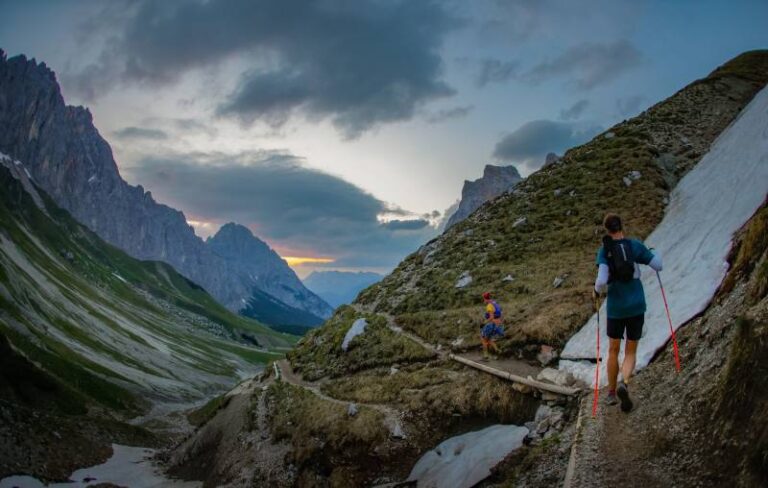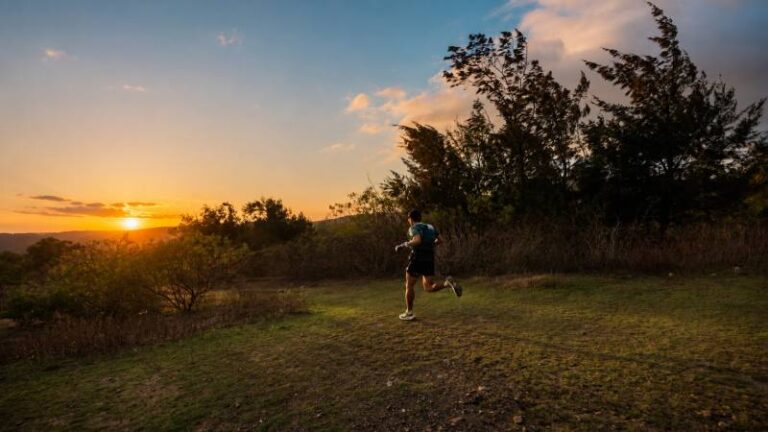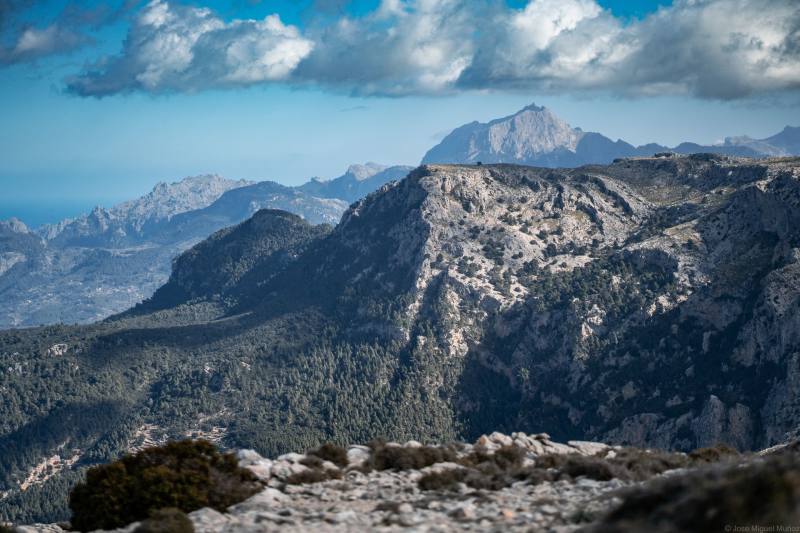
A Mallorca by UTMB training plan prepares you to cross the Serra de Tramuntana, the UNESCO-listed mountain range in north-west Mallorca. Cobbled paths, dry stone walls, limestone ridges and descents to the sea make the terrain as beautiful as it is tough on your legs. Here is how to train for every race, from the 7 km charity run to the 138 km.
The short answer
- Allow 10 to 12 weeks for the CDA (26 km), 14 to 16 weeks for the ETM (56 km) and 5 to 6 months for the CPS (104 km) and the SDT (138 km).
- Indicative peak load: 40 to 60 km and 1200 to 2000 m of climbing per week for the shorter races, 60 to 90 km and 2500 to 4000 m for the ultras, depending on your level.
- Key sessions: power-hiking climbs, descents on stones and steps, long technical runs, night runs for the SDT.
- Number one challenge: very rocky terrain (cobbles, stones, steps) that hammers your feet and quads, especially downhill.
Contents
Mallorca by UTMB distances and elevation
Mallorca by UTMB takes place in late October or early November, with finishes in Port de Sóller. Figures come from each race page on the official Mallorca by UTMB website, which notes that courses may be changed or shortened due to weather or terrain.
| Race | Distance | Elevation gain | Profile/notes |
|---|---|---|---|
| SDT – Serra de Tramuntana (100M category) | 138 km | 5350 m | Night start from Cala d’Estellencs, finish in Port de Sóller; 4 Running Stones; 30 h 30 limit |
| CPS – Camins de Pedra en Sec (100K category) | 104 km | 3740 m | Cala d’Estellencs to Port de Sóller; technical finish through the Barranc de Biniaraix; 21h30 limit; 3 Running Stones |
| ETM – Els Tres Mils (50K category) | 56 km | 2450 m | Starts in Selva, high mountain section past the Cúber reservoir, technical descent; 12-hour limit; 2 Running Stones |
| CDA – Camins de s’Arxiduc (20K category) | 26 km | 1000 m (1300 m descent) | Valldemossa to Port de Sóller on the GR-221; 5-hour limit; 1 Running Stone |
| 7K – Memorial Guiem Sec | 7 km | 150 m | Coastal charity challenge in Port de Sóller, no Running Stones; 1-hour limit |
Altitudes are moderate but the ground is demanding: holm oak forests, old cobbled paths, dry stone walls, cliffs, scree and ravines. Much of the route crosses private land that is only open during the race.
What makes Mallorca by UTMB so demanding
The surface is the first challenge. Old cobbled paths and stone trails are slippery when wet and wearing over time; stepped descents tire your quads faster than dirt trails. The finishes are the second: the CPS ends with cliffs, scree and the ravines of the Barranc de Biniaraix, and the ETM with a technical descent, exactly when your legs are heaviest. The SDT starts in the evening, so you spend the night on this rocky terrain. On the CDA, an 850 m neutralised section must be walked, with a 20-minute penalty for running it.
How long do you need to prepare?
The 7K suits any regular runner. The CDA takes 10 to 12 weeks if you already run trails. The ETM needs 14 to 16 weeks and a previous 30 to 40 km trail with climbing. The CPS and SDT call for 5 to 6 months and at least one finished ultra over 50 km, plus night running experience for the SDT. Our guide to increasing distance in trail running explains how to build up.
The phases of your training plan
Base phase. Easy running, one quality session per week and two strength sessions focused on quads, calves and ankles (squats, lunges, controlled step-downs, balance work). As the race is in the autumn, this phase often falls in early summer, so manage the heat and hydrate well.
Specific phase. Gradually increase climbing, with long runs on rocky ground and lots of downhill work. For the CPS and SDT, add back-to-back weekends and night runs, with a lighter week every three or four weeks.
Taper. One to three weeks depending on the race, cutting volume by 30 to 50% so your quads arrive fresh for the descents to Port de Sóller.
Key sessions for Mallorca by UTMB
Power-hiking climbs: for example 4 to 6 x 6 to 10 minutes uphill at a sustained effort, mixing running and fast hiking.
Descents on steps and stones: stairs, stony trails and repeated descents. This is the most important session for Mallorca.
Long technical run: 3 to 6 hours depending on the race, on rocky ground if possible, testing fuelling and shoes.
Night run (SDT): practise running by headtorch on technical ground.
The RunMotion Coach app builds a personalised, adaptive plan that adjusts every week to your completed sessions, level and availability, with climbing, strength and recovery built in. RunMotion Coach is the official online coach of the UTMB World Series, and its founders, twin brothers Guillaume and Romain Adam, come from the Alps: big climbs are their home ground. Try it free for 7 days.
Plan your race strategy with Race Strategy
On such technical ground, your pace depends as much on the surface as on the gradient. Race Strategy by RunMotion calculates your strategy kilometre by kilometre, with pace adjusted for elevation, altitude and terrain technicality, estimated split times at key points, a nutrition and hydration plan per section (carbs, water, sodium) and a race-day weather adjustment. Import the official GPX of your race to get started.
Running Stones and the UTMB World Series
Mallorca by UTMB is part of the UTMB World Series. According to the official site, the SDT earns 4 Running Stones, the CPS 3, the ETM 2 and the CDA 1; the 7K earns none. The CPS and ETM can also offer direct entry to the CCC and OCC for top finishers or based on UTMB Index. To plan your season, see our UTMB World Series training plan guide and our article on preparing a UTMB World Series season.
FAQ
Do you need poles for Mallorca by UTMB?
Check the official race regulations. Poles help on long climbs, but on cobbles and steps some runners prefer free hands. Train with them if you plan to use them.
What level do you need for the ETM (Els Tres Mils)?
With 2450 m of climbing over 56 km and a 12-hour limit, you should already have run a 30 to 40 km mountain race and be comfortable on technical descents.
Which shoes for the Serra de Tramuntana?
Choose shoes with good grip on rock, including when wet, and enough protection for hard footing. Test them on your long runs first.
Conclusion
Mallorca by UTMB demands strong legs downhill, feet used to rocky ground and patient pacing. Train progressively and you will enjoy the Tramuntana to the full. For a plan that adapts to you, start your 7-day free trial of RunMotion Coach.
Article updated by the RunMotion Coach team.
Sources: mallorca.utmb.world, SDT, CPS, ETM, CDA, 7K Memorial Guiem Sec.