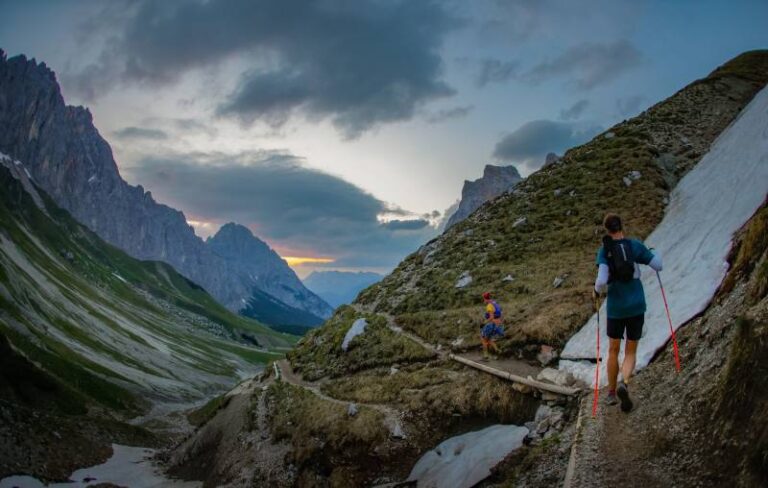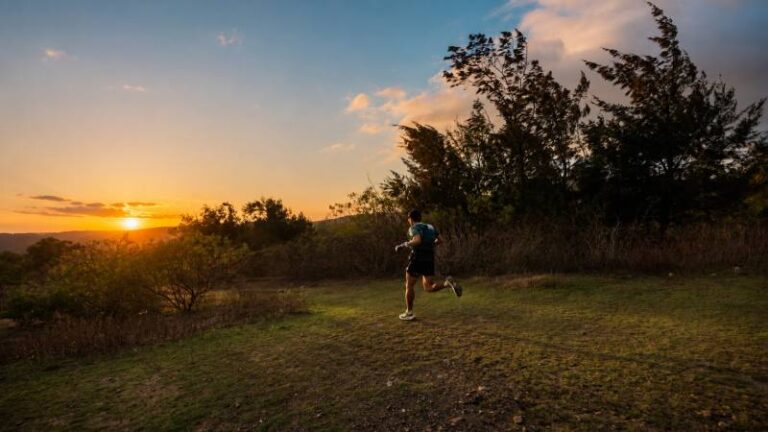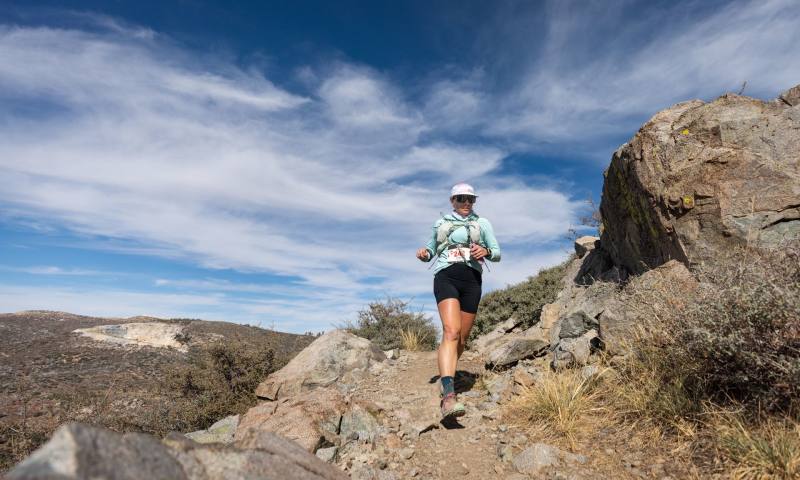
A Kodiak Ultra Marathons training plan has to account for one thing many runners underestimate: altitude. Around Big Bear Lake, California, the courses spend a lot of time above 7,000 ft (about 2,130 m) and top out on Sugarloaf Mountain at 9,995 ft (about 3,050 m). Designated the Americas Major of the UTMB World Series, the October event offers five races from 10 km to 100 miles. Here are the official numbers and how to structure your build.
The short answer
- Typical build: 6 to 10 weeks for the 10K, 10 to 14 weeks for the 21K, 4 to 5 months for the 50K, 5 to 7 months for the 100K, 7 to 12 months for the 100M.
- Specific-phase volume: roughly 3 to 5 hours a week for the short races, up to 8 to 14 hours for the 100M.
- Key sessions: long runs on runnable trail, long threshold climbs, back-to-backs for the ultras, and time at altitude if you can get it.
- The defining feature: lots of running above 7,000 ft on smooth, very runnable singletrack.
Contents
Kodiak distances and elevation
The official name is HOKA Kodiak Ultra Marathons by UTMB. Figures come from the official race pages; Running Stones reflect Major status, which doubles them compared with other series events.
| Race | Distance | Elevation gain | Profile / notes |
|---|---|---|---|
| 100M (100M category) | 161 km (100 mi) | 4,876 m (15,997 ft) | Full loop of the Big Bear Valley including Sugarloaf summit; afternoon start; 36-hour limit; 8 Running Stones |
| 100K (100K category) | 101.1 km (62.8 mi) | 3,143 m (10,312 ft) | Sugarloaf Mountain and Skyline Trail; 20 h 15 min limit; 6 Running Stones |
| 50K (50K category) | 49 km (30.4 mi) | 1,364 m (4,475 ft) | Snow Summit climb then Skyline Trail, start/finish in the village; 10-hour limit; 4 Running Stones |
| 21K (20K category) | 21.7 km (13.5 mi) | 678 m (2,224 ft) | Introduction to high-altitude mountain running via Snow Summit; 5-hour limit; 2 Running Stones |
| 10K | 9.4 km (5.8 mi) | 342 m (1,122 ft) | South Shore trails and Snow Summit area; 3-hour limit; no Running Stones listed |
The 100M circles the entire Big Bear Valley, including a few miles of the Pacific Crest Trail, moving from tall-pine alpine forest to high desert with Joshua trees. The organisers call it “a true mountain 100 miler with a lot of running above 7,000 feet”. Shorter races stay around Snow Summit and the Skyline Trail, with flowing singletrack and lake views. More on the official website.
What makes Kodiak hard
The climbing ratio is moderate, about 30 m of gain per kilometre (roughly 160 ft per mile) on the 100M. Altitude is what changes the equation. Above 2,000 m, most lowland runners pay more for the same pace and recover less well during the race. Starting at your usual runnable-trail pace is the surest way to pay later.
The runnable terrain is the second challenge: smooth trails reward real running fitness, not just strong hiking. And the 100M starts in the afternoon, so you will run through a full night in the mountains in October, when temperatures can drop. Check the mandatory gear list in the regulations.
How long to train for each distance
The 10K and 21K are accessible to regular runners: 6 to 10 weeks for the 10K, 10 to 14 weeks for the 21K. The 50K calls for a previous 25 to 30 km trail finish and 4 to 5 months of preparation. The 100K suits runners with a 50 to 60 km finish behind them, over 5 to 7 months; see our 100 km trail training plan. The 100M ideally follows at least one 80 to 100 km ultra, with 7 to 12 months to prepare and a gradual increase in long-run duration, as explained in our guide to increasing distance. These are benchmarks; your history and available time come first.
The phases of your training plan
With an October race, your base phase falls in spring and early summer: grow easy volume, keep one quality session a week and two strength sessions. The specific phase, 8 to 12 weeks before the taper, lands in late summer, the ideal window for mountain weekends or a training camp at altitude and for longer runs on runnable trail. Take a lighter week every three or four. The taper lasts one to two weeks for the short races and two to three weeks for the 100K and 100M. If you live at sea level, think about arrival timing: some runners prefer to arrive several days early, others at the last minute. If you have any medical history, ask a health professional.
Key workouts for Kodiak
The runnable long run. On rolling trail with moderate climbing, practise running for a long time at easy effort, running the gentle grades instead of hiking them. That is the essence of Kodiak.
Long threshold climbs. Reps of 8 to 15 minutes uphill at threshold effort (roughly what you could hold for an hour), to make the Sugarloaf climb more economical.
Back-to-backs (100K and 100M). Long on Saturday, shorter on Sunday, to train on fatigue without unnecessary risk.
The night run (100M). One or two long runs starting in the evening to test your headlamp, nutrition and alertness.
Want a plan that adapts every week to the sessions you complete, your level and your schedule? The RunMotion Coach app, official online coach of the UTMB World Series, builds in elevation, strength and recovery. Try it free for 7 days.
Plan your race with Race Strategy
At altitude, your usual pace no longer applies. Race Strategy by RunMotion builds a kilometre-by-kilometre plan with pace adjusted for gradient, altitude and terrain, estimates your splits at key points, and gives you a per-section nutrition and hydration plan (carbs, water, sodium) adjusted to race-day weather. Import the official GPX for your race.
Running Stones and the UTMB World Series
As the Americas Major, Kodiak doubles Running Stones: 8 for the 100M, 6 for the 100K, 4 for the 50K and 2 for the 21K. The official site also lists it as a dual qualifier for the UTMB World Series Finals and Western States (within the time limits set by Western States). To build a full season, see our UTMB World Series training plan hub and how to plan your trail running season. RunMotion’s founders, twin brothers Guillaume and Romain Adam, come from the Alps: mountains, vertical and ultra distance are home turf.
FAQ
Do I need poles at Kodiak?
The regulations list them as recommended rather than mandatory. Many runners skip them on the shorter, very runnable races; on the 100M they can help on Sugarloaf.
How do I prepare for altitude if I live at sea level?
Time at altitude during the specific phase is the most effective option. Otherwise, focus on running long at a controlled effort and plan to start slower than you would on a lowland course.
Are pacers allowed on the 100M?
According to the regulations, only on the 100M, from the Doble Camp aid station.
Kodiak rewards runners who can genuinely run and who respect the altitude. Build your aerobic base, include runnable mileage and mountain time, and start conservatively. For a plan that adapts to you, start your free 7-day RunMotion Coach trial.
Article updated by the RunMotion Coach team.
Sources