A Julian Alps Trail Run training plan prepares you for ridge and mountain running between the Julian Alps and the Karawanks, finishing in Kranjska Gora, Slovenia. Julian Alps Trail Run by UTMB offers six adult races from 11 km to 122 km around Triglav National Park. Here is how to train for each of them, with the official figures.
The short answer
- Vitranc Funny 10K, Speed 15K and Kranjska Gora 25K: 8 to 12 weeks; Sky Trail 50K: 12 to 16 weeks; Lake Bled 80K and I Feel Slovenia 120K: 5 to 8 months.
- Rough guide in the specific phase for the 120K: 8 to 13 hours a week and 1500 to 3000 m of elevation gain, depending on your level.
- Key sessions: long hill repeats, long ridge runs, descents, night runs for the 120K.
- The main challenge: point-to-point courses into Kranjska Gora with long ridge sections, and a 9 p.m. start on the 120K.
Contents
Julian Alps Trail Run distances and elevation gain
Figures from the official Julian Alps Trail Run by UTMB website.
| Race | Distance | Elevation gain | Profile/notes |
|---|---|---|---|
| I Feel Slovenia 120K | 122 km | 5855 m | Radovljica to Kranjska Gora, 9 p.m. start, 32-hour limit, 750 runners max |
| Lake Bled 80K | 80 km | 3866 m | Bled to Kranjska Gora, 21-hour limit |
| Sky Trail 50K | 55 km | 2828 m | 50K category, 2 Running Stones. Žirovnica to Kranjska Gora along the Karawanks ridge, 13 h 30 limit |
| Kranjska Gora 25K | 25 km | 1090 m | 20K category, 1 Running Stone. Loop around Kranjska Gora, 6-hour limit |
| Intersport Speed 15K | 17 km | 583 m | Category not stated |
| Vitranc Funny 10K | 11 km | 329 m | Entry-level race |
| Next Gen 10K | 11 km | 329 m | Youth race |
The 120K climbs to Jelovica, Babji zob and Stol, the highest peak of the Karawanks, before a ridge section past Golica and Klek, a descent to Mojstrana and a final climb. The site mentions marked paths, pastures and logging areas. Maximum altitude per course is to be confirmed. The event takes place in September, and the organisers may require extra hot- or cold-weather kit depending on conditions.
What makes the Julian Alps Trail Run demanding
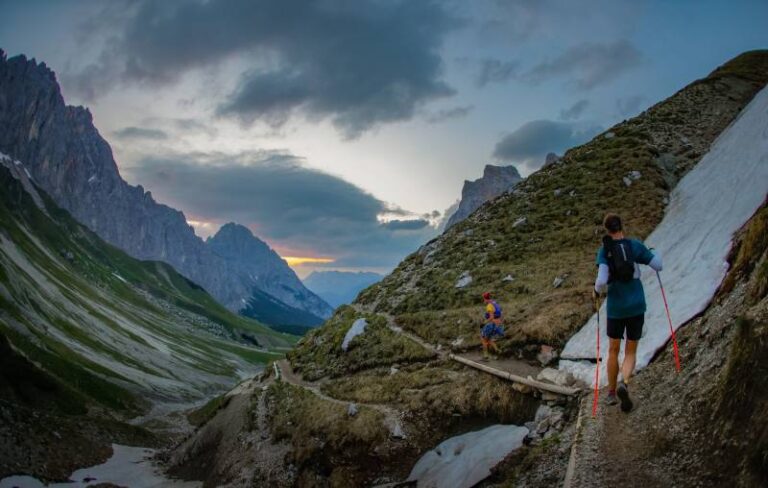
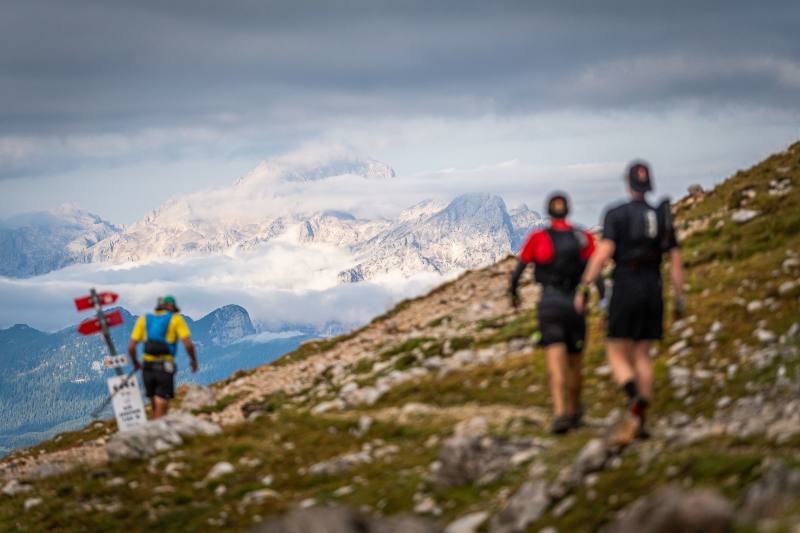
Ridges come first. The long races follow the Karawanks, with sections exposed to wind and weather and marked climbs to Stol. You need confidence on mountain paths and strong ankles.
The point-to-point format comes next. The 120K starts in Radovljica, the 80K in Bled and the Sky Trail 50K in Žirovnica, all finishing in Kranjska Gora, so plan your logistics (drop bags, crew, transport) accordingly.
Night matters on the 120K: a 9 p.m. start and a 32-hour limit mean a full night followed by a day in the mountains.
How long do you need to train?
For the Vitranc Funny 10K and Speed 15K, a few weeks of regular running with some climbing is enough. For the Kranjska Gora 25K, allow 8 to 12 weeks.
For the Sky Trail 50K, 12 to 16 weeks is a good benchmark, ideally after a first 25 to 35 km mountain race. Note that it is actually 55 km.
For the Lake Bled 80K and I Feel Slovenia 120K, plan 5 to 8 months including 12 to 16 specific weeks, with a 50 km+ race already completed. Our guide to increasing your trail distance explains how to step up. These are benchmarks, not guarantees.
The phases of your training plan
Base building (spring)
Easy aerobic volume, two strength sessions a week and one quality session. With a September race, you can build your base calmly in spring.
Specific phase (summer)
Over the last 10 to 12 weeks, gradually increase elevation and long-run duration, favouring ridges and long climbs. For the 120K, include two or three night runs with headlamp and race nutrition.
Taper
Two to three weeks of reduced volume (30 to 50 %) and a few short efforts. For the 120K, prioritise sleep before the evening start.
Key workouts for the Julian Alps Trail Run
Long hill repeats: 3 to 5 climbs of 10 to 15 minutes at a controlled effort, to prepare for the big climbs onto the ridges.
Long ridge runs: 4 to 6 hours in the mountains, ideally with a ridge section, to get used to the duration and terrain.
Descents: one session a week in the specific phase, repeating descents on trail to prepare for the end of the course.
Night runs: for the 120K, 3 to 4 hours in the evening to test headlamp, clothing and fuelling.
The RunMotion Coach app builds and adjusts your plan every week based on completed sessions, level and availability, including elevation, strength and recovery. RunMotion Coach is the official online coach of the UTMB World Series, and its founders, twin brothers Guillaume and Romain Adam, come from the Alps: mountains and ultras are their home ground. Try the app free for 7 days.
Plan your race strategy with Race Strategy
Race Strategy by RunMotion calculates your race plan kilometre by kilometre, with pace adjusted for elevation, altitude and technical terrain, estimated split times at key points and a fuelling and hydration plan per section (carbohydrates, water, sodium). On a point-to-point course, those split times also help your crew plan. Import the official course GPX from the race website, then adjust for race-day weather.
Running Stones and the UTMB World Series
The Julian Alps Trail Run is part of the UTMB World Series, and participants can earn Running Stones, which improve their chances in the lottery for the Finals in Chamonix. The official site lists 2 Running Stones for the Sky Trail 50K and 1 for the Kranjska Gora 25K. For season planning, see our UTMB World Series training plan hub and how to plan your trail running season.
FAQ
Are poles allowed at the Julian Alps Trail Run?
Check the official race regulations. On the 80K and 120K, poles help on long climbs if you have trained with them.
What level do you need for the 120K?
Having finished at least one 50 to 80 km mountain race is a sensible prerequisite, ideally with some night running experience.
How many hours a week to train for the Sky Trail 50K?
In the specific phase, 6 to 9 hours a week with 1200 to 2000 m of climbing is a common benchmark, always built up gradually.
Conclusion
The Julian Alps Trail Run calls for endurance, confidence on ridges and good organisation on point-to-point courses. Choose your race according to your experience and build towards it over time. Start your free RunMotion Coach trial.
Article updated by the RunMotion Coach team.
Sources: