Cross-country skiing, also known as Nordic skiing, is an outstanding endurance sport that challenges both your cardiovascular system and your muscles. Made popular by sports such as biathlon, with French legend Martin Fourcade, you may be wondering whether you can add cross-country ski sessions to your running or trail training. Discover all the benefits of cross-country skiing for runners and why you should make the most of winter to get out on the snow, if you have the opportunity!
Contents
Cross-country skiing, how does it work glide?
First, there are two ways to enjoy Nordic skiing: classic skiing and skate skiing. Both techniques offer a range of benefits for running.
Classic skiing, the more accessible option
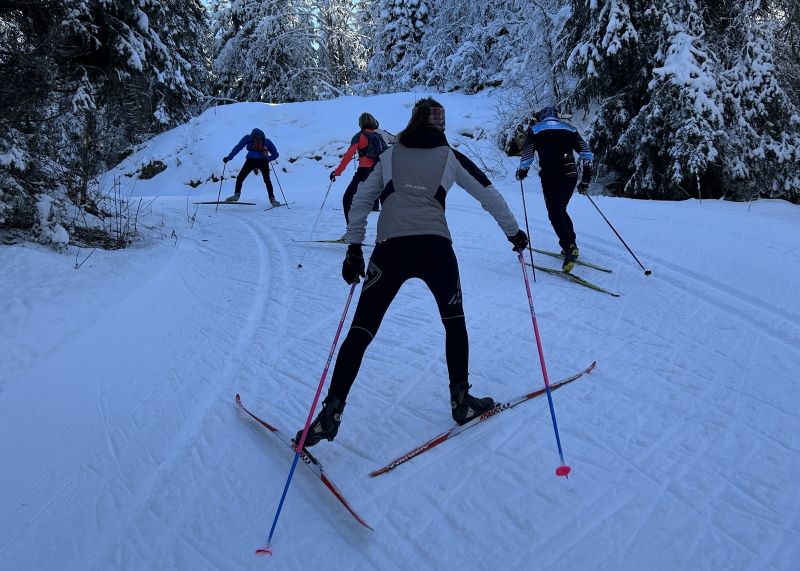
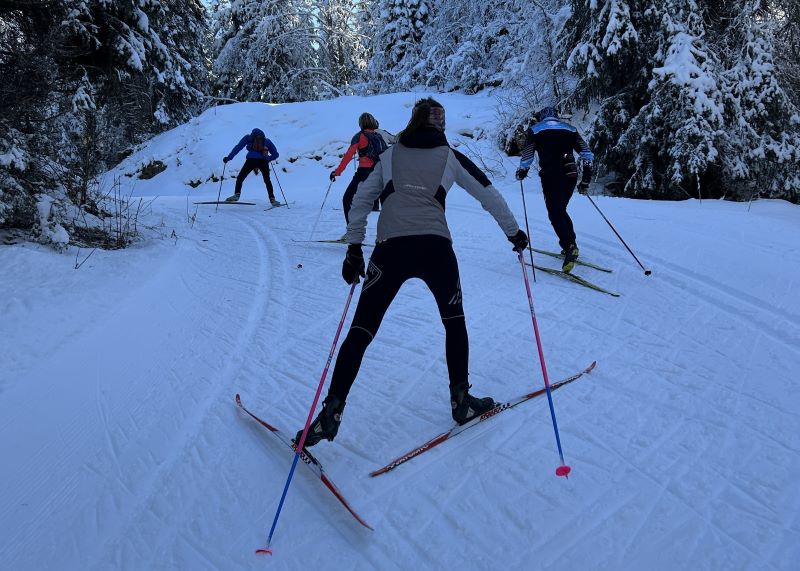
The movement is very similar to running, except that you aim to make the most of the glide. You also use your arms a lot to maintain that gliding momentum. The movement is fairly natural and easy because it is guided by the tracks on groomed trails. The skis have small scales underneath, which stop you from sliding backwards on climbs.
If you have never skied before and are not used to the skating stride, I recommend starting with classic skiing. You will have fun sooner and quickly enjoy the benefits of cross-country skiing for running, because the technical side is much less demanding.
Skate skiing, the more technical option
Skate skiing is a little different, as the skis are completely smooth. You use a skating stride to move forward, similar to the movement used in ice skating or rollerblading. It is technically harder to master and more demanding on your muscles. The big advantage is that you move faster and get a real sensation of speed.
Coordination between your pole push and leg movement is essential in skate skiing. It can take quite a few sessions before you feel comfortable and fully enjoy the benefits of cross-country skiing for running!
At first, runners often compensate for a lack of technique with a big aerobic engine. But the risk is spending the whole time in the red and struggling to keep up with your friends. The longer the effort goes on, the wider the gap becomes. It can be worth taking one or two lessons with an instructor to help you master the V1 technique and develop a style that lets you enjoy skiing even more.
Is cross-country skiing the ultimate endurance sport?
Both forms of cross-country skiing offer benefits for runners. Overall, apart from the technical differences, their advantages are almost the same. One of the main benefits of cross-country skiing for running is that it puts less stress on your joints. Snow and gliding movements absorb more impact. It is ideal for recharging your batteries before race season, which can be extremely demanding on your joints.
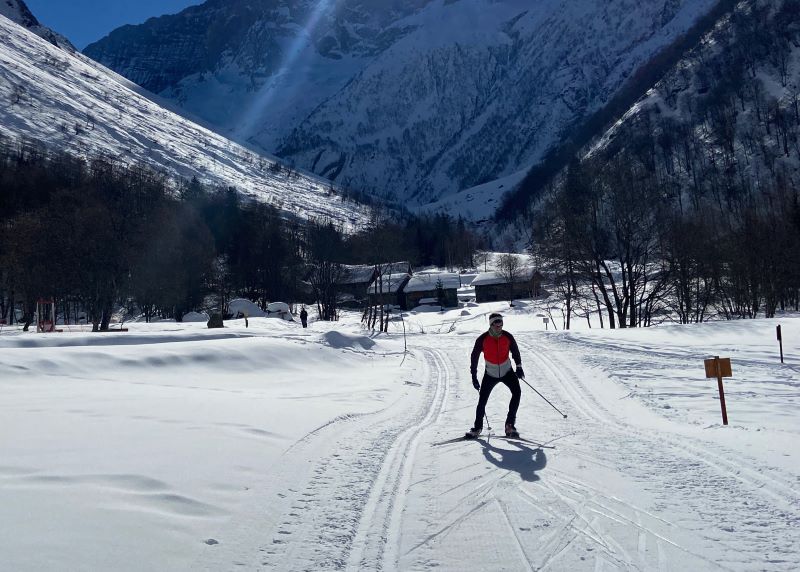
Cross-country skiing may be the ultimate endurance sport. It is a discipline that heavily challenges your aerobic capacity. The best cross-country skiers have a VO2 max that is even higher than that of the best ultra-trail runners, for example. You can therefore develop your cardiovascular fitness more significantly than through running alone, because you use your whole body to move forward rather than just your legs.
To ski efficiently, it is essential to keep your core strong and stable! That is especially useful for runners who regularly skip upper-body strength sessions. A well-braced upper body then allows for far more efficient energy transfer when you run. You stabilize your upper body and drive through your arms to move forward and stay balanced. As I said, it is a very complete discipline!
When it comes to muscle strengthening for trail runners, cross-country skiing is also excellent for building stronger glutes and quads, while improving proprioception. Every muscle and joint is engaged to maintain your balance.
Specific cross-country ski workouts
How cross-country skiing compares with running
A cross-country ski outing is similar to a fartlek workout. There are periods where your skating tempo picks up on the climbs, followed by much easier sections on flatter terrain, for example. This applies whether you ski classic or skate.
In terms of heart rate, your cross-country ski sessions can replace active endurance and threshold running workouts. This allows you to improve at these intensities through cross-training, while developing every part of your body at the same time.
Examples of cross-country ski training sessions
Once you have gained a little experience in Nordic skiing, whether classic or skate skiing, you may want to add a few structured workouts on skis. The easiest option is to do interval sessions, just like you would for running. If you ski faster than your friends, even better! One rep you leave them behind, the next you wait for them, perfect!
You can start with the classic 10 x 30 seconds on, 30 seconds off. For 30 seconds, put the power down, then ease off and recover for 30 seconds.
You can also increase the length of your hard efforts with, for example, 5 x 4 minutes, with 2 minutes of recovery between each interval. The key is to be as consistent as possible with your pace and maintain the same speed for every repeat.
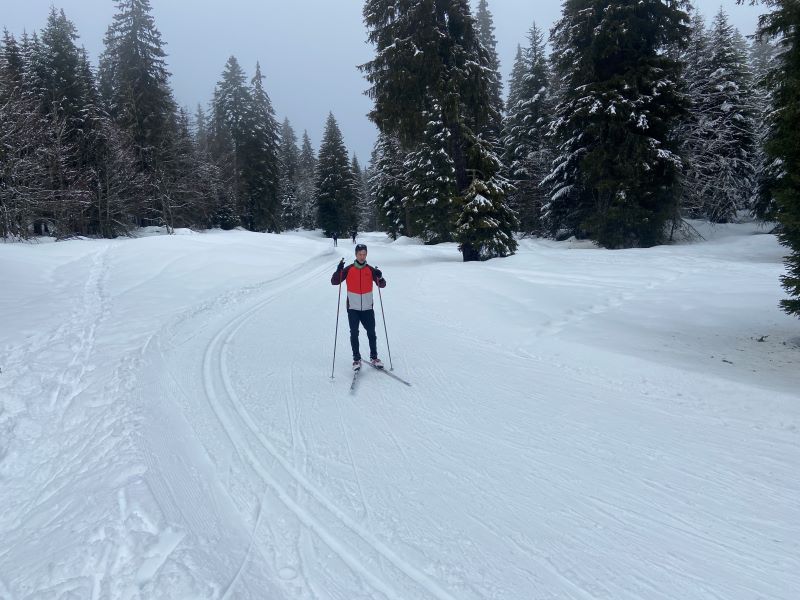
Make the most of cross-country skiing for running
You are now ready to use cross-country skiing as cross-training during the winter running season. Of course, none of this means you should skip your strength and conditioning sessions, they will always be valuable!
You should also keep running regularly, so you do not lose joint elasticity and your body remains accustomed to the specific demands of running. That is the only drawback of low-impact cross-training for runners.
Good news: with RunMotion Coach Premium, you can now add cross-country skiing to your training plan! Depending on your goal, you can now access endurance and intensity sessions that integrate seamlessly into your original running training plan.
If you are not sure where to find Nordic ski resorts, you can visit this website, which lists a number of them.
All that is left to do is go running skiing!