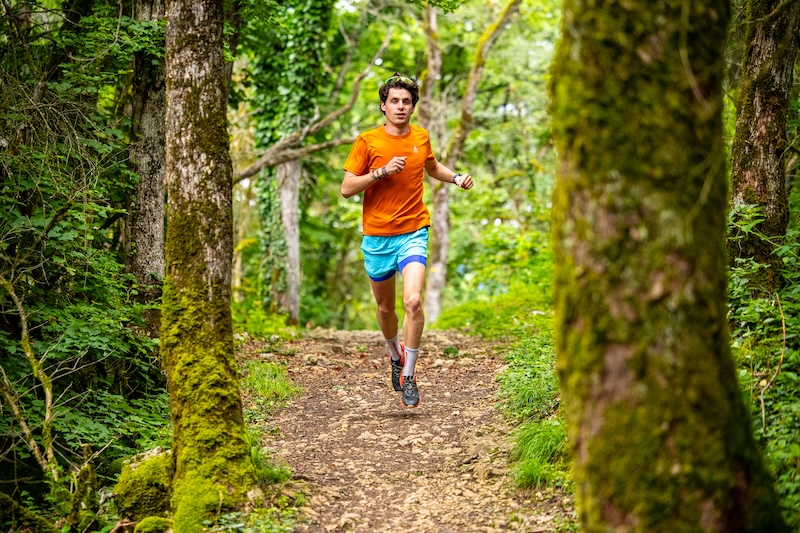
Taking part in a Backyard Ultra is an experience unlike any other. Unlike a marathon or ultra-trail race, there is no fixed distance to cover and no target time to chase. The only goal is to line up again for every new start, until just one runner remains.
Created by Lazarus Lake, this format attracts more and more endurance sports enthusiasts every year. Training for a Backyard Ultra is not just about logging miles. You need to learn how to manage your effort, maximize recovery and build endurance that can last for hours, or even several days.
In this guide, discover how to train for a Backyard Ultra and how RunMotion Coach can support you all the way to race day.
Contents
- Why train differently for a Backyard Ultra than for an ultra-trail?
- What training do you need for a Backyard Ultra?
- How long do you need to train for a Backyard Ultra?
- What pace should you run?
- How do you recover well between loops?
- Mistakes to avoid in your Backyard Ultra training
- How can RunMotion Coach help you train for a Backyard Ultra?
- In summary
Why train differently for a Backyard Ultra than for an ultra-trail?
At first glance, a Backyard Ultra may look like any other ultra-endurance event. Yet its format completely changes the way you approach the race.
The principle is always the same: every hour, participants start a 6.706 km (4.167-mile) loop. They have 60 minutes to complete it. Once back at base camp, they can refuel, change clothes or rest before the next start. If a runner fails to finish the loop within the time limit or does not make it to the start line for the next loop, they are eliminated.
The race continues until only one participant is able to complete one more loop.
This rule transforms the strategy entirely. In a traditional ultra, it can make sense to push the runnable sections to gain time. In a Backyard Ultra, running faster than necessary brings almost no advantage. It is better to save your energy and return to base camp feeling fresh enough to start again one hour later.
Performance therefore depends more on consistency, endurance and your ability to recover than on raw speed.
What training do you need for a Backyard Ultra?
Successful preparation starts with a strong aerobic base. The goal is not to run fast, but to make slow paces as efficient as possible.
Easy runs in aerobic endurance therefore play a central role in your training. Performed at low intensity, they improve cardiovascular fitness, develop your ability to use fat as an energy source, and gradually strengthen your muscles, tendons and joints. This endurance base is essential for running hour after hour with a limited energy cost.
Long runs are another essential part of Backyard Ultra training. They help your body adapt to running for several hours, while also allowing you to test your nutrition, gear and ability to stay focused over time. However, there is no need to pile up very long runs every weekend. Consistent training is often more beneficial than a series of extreme sessions.
Even though a Backyard Ultra is raced at a moderate pace, keeping one quality session per week is still valuable. Threshold training or a few faster intervals can improve your running economy. The higher your overall fitness level, the smaller a percentage of your capacity Backyard pace will represent, helping you limit fatigue.
Strength training is crucial for a Backyard Ultra, as muscular fatigue is one of the main limiting factors in this type of effort. One or two sessions per week can strengthen your lower body, core and postural muscles, all of which are heavily challenged as the hours add up.
How long do you need to train for a Backyard Ultra?
The length of your preparation naturally depends on your experience.
A runner with marathon or trail-running experience can generally prepare for their first Backyard Ultra in around 12 weeks, provided they already have a consistent training base.
If you are new to long-distance running, it is best to build your endurance gradually over several months before considering a Backyard Ultra. This extra time will allow you to increase your training volume without raising your injury risk.
The aim is not to rack up as many miles as possible, but to develop lasting endurance that your body can properly absorb.
What pace should you run?
One of the most common mistakes is starting the first few loops too fast.
In a Backyard Ultra, finishing a loop in 43 minutes gives you no more advantage than finishing it in 53 minutes if those 10 minutes saved cost you more energy. The next start will be at the same time for every participant.
The ideal approach is to run at a comfortable pace, one that is consistent and fully under control. The best Backyard Ultra specialists often look as though they are out for an easy jog during the opening hours. That apparent ease is exactly what allows them to keep going when everyone else starts to slow down.
Training is your opportunity to learn to recognize this intensity and resist the temptation to run too fast.
How do you recover well between loops?
The few minutes spent at base camp are almost as important as the miles you run.
Every return should follow a simple, effective routine: drink, eat, check your gear, adjust your clothing if the weather changes, then head back out without stress. The smoother this organization becomes, the less mental energy you will spend as the hours pass.
It is also essential to test your nutrition strategy during training. The foods you tolerate during a marathon may not be what you want to eat after 10 or 15 hours of running. It is far better to experiment in training than discover a digestive issue on race day.
In the longest Backyard Ultras, sleep management also becomes a decisive factor. Although most participants will not race beyond one night, considering that possibility is part of good preparation.
Mistakes to avoid in your Backyard Ultra training
The first mistake is believing that you simply need to do increasingly longer runs. Balanced preparation is built above all on consistency. Several weeks of coherent training deliver more benefits than one or two huge weekends followed by difficult recovery.
Another common mistake is neglecting nutrition. Waiting until you feel hungry or thirsty is rarely a good strategy in a race with no known finish time. It is better to establish a regular fueling routine from the very first hours.
Finally, many runners struggle to slow down. Yet patience is one of the most important qualities for a Backyard Ultra participant. Running a few seconds slower per kilometer at the start of the race may help you gain several more loops at the end.
How can RunMotion Coach help you train for a Backyard Ultra?
Training for a Backyard Ultra requires finding the right balance between endurance development, recovery and progressive training volume. That is exactly what RunMotion Coach delivers.
By choosing the “Prepare for a Backyard Ultra” goal, you receive a personalized training plan based on your fitness level, experience and the time you have available each week. The app alternates easy aerobic runs, long runs and quality sessions to progressively build the essential qualities for this type of event.
Your plan also adapts when your schedule changes, allowing you to maintain consistent progress all the way to race day. You can easily complement your preparation with strength training sessions or workouts dedicated to testing your gear and fueling strategy.
In this episode of BPM by RunMotion Coach, discover Xuane Nguyen’s experience, a RunMotion user who raced the Backyard des Barjots. He completed 66 loops!
In summary
Preparing for a Backyard Ultra is not only about running long. It is about learning to manage your pace, recover efficiently between loops and build endurance that can withstand the accumulation of hours.
With progressive, structured training, you can fully embrace this unique experience, whatever your goal. Whether you want to discover the format or push your personal best, RunMotion Coach supports you with a personalized training plan so you can arrive at the start line with confidence.
In a Backyard Ultra, victory does not always go to the fastest runner. It often rewards the athlete who can stay patient and start one more loop.