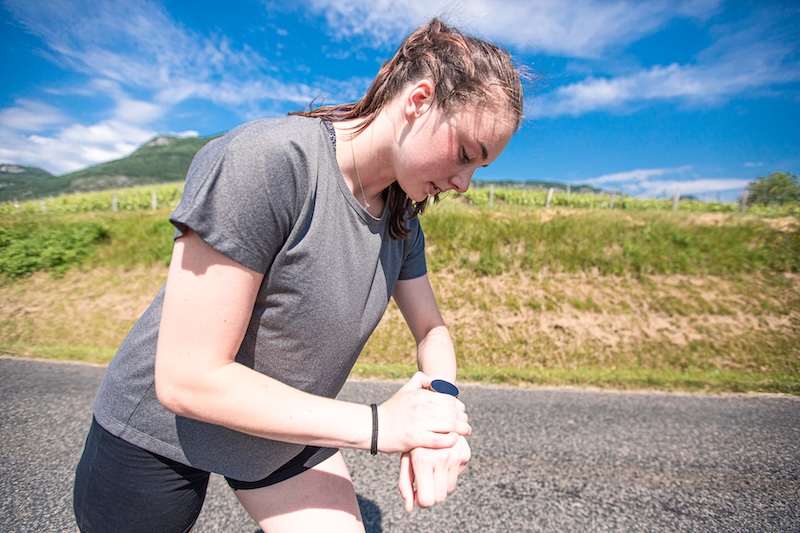
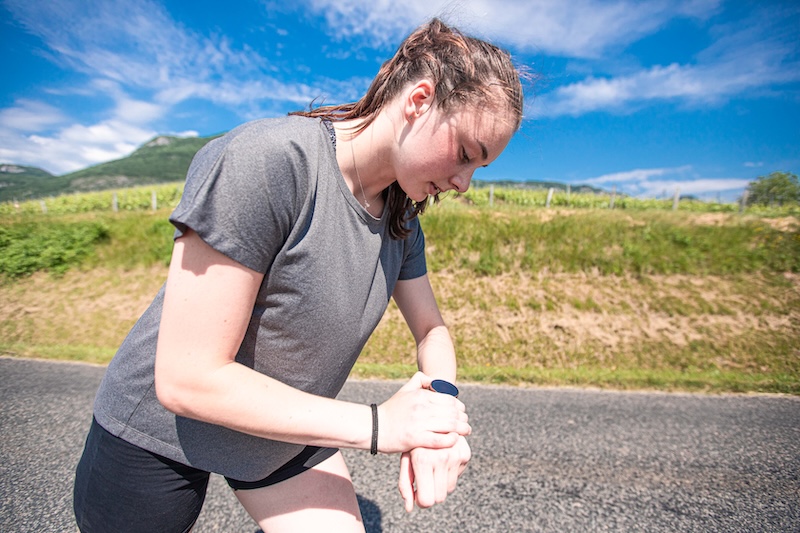
In triathlon, there are two main ways to measure training intensity, heart rate and power (mainly for cycling). Between HR watches, bike power meters, and an ever-growing pile of data, a lot of triathletes wonder which tool to prioritise to improve endurance performance efficiently.
The truth is, there isn’t one single right answer. Both approaches work together, but they don’t tell exactly the same story about your effort. Understanding the differences helps you structure your triathlon training plan more effectively and avoid a few classic mistakes.
Contents
Heart rate: measuring your body’s response
Training with heart rate means tracking how your body reacts to effort. As intensity rises, your heart beats faster to deliver oxygen to working muscles.
This method has been used for decades in endurance sports, especially running and triathlon. It’s still extremely relevant today, particularly for building a strong aerobic base.
One big advantage of heart rate is how easily it helps you control intensity during aerobic endurance sessions. Many triathletes think they’re riding or running “easy” when they’re actually already pushing too hard.
Another benefit is that it also reflects your fatigue level. An unusually high heart rate can signal poor recovery, stress, or difficulty adapting to heat. On the other hand, a heart rate that struggles to rise can be a sign of heavy fatigue.
But heart rate has its limits too. It responds with a delay. On short or very intense intervals, your HR can take several dozen seconds to climb, which makes it harder to pace high-intensity interval training with real precision.
It’s also influenced by plenty of external factors, temperature, hydration, fatigue, caffeine, or stress.
Power: measuring the real work you produce
Power-based training is mostly used on the bike thanks to sensors built into pedals, cranks, or an indoor trainer. Here, you’re no longer measuring the body’s response, you’re measuring the actual mechanical work you’re putting out.
In practical terms, if your power meter reads 250 watts, you are producing exactly that power, regardless of how you feel or what the conditions are like.
In cycling, power lets you control session intensity with pinpoint accuracy. For short intervals, climbs, or triathlon-specific efforts, it becomes a seriously effective tool for performance gains.
It also helps massively on race day. Many triathletes blow up on the run because they rode too hard on the bike. With power, you can pace smarter and stick to a target intensity that matches the race distance. On an Ironman or a 70.3, that control can make a huge difference.
So, do you have to choose between heart rate and power?
Not necessarily. Power and heart rate don’t measure the same thing. Power shows what you produce, heart rate shows how your body responds to that output. The best triathletes generally use both.
Here’s a simple example, you do a session at your usual 220 watts, but your heart rate is much higher than normal. That can point to fatigue, early dehydration, or lack of recovery.
On the flip side, if you’re producing less power with a high heart rate, it can also reveal a dip in fitness. Combining the data becomes really valuable to better understand your sensations and adjust your training load.
Which method should you prioritise based on your level?
If you’re new to triathlon, heart rate is often the best place to start. It’s affordable, easy to use, and very useful for learning how to manage the right intensities, especially for aerobic base training. In running, heart rate is still an excellent reference for most amateur triathletes.
If you already ride regularly and want to improve with more precision, investing in a power meter can clearly take you up a level. This is especially true when preparing for long-distance triathlon, where pacing and effort management are crucial.
The best option is often a hybrid approach:
- heart rate to monitor recovery and endurance workouts,
- power to precisely guide bike sessions and race pacing.
Most importantly, understand what these metrics are truly measuring so you don’t end up training hard without training smart.
Because in the end, the best workouts aren’t necessarily the most complicated ones, they’re the ones you can repeat consistently, week after week, with purpose.