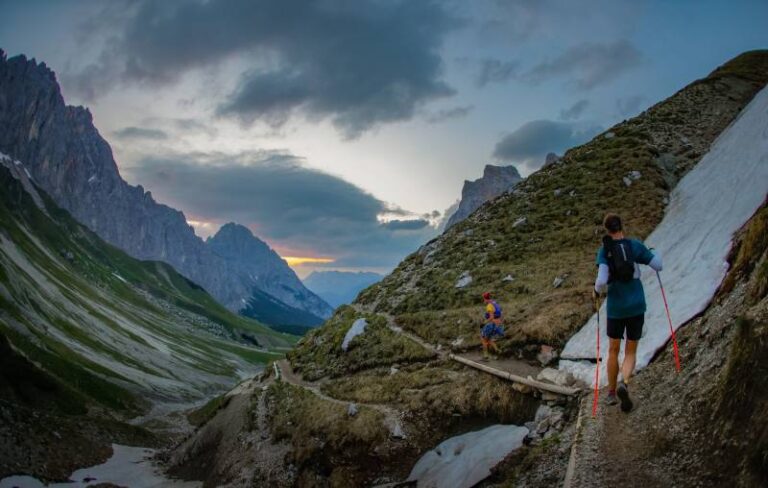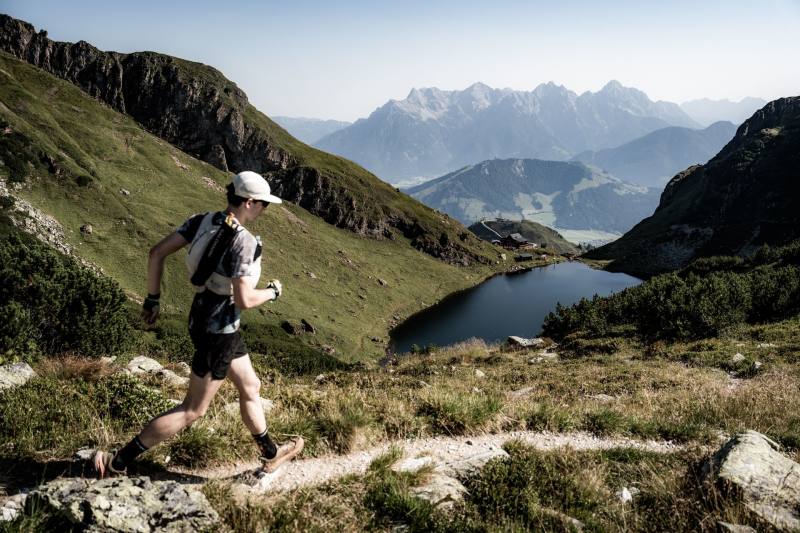
Building a KAT100 by UTMB training plan means preparing for one of the hilliest 100-milers on the circuit: 169 km and 9000 m of climbing in the Kitzbühel Alps of Tyrol, Austria, starting from Fieberbrunn. The shorter formats, from 24 to 75 km, share the same signature of long climbs over grassy alpine pastures and rocky passages. Here is how to train for KAT100, format by format.
The short answer
- Typical build: 10 to 12 weeks for the Speed Trail, 12 to 16 weeks for the Marathon Trail, 16 to 24 weeks for the Endurance Trail, 9 to 12 months for the 100 Miles (with a mountain 100 km already finished).
- The race is held in early August: spring for base, early summer for the bulk of the climbing.
- Key sessions: long climbs, repeated descents, 5 to 8-hour mountain long runs, back-to-backs, a night run.
- The defining trait: exceptional climbing (about 53 m of gain per km over 169 km) and, for many 100 Miles runners, two nights out.
Contents
KAT100 distances and elevation gain
| Format | Distance | Elevation gain | Profile/notes |
|---|---|---|---|
| 100 Miles (100M) | 169 km | 9000 m | Evening start in Fieberbrunn, 45 h max race time; 4 Running Stones |
| Endurance Trail (100K) | 75 km | 4100 m | Starts in Kitzbühel; 3 Running Stones |
| Marathon Trail (50K) | 52 km | 3100 m | Fieberbrunn; 2 Running Stones |
| Speed Trail (20K) | 24 km | 1650 m | Fieberbrunn; 1 Running Stone |
| Easy Trail | 8 km | 250 m | Fieberbrunn; discovery format, no category |
| Kids Trail | not published | not published | Kids’ race |
Figures come from the official KAT100 by UTMB website. The organisers describe rocky passages through the famous grassy mountains of the Kitzbühel Alps: long pasture climbs, ridges, steep descents and little flat ground. On the 100 Miles they mention the glowing Jakobskreuz at night and sunrise on the Kitzbüheler Horn, so much of the race happens in the dark. In early August, valleys can be hot and summits cool, with the usual risk of summer thunderstorms in the Alps.
What makes KAT100 tough
The headline number is the climbing: 9000 m over 169 km, a very high ratio for a 100-miler. That means hours of power hiking and just as much descending, and it is usually the quads, not the lungs, that decide how the race ends. The shorter races follow the same logic: the Speed Trail averages about 69 m of gain per km, a true mountain race despite its 24 km.
On the 100 Miles, the evening start and 45-hour limit mean many runners will spend two nights outside. Managing sleep, night-time fuelling and cooler temperatures up high becomes as important as fitness.
How long do you need to train?
For the Speed Trail (24 km, 1650 m), allow 10 to 12 weeks with regular mountain running. The Marathon Trail (52 km, 3100 m) needs 12 to 16 weeks after a 30 km race with at least 1500 m of gain. The Endurance Trail (75 km, 4100 m) takes 16 to 24 weeks and some mountain ultra experience. For the 100 Miles, specific training lasts at least six months, but ideally you build the season over 9 to 12 months with a mountain 100 km already behind you. Our guide to preparing a 100-mile UTMB-style race covers the same logic. Treat all of this as guidance: level, history and available time come first.
The phases of your training plan
Base and strength (winter to spring). Build aerobic endurance through running and, if you like, ski touring or cycling for low-impact volume. Strength work is central: eccentric quads, calves, posterior chain and core, twice a week.
Mountain-specific phase (May to July). Weekly climbing rises gradually, with long mountain days and big weekends. This is exactly the terrain the RunMotion team knows: founders Guillaume and Romain Adam, twin brothers, come from the Alps, where mountains, vertical and ultra are part of everyday life. One or two race-like tests let you validate kit and fuelling.
Taper (2 to 3 weeks). Cut volume by about 30 to 50%, keep a few hard climbs and, for the 100 Miles, take three weeks and protect your sleep.
Key sessions for KAT100
Long power-hiking climbs. 30 to 60-minute climbs at a fast walk, with poles if you plan to race with them and the rules allow it. This is the skill that moves you across the pastures.
Repeated descents. Hike up, run down, several times per session. With 9000 m to descend on the 100 Miles, this is the session that best protects your quads on race day.
Threshold hill repeats. Repeats of 6 to 10 minutes at an effort you could hold for about an hour. They make the difference on the Speed Trail and Marathon Trail.
Back-to-backs and a night run. For the Endurance Trail and 100 Miles, link two long mountain runs over a weekend. For the 100 Miles, include at least one run that starts in the evening and continues into the night.
To turn these principles into a concrete programme, the RunMotion Coach app, the official online coach of the UTMB World Series, builds a personalised plan for your KAT100 format, covering elevation, strength, recovery and mental preparation, and adjusts it every week to your completed sessions and availability. Try it free for 7 days.
Plan your race strategy with Race Strategy
Over 169 km and 9000 m of climbing, strategy matters as much as fitness. Race Strategy by RunMotion calculates your plan kilometre by kilometre with pace adjusted for elevation, altitude and terrain technicality, estimates split times at key points and builds a fuelling and hydration plan by section (carbohydrates, water, sodium), with a race-day weather adjustment. Start from the race list or import the official KAT100 GPX file from the organisers’ website to see when each night will begin for you.
Running Stones and the UTMB World Series
According to the official website, the 100 Miles earns 4 Running Stones, the Endurance Trail 3, the Marathon Trail 2 and the Speed Trail 1. They improve your chances in the Finals draw in Chamonix. See our UTMB World Series training plan guide and our article on preparing a UTMB World Series season.
FAQ
What level do you need for the KAT100 100 Miles?
It is for runners who have finished at least one mountain 100 km with substantial climbing and have experience of racing through the night.
Do you need poles at KAT100?
The rules and mandatory kit list on the official website are the reference. With this much climbing, poles are often valuable on the long formats, provided you have trained with them.
How much weekly climbing for the 100 Miles?
As a rough guide, experienced runners preparing such a hilly 100-miler often peak at 3000 to 5000 m of gain per week. Build up over several months, according to your history and access to mountains.
Final thoughts
KAT100 by UTMB is all about vertical: climb for a long time, descend often and handle the night. With a gradual build over several months, real downhill work and mountain weekends, you will enjoy the Kitzbühel pastures instead of enduring them. Start your 7-day free trial of RunMotion Coach for a plan that adapts to you every week.
Article updated by the RunMotion Coach team.
Sources