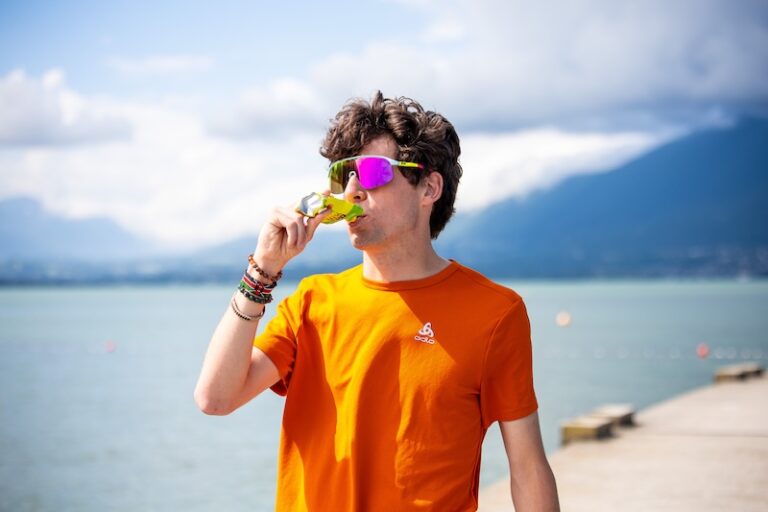
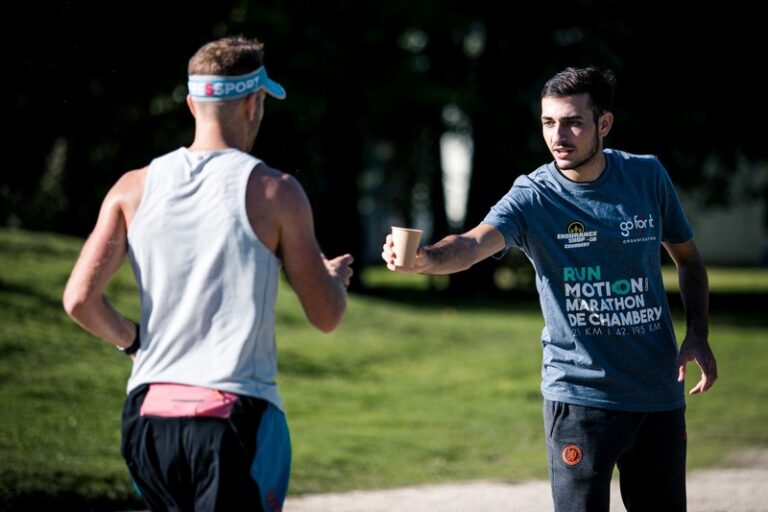
To adapt your running nutrition in cold weather, you don’t need to reinvent everything: carbohydrate targets stay the same, but the cold blunts your thirst, makes energy bars rock hard and makes you less willing to stop and eat. The real challenge is to keep drinking and fueling regularly, with foods that cope with low temperatures.
Here’s how to handle it before, during and after the effort, whether you’re heading out for a winter long run or lining up for a cold night race like the Hellgate 100K.
The short answer
- For a one-hour easy run: nothing special to change, apart from a small snack if you head out on an empty stomach.
- For a long effort: aim for the same intake as usual (30 to 60 g of carbs per hour between 1 and 2.5 hours, up to 90 g beyond that), starting in the first hour.
- Hydration: drink on a schedule, because the cold clearly reduces your sense of thirst.
- What to carry: choose gels and purées over bars, which harden in the cold, and keep your flasks close to your body so they don’t freeze.
- At aid stations: make the most of hot drinks and salty food to revive your appetite, without lingering long enough to get chilled.
Contents
- Does cold weather really change your nutrition needs?
- Before the race: start with full energy stores
- During the race: fuel early and regularly, even if you’re not hungry
- Hydration in cold weather: the thirst trap
- Example: a fueling strategy for a long winter race in the dark
- Common mistakes when running in the cold
- After the race: warm up and refuel fast
- FAQ: cold weather running nutrition
- Ready to take on the cold?
- Sources
Does cold weather really change your nutrition needs?
On a one-hour run, not really. You produce a lot of heat while running, and a few well-chosen layers are enough to stay at a comfortable temperature. There’s no need to eat more “because it’s cold” before an easy run.
Things change when the effort gets longer. Running in snow or mud, wearing heavier clothing, takes more energy: the expert consensus statement published by the American College of Sports Medicine (ACSM) points out that cold can alter your gait and increase the energy demands of exercise.
On a long trail race, there are also the moments when you slow down, hike a climb or stop at an aid station. Your heat production drops suddenly, and your body relies on shivering to warm up.
That’s when nutrition becomes a safety issue as much as a performance one. Shivering burns a lot of carbohydrate, and the same ACSM statement stresses that it is substantially impaired if hypoglycemia occurs. Fatigue, dehydration and poor calorie intake are also listed among the risk factors for cold injuries. A runner who is “running on empty” cools down faster and struggles to regain warmth.
So the main trap isn’t needing far more calories, it’s eating less than usual. When it’s cold, nobody wants to take their gloves off to open a gel, or stop to drink. And during a night race, appetite drops even further with fatigue.
Before the race: start with full energy stores
In cold weather as at any other time of year, a good long race starts in the days before: carbohydrate-rich meals, foods you know well and little fiber the day before. Our article on nutrition before a marathon or trail race covers this phase in detail.
On race day, the cold adds two points to watch. First, waiting at the start: at a winter race you may stand still for a long time in the corral, and you start dipping into your reserves to stay warm before you’ve even run a step. Keep a warm layer on until the last moment, and have a hot drink or a small snack if the wait drags on.
Second, late starts for night races. If you start at 11 p.m. or midnight, your last proper meal is often three to four hours earlier, and a small, easily digested snack (applesauce, a banana, a slice of banana bread) late in the evening keeps you from starting on an empty stomach. Don’t try anything new on race day.
During the race: fuel early and regularly, even if you’re not hungry
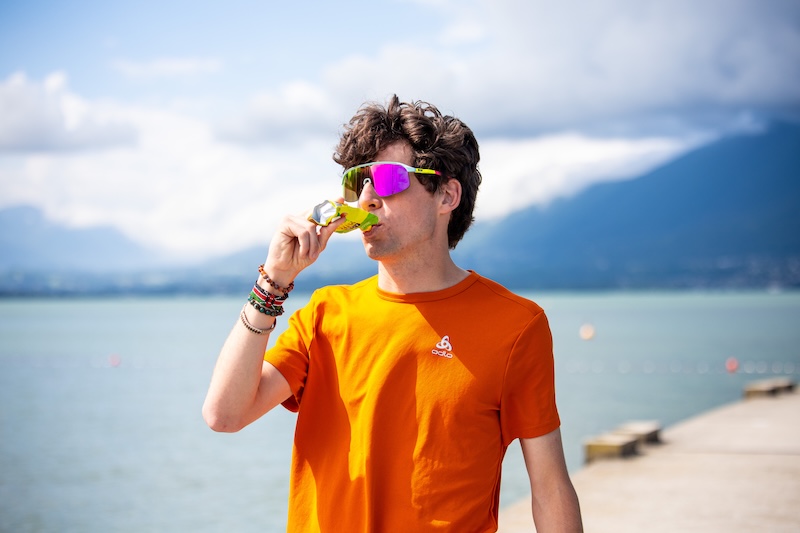
How many carbs per hour when it’s cold?
The targets don’t change with temperature. The joint position statement of the ACSM, the Academy of Nutrition and Dietetics and Dietitians of Canada on nutrition and athletic performance gives these ranges:
| Duration of exercise | Recommended carbohydrate intake |
|---|---|
| Under 45 minutes | Not needed |
| 45 minutes to 1h15 | Small amounts, or simply a mouth rinse with a sports drink |
| 1 to 2.5 hours | 30 to 60 g per hour |
| Beyond 2.5 to 3 hours | Up to 90 g per hour, ideally with a glucose-fructose mix |
What changes in the cold is how you hit those numbers. Since hunger and thirst are less reliable, set yourself a simple rhythm: something every 30 to 40 minutes, starting in the first hour. A reminder on your watch helps when your head is down, or buried in your jacket collar.
Training for a winter race? RunMotion Coach builds your training plan around your race date, your level and the time you have, and adjusts it week after week. Try the app free for 7 days.
Bars, gels, purées: what to carry when it’s cold
In the cold, some foods change texture. Energy bars, granola bars and chocolate get so hard they become a chore to chew, and a banana forgotten in an outside pocket can freeze. Nothing serious, but if you have to fight with your food, you end up putting off eating. So swap your bars for gels or purées in pouches, which stay much easier to get down.
The simplest fix is to keep whatever you’ll eat in the next hour close to your body: an inside jacket pocket, a waist belt or the front pockets of your vest under a layer. The rest can travel in your pack. If you still want to bring a few bars, cut them up in advance, and tear the wrappers open slightly so you don’t have to do it with gloves on.
The best test is a long run in the cold: carry exactly what you plan to use on race day, in the kit you’ll wear, and note what’s easy to eat after two or three hours outside.
Salty and hot food to revive your appetite
After a few hours of sweet stuff, many runners hit a wall, especially at night. Salty food helps bring your appetite back and provides sodium: broth, soup, crackers, cheese, small pieces of bread, mashed potatoes. At winter aid stations, a hot soup or sweet tea also does wonders for morale.
Beware of the overly comfortable aid station, though. You arrive warm, you stop, you take off a glove… and ten minutes later you leave shivering. Decide what you want before you get there, eat while walking if you can, and put a layer back on if you stay more than a few minutes.
Hydration in cold weather: the thirst trap
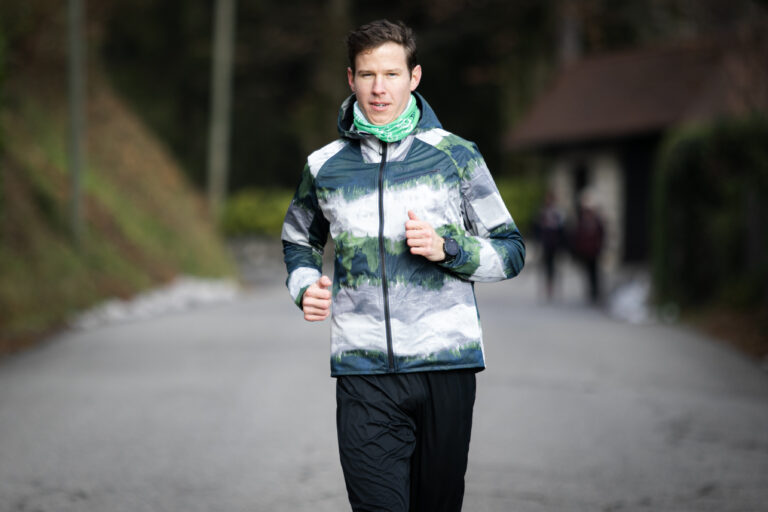
You sweat less when it’s cold, but you still lose water. You lose it by breathing cold, dry air, you sweat under your layers, and cold exposure also makes you need to pee more often. The problem is that your body gives you far fewer warning signs.
A study by Robert Kenefick and colleagues, published in Medicine & Science in Sports & Exercise, showed that the sensation of thirst was reduced by about 40% in the cold (4 °C / 39 °F), at rest and during moderate exercise, even in people who were already dehydrated. In other words: if you wait until you’re thirsty, you’ll drink too little.
In practice, take a few sips at regular intervals, for example every 15 to 20 minutes, rather than large amounts at once. Over several hours, a drink with electrolytes or salty food at aid stations will help keep your sodium intake up. The goal isn’t to drink as much as possible: drinking well beyond your losses can also cause problems. The color of your urine and the difference in body weight before and after your long runs are good indicators to fine-tune your intake.
How to stop your water from freezing
Below freezing, your hydration bladder is the most exposed: the hose freezes first. After each sip, blow back into the bite valve to push the water back into the bladder, and run the hose under your jacket or use an insulated hose. Soft flasks stored in the front pockets of your vest, against your body, hold up better.
You can also start with a lukewarm drink, or even carry a small thermos of sweet tea on a long run. As well as warming you up, it makes you want to drink. Finally, remember your own cup or bottle if your race doesn’t provide cups: at the Tour de Helvellyn in the Lake District, for example, a mug and/or drinks bottle is part of the mandatory kit.
Example: a fueling strategy for a long winter race in the dark
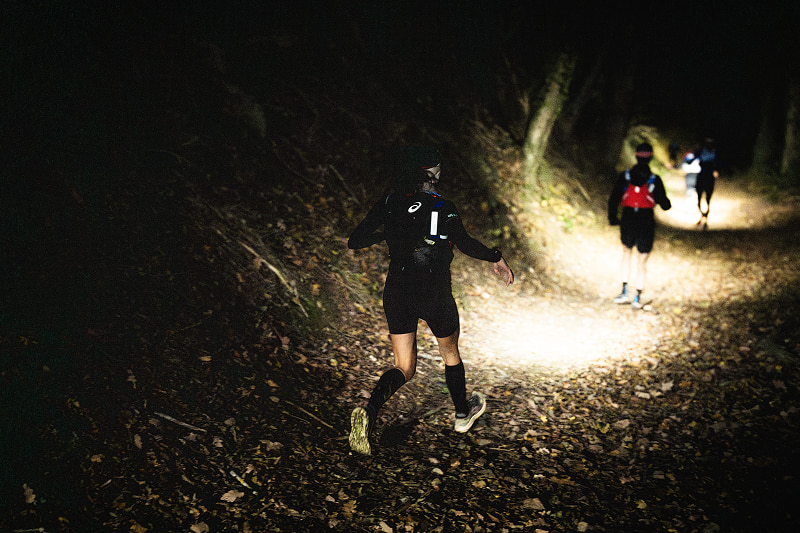
Let’s take a concrete case: a trail race of eight hours or more in December, at temperatures around 0 °C (32 °F), with aid stations 6 to 10 miles (10 to 15 km) apart and a good part of it run by headlamp. That’s what runners face at the Hellgate 100K, in Virginia’s Blue Ridge Mountains, which starts at 12:01 a.m. on the second Saturday of December, or at the Tour de Helvellyn in England’s Lake District, held on the shortest Saturday in December, where a headtorch is required even for the fastest. What follows is an example to adapt, not a one-size-fits-all recipe.
Before a night start, you eat a proper carb-rich meal three to four hours before the gun, then a light snack an hour before. While you wait, you stay covered up and drink something warm.
During the race, you take in something every 30 to 40 minutes from the first hour, alternating gels, applesauce pouches and purées, then more and more salty food as the hours go by. You take a few sips every 15 minutes, with a flask of sports drink against your body and a flask of water. At each aid station, you refill your flasks, grab a hot drink and something salty, and head out quickly, eating as you walk.
Between 2 and 5 a.m. is often the toughest stretch: fatigue sets in, the temperature drops and your appetite disappears. That’s exactly when you must not skip your fuel. If you use caffeine, save it for that moment, provided you’ve tested it in training. Our guide to night trail nutrition goes into more detail.
You’ll also find more tips on aid stations, whatever the season, in our guide on how to fuel for a trail or ultra trail run.
Common mistakes when running in the cold
- Waiting until you’re thirsty to drink: in cold weather, thirst comes late and faintly.
- Delaying your first fuel: a deficit built up early is hard to make up, especially at night.
- Keeping all your food at the bottom of your pack: if it’s a hassle to reach, you’ll eat less.
- Only testing your fuel in good weather: a bar that goes down easily in September can turn into a brick in December.
- Lingering at aid stations: you cool down very quickly once you stop, especially if you’re wet.
Nutrition is only part of the picture: clothing, pacing and warming up matter just as much. For the rest, our article on running in the cold of winter gives you the right habits.
After the race: warm up and refuel fast
Once you cross the line, your body temperature drops quickly, especially if your clothes are damp. Change into dry clothes first, then within the hour have a hot drink and a meal or snack combining carbohydrate and protein: soup with bread, rice pudding, a sandwich, hot chocolate. Keep drinking regularly in the following hours, because dehydration built up in the cold often goes unnoticed.
Don’t count on alcohol to warm you up, though: it gives a feeling of warmth by dilating the blood vessels in your skin, but actually increases heat loss.
FAQ: cold weather running nutrition
Should you eat more when running in winter?
Not for your usual one-hour sessions. Your daily diet doesn’t need to change. On long efforts in snow, mud or the mountains, energy expenditure rises a little, but the most important thing is not to eat less than usual during the effort.
Can you run fasted in cold weather?
A short, easy fasted run is no particular problem if you’re used to it. Avoid long or hard fasted sessions in very cold weather, though: with little carbohydrate available, you cool down faster as soon as you slow down.
Are hot drinks a good idea during a race?
Yes, they help you maintain a good temperature and make you want to drink. Tea or a lukewarm sports drink in an insulated flask works very well on a long run. Just avoid scalding drinks that you could only finish by stopping for a long time.
Should you drink less when it’s cold?
You often need to drink a little less than in summer, because you sweat less. But you’re also much less thirsty, so the bigger risk is drinking too little. Keep a regular rhythm and adjust based on how you feel and the color of your urine.
Ready to take on the cold?
Running in the cold doesn’t call for a different nutrition plan, but a more disciplined one: eat and drink on a schedule, keep your food accessible and warm, and use salty food and hot drinks to keep going over the long haul. The best time to dial all this in is during your winter long runs, in the conditions of your upcoming race.
To make sure your training is as well calibrated as your fueling strategy, follow a trail running training plan built for your goal. RunMotion Coach adapts your workouts to your level, your schedule and your race. Try the app free for 7 days.
Sources
- Castellani JW, Eglin CM, Ikäheimo TM, Montgomery H, Paal P, Tipton MJ. ACSM Expert Consensus Statement: Injury Prevention and Exercise Performance during Cold-Weather Exercise. Current Sports Medicine Reports, 2021;20(11):594-607. DOI: 10.1249/JSR.0000000000000907
- Kenefick RW, Hazzard MP, Mahood NV, Castellani JW. Thirst sensations and AVP responses at rest and during exercise-cold exposure. Medicine & Science in Sports & Exercise, 2004;36(9):1528-1534. DOI: 10.1249/01.MSS.0000139901.63911.75
- Thomas DT, Erdman KA, Burke LM. American College of Sports Medicine Joint Position Statement. Nutrition and Athletic Performance. Medicine & Science in Sports & Exercise, 2016;48(3):543-568. DOI: 10.1249/MSS.0000000000000852
Last updated: October 29, 2026.