
Whether you’re just starting out or you’ve been training for years, nutrition is always a big question. Today, I’m going to walk you through the main food groups and nutrients, what “healthy eating” really means for athletes, and why it matters. You’ll also see how to apply these tips in your day-to-day life, so you can fuel your training, recovery, and performance with confidence.
Contents
What is a healthy diet for athletes?
Recommended intake for healthy eating
We learn it early on, different foods and nutrients play different roles in the body. We’re constantly told to eat a balanced diet, to get 5 servings of fruits and vegetables a day, and so on. But what does a “balanced diet” actually look like?
There are roughly 3 main food groups made up of different nutrients:
- Vegetables and fruit, sources of fiber, vitamins, and more
- Starchy foods, sources of carbohydrates (pasta, rice, etc.)
- Protein-rich foods (eggs, meat, fish, substitutes, etc.)
Oils and fats (lipids) deserve their own category, we’ll come back to them a bit later.
In recommendations from health organizations and scientific studies, the general idea is that these food groups should be split on your plate roughly like this:
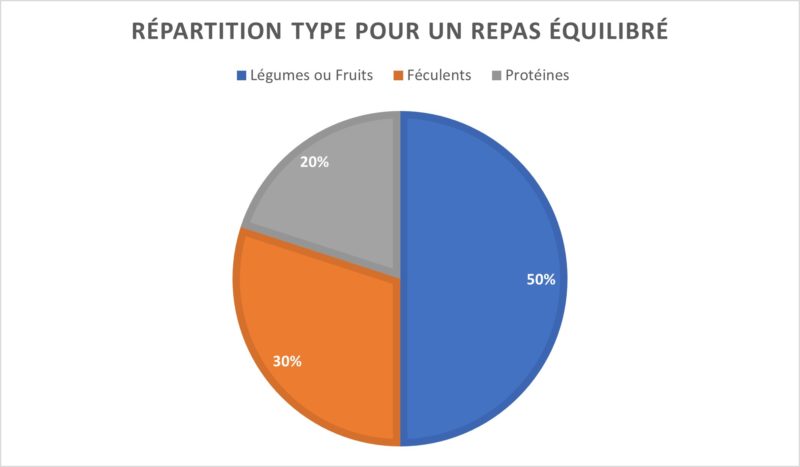
You can probably guess it, this “standard plate” shifts a little when you’re adapting healthy eating to sports and endurance training.
Recommended intake for a healthy athlete’s diet
Your energy expenditure changes and increases when you train. Your needs aren’t the same anymore, so a healthy diet for athletes naturally looks different. Beyond simply eating a bit more overall, especially more starchy carbs, the balance on the plate tends to flip slightly. More or less, depending on the sport, you can think of an athlete’s healthy plate like this:
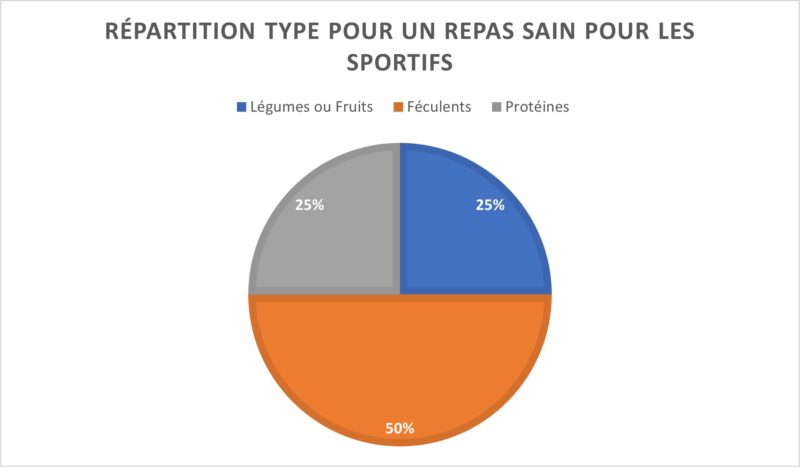
And of course, always paired with plain, unsweetened water.
So basically, what should I eat?
Now that you know how to structure your intake, here are practical details to build a healthy diet for athletes, especially endurance athletes like runners.
Starchy carbs
Starchy foods deserve a central place in your meals because they’re rich in complex carbohydrates. One key point, respect cooking times. Overcooking can raise the glycemic impact, meaning you’ll end up with something closer to fast-acting sugars, which is less ideal for daily health and steady endurance energy. For endurance efforts like running, complex carbs help build your fuel reserves. If you digest them well, choose whole grains for an even more complete option. They bring additional fiber, which supports good digestion and better carbohydrate absorption.
Vegetables and fruit
Vegetables and fruit are mainly sources of fiber and vitamins, and they also provide antioxidants. When you train a lot, you can create oxidative stress and inflammation. Fruits and vegetables support recovery and help buffer acidity, they’re often described as “alkalizing,” even when they taste acidic.
They’re essential for athletes and make a huge difference in staying healthy and energized. The only time you might reduce them slightly is as a race gets closer, especially if you’re prone to digestive issues.
Protein
Protein-rich foods are also essential for athletes. Protein supports muscle building and repair. Even if running doesn’t require a bodybuilder physique, strong, resilient muscle is a major performance and injury-prevention asset. Protein helps strengthen your muscles and improves recovery after training. There are many options, meat, with lean or white meat often preferred, eggs, and small fish.
And if you’re vegetarian or vegan, there are plenty of alternatives too, soy for example. The key is variety, so you get a more complete amino acid profile.
Legumes
Legumes, also called pulses, should be a core part of a healthy athlete’s diet. The most well-known are soybeans, peanuts, beans, peas, fava beans, and lentils.
Legumes are a great combo of complex carbs, fiber, and protein. That makes them an excellent choice, and they can help you avoid relying on animal protein at every single meal. It’s good for your health and for the planet.
Oils and fats, “good” vs “bad” fats?
Contrary to what people often think, fats aren’t simply “good” or “bad.” They’re just more calorie-dense than other foods. That said, some fats are more worth prioritizing.
There are several types of fats, but here we’ll focus on saturated and unsaturated fatty acids. Unsaturated fats are essential for health. You’ll find them in higher amounts in certain oils, rapeseed or canola oil for example, and in foods like avocado, fatty fish, and almonds. It’s a smart move to include a little bit every day.
Saturated fats are naturally present in everyday foods and can be useful, as long as they’re not eaten in very large quantities.
There are still some fats you should avoid as much as possible, trans fats. They’re common in heavily processed industrial foods, deep-frying oils, cakes, certain margarines, and more. These are modified fats created artificially. To spot them, check ingredient lists for hydrogenated oils.
If you want to go deeper on fats, there’s a blog post dedicated to them: Fats are good for your health and for runners!
Fast sugars
Fast sugars, like what you’ll find in candy, should be limited in your everyday diet. They can be useful in small amounts right before or during training, in specific forms like sports nutrition products such as Baouw. The rest of the time, though, they shouldn’t be a daily habit. In any case, you already get plenty of naturally occurring sugars from foods like fruits and vegetables. You don’t necessarily need more.

Why follow a healthy diet for athletes?
All of this sounds great, but what’s the point?
In practical terms, a healthy athlete’s diet helps you in everyday life. You feel fitter, you have more energy, and your body thanks you.
In an athlete’s routine, nutrition plays a major role in performance in training and on race day. Eating well helps you feel better during workouts, stay fresher toward the end of the session, recover faster, and deal with fewer sore muscles.
Injuries are over, or almost. Combined with solid sleep, a healthy diet significantly reduces injury risk. It doesn’t necessarily mean you can massively increase your training load overnight. But poor nutrition creates fatigue, and fatigue is behind a lot of injuries. Give yourself the best chance to stay healthy and keep progressing.
A few tips to stay motivated
Eating healthy as an athlete doesn’t mean a drastic diet or flipping your habits upside down. Adjust things gradually so your body and mind can adapt.
Also, healthy eating doesn’t mean you can’t enjoy a treat now and then. It’s even important to have fun with food. The goal is not to feel like you’re depriving yourself every day, that’s how you make it sustainable long term.
That’s why variety might be the most powerful tool to keep motivation high. Change flavors, try new recipes, make your meals enjoyable. Sometimes one small tweak changes everything.
Planning ahead is the key to success. Try to anticipate your meals as much as possible to save time. It helps you avoid grabbing pastries or whatever is easiest when you didn’t prep lunch the night before for work.
Snacks and specific nutrition
If you get snack cravings, instead of reaching for the first pack of cookies within arm’s reach, try nuts like almonds. They’re packed with valuable nutrients for athletes.
The quality of what you eat matters for a healthy athlete’s diet, especially for fresh products. Try to prioritize local and organic if you can.
If you want to learn the ideal athlete’s breakfast, how to eat before a race, or how to fuel during exercise, check out our dedicated blog articles.