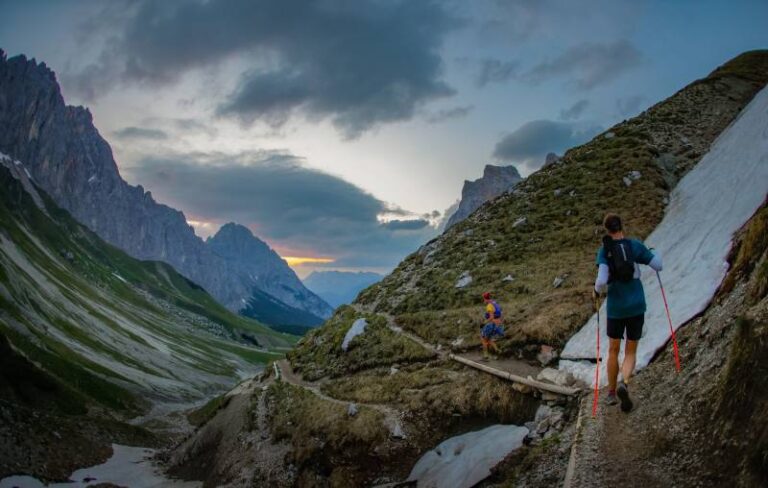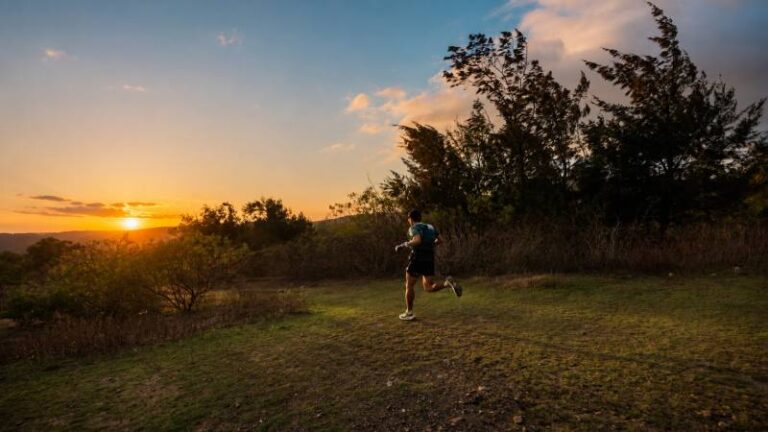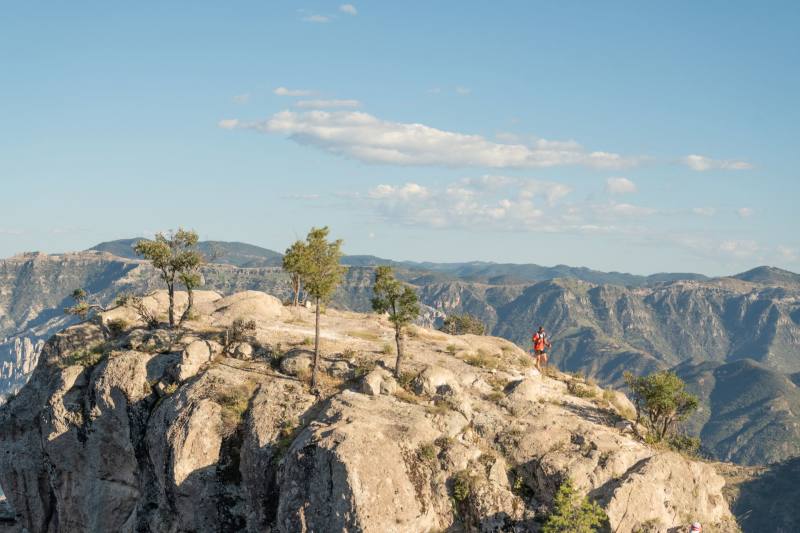
This Chihuahua by UTMB training plan guide covers all six races of the early-October event in Mexico’s Copper Canyons (Barrancas del Cobre), in the heart of the Sierra Tarahumara. Plunging descents to the canyon floors, endless climbs back out and remote trails make it one of the wildest settings on the circuit, in the homeland of the Rarámuri people, famous for their long-distance running tradition. Here are the official numbers, how long to train and the key workouts for each distance.
The short answer
- Training time: 12 to 16 weeks for the Napurega 21K, 16 to 20 weeks for the Komakali 39K and Akáa 58K, 24 weeks or more for the Weriga 93K and Rarámuri 118K.
- Indicative Rarámuri peak: 70 to 100 km per week with 3000 to 5000 m of climbing, depending on your level and experience.
- Key sessions: long power-hiking climbs, long descents to harden your quads, back-to-back weekends, night runs.
- Main challenge: a canyon profile (about 47 to 50 m of gain per km on the long races), with long descents and climbs on remote trails.
Contents
Chihuahua by UTMB distances and elevation
| Race | Distance | Elevation gain | Profile/notes |
|---|---|---|---|
| Rarámuri 118K | 118 km | 5600 m | 100M category (4 Running Stones). 6 a.m. start in Cerocahui, life base in Urique, 30-hour max race time. |
| Weriga 93K | 94 km | 4700 m | 100K category (3 Running Stones). Listed location: Cerocahui. Shown as 94 km despite the “93K” name. |
| Akáa 58K | 58 km | 2500 m | 50K category (2 Running Stones). Listed location: Parque Barrancas, Divisadero. |
| Komakali 39K | 39 km | 1700 m | 50K category (2 Running Stones). Listed location: Parque Barrancas, Divisadero. |
| Napurega 21K | 21 km | 700 m | 20K category (1 Running Stone). Listed location: Parque Barrancas, Divisadero. |
| Norawa 9K | 9 km | 200 m | Short discovery race, no Running Stones listed. Starts at Parque Barrancas, Divisadero. |
The two longest races start in Cerocahui and cross the canyons on trails the organizers describe as remote and demanding, with a life base in the village of Urique. The shorter races are based at Parque Barrancas in Divisadero, on the canyon rim. All figures come from the official Chihuahua by UTMB website; check them again before race day.
What makes Chihuahua by UTMB demanding
Canyon terrain sets its own rhythm. Instead of rolling hills, you face very long descents to the bottom of the barrancas followed by long climbs back to the rim. Extended descents wreck unprepared quads, and the climbs demand efficient power hiking for long stretches. With 5600 m of gain over 118 km, the Rarámuri’s climbing is comparable to major Alpine ultras.
Remoteness and changing conditions add to the challenge. Canyon floors can be much warmer than the rims, and nights cooler up high. With a 30-hour limit on the Rarámuri, many runners will race through the night. Self-sufficiency between aid points, water management and clear thinking under fatigue are all part of the test.
How long do you need to train?
For the Norawa 9K and Napurega 21K, 10 to 16 weeks is enough if you already run regularly. For the Komakali 39K and Akáa 58K, plan 16 to 20 weeks and some prior experience of at least 25 to 30 km in the mountains; our trail marathon training plan is a good starting framework.
For the Weriga 93K and Rarámuri 118K, allow 24 weeks or more after finishing a mountainous 50 to 80 km ultra in good shape. These are not first-ultra races. The principles in our 100 km trail running training plan apply, with more vertical.
The phases of your training plan
Base (8 to 10 weeks for the long races). Build easy volume and add two strength sessions a week with an emphasis on eccentric quad work (slow step-downs, controlled squats). Take a lighter week every three or four weeks.
Specific (10 to 12 weeks). Move long runs to the most mountainous terrain you can reach, favoring long climbs and long descents over short hills. For the long races, add back-to-back weekends and night runs, and test your self-supported gear. RunMotion’s founders, twin brothers Guillaume and Romain Adam, come from the Alps, where mountains, vertical and ultra distance are home ground, and this kind of profile calls for an Alpine-style build.
Taper. Three weeks for the Rarámuri and Weriga, 10 to 14 days for the others. Factor in the often long journey to the sierra and arrive a few days early if you can.
Key workouts for Chihuahua by UTMB
Long power-hiking climb. 2 to 4 climbs of 20 to 30 minutes, mixing running and fast hiking, with or without poles, at a steady effort.
Long descent. 30 to 45 minutes of continuous or repeated downhill at a controlled pace. This is the session that prepares your quads for the canyons.
Back-to-back weekend. For example 5 to 6 hours on Saturday and 3 hours on Sunday in mountainous terrain, for the long races.
Night run. For the Rarámuri and Weriga, two or three long runs with a night section, headlamp and race fueling.
Every build depends on your level, ultra experience and available time. The RunMotion Coach app, the official online coach of the UTMB World Series, builds your personalized plan up to 12 months before race day, covers climbing, strength, recovery and mental preparation, and adjusts every week to the sessions you complete. It is available in English and Spanish, among other languages. Try it free for 7 days.
Plan your race with Race Strategy
In the canyons, your pace can drop sharply on climbs and your stomach can struggle in the heat of the canyon floors. Race Strategy by RunMotion calculates a kilometer-by-kilometer plan with pace adjusted for elevation, altitude and terrain, estimated split times at key points, a carbs, water and sodium plan for each section and a race-day weather adjustment. Import the official course GPX to generate yours.
Running Stones and the UTMB World Series
According to the official website, the Rarámuri earns 4 Running Stones, the Weriga 3, the Akáa and Komakali 2 each and the Napurega 1, improving your odds in the UTMB World Series Finals draw. To build your season around Chihuahua, see our UTMB World Series training plan hub and our guide to planning your trail running season.
FAQ
Do you need poles for Chihuahua by UTMB?
On the Rarámuri and Weriga, long canyon climbs make poles very useful for many runners, provided you have trained with them. Check the official rules.
What experience do you need for the Rarámuri 118K?
Solid mountain ultra experience, ideally a finished 80 to 100 km race with plenty of climbing, and comfort running through the night.
Which race is best for a first taste of the canyons?
The Napurega 21K or Komakali 39K, based in Divisadero, let you discover the scenery without committing to a 90 km-plus ultra.
Bottom line
Train for Chihuahua by UTMB like a major mountain ultra: long climbs, long descents, quad strength, night running and self-sufficiency. Pick your race based on your experience and give yourself time. For a plan that adapts to you, start your 7-day free trial of RunMotion Coach.
Article updated by the RunMotion Coach team.
Sources