During a running workout, you often notice moments where you recover. Most of the time, it’s between each rep and/or set. It can be a few seconds, or even a few minutes in some cases. So how should you recover? Jogging, walking, or standing still? We’ll break it all down!
For example, you’ve got a session like 12×400 m with 1 minute recovery between reps, 10×30 seconds uphill with 1 minute recovery, or 6×4 minutes with 2 minutes recovery. As the session goes on, you start getting more and more out of breath, and your legs might begin to feel heavy. Is it better to go for “active” or “passive” recovery?
Contents
Active recovery by running or easy jogging
The goal of interval training is to simulate a specific intensity, but by splitting the effort into manageable chunks so you can actually execute it in training. For instance, when you do 8×1 km at 10K pace, it’s almost impossible to run 8 km at your 10K personal best pace. You’re not in race conditions, and you might be in the middle of a heavy endurance training week. Recovery is what helps you hit the target times on each rep.
In a vVO2max session, for example 12×400 meters with 1 minute recovery, the goal is to reach your Maximum Heart Rate HRmax on the last segments of the workout. If you do your recovery standing still, your heart rate drops too much between reps, and you probably won’t achieve the desired effect of breathing hard and getting close to HRmax.
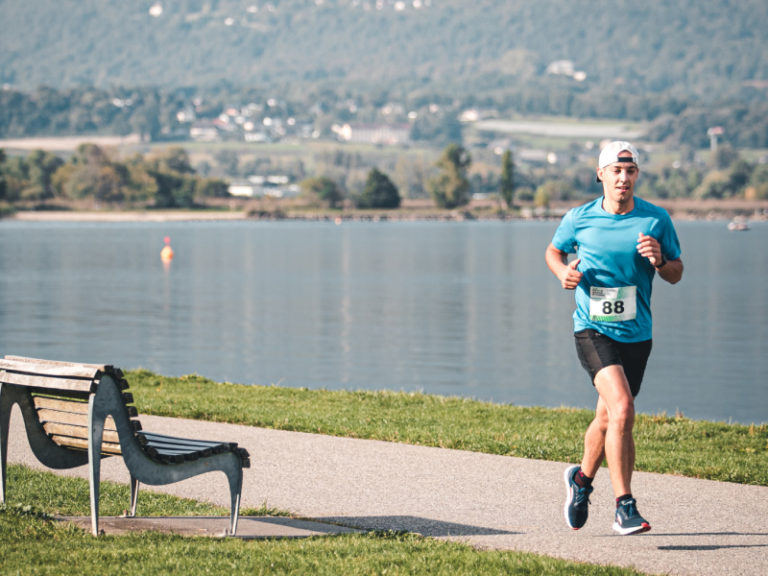
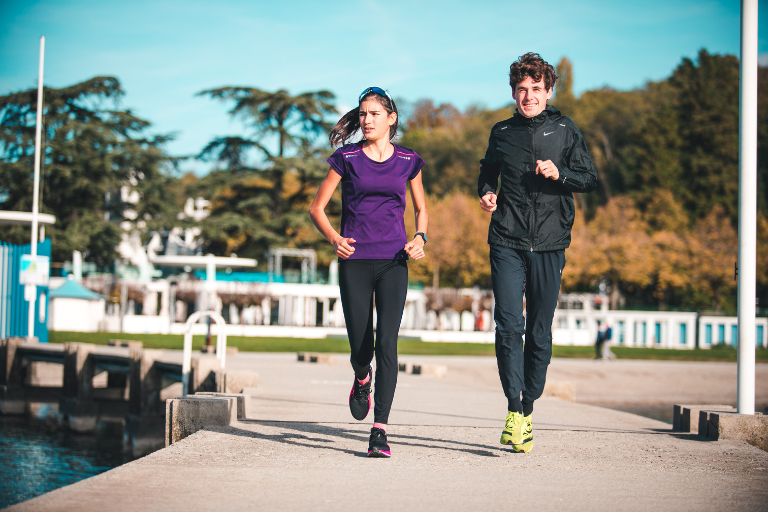
Active recovery, meaning you recover by running or easy jogging, is generally recommended for interval workouts.
During active recovery, aim for your easy endurance pace. If you’re feeling great on the day, it can sometimes be smarter to slightly quicken your recovery jog rather than obsessing over running the fastest possible rep splits. This is especially true in vVO2max workouts.
This type of recovery helps keep your heart rate fairly high, and keeps your muscles warm (especially with longer recoveries like 4 to 5 minutes). Plus, easy jogging improves muscle oxygenation and helps clear lactate.
Active recovery by walking
Active recovery by walking is a lower-intensity version of active recovery. It’s especially well suited for beginners, or for anyone who finds it hard to keep jogging after a hard rep. It can also be a good option if you realize you ran one repetition too fast.
Or if you’re particularly tired at some point in the session and you feel like you need to catch your breath. Normally, this shouldn’t happen too often (it usually means pacing or workload wasn’t ideal), but it’s still better than completely blowing up on the next rep.
By walking, your body stays in motion, which still supports blood flow and oxygen delivery, but with less muscular stress. For beginners, it can be a smart strategy to start with walking recoveries, then gradually progress to jogging recoveries as your fitness and running economy improve.
Passive recovery
Passive recovery means taking a complete rest period. You don’t move, you just wait for the timer to finish before starting the next segment.
This method can be useful in certain situations, especially when your body needs total rest after an extremely intense effort. It can also make sense if you feel joint, tendon, or muscle pain, so you can reassess how you’re feeling before continuing.
Recovery after your workout
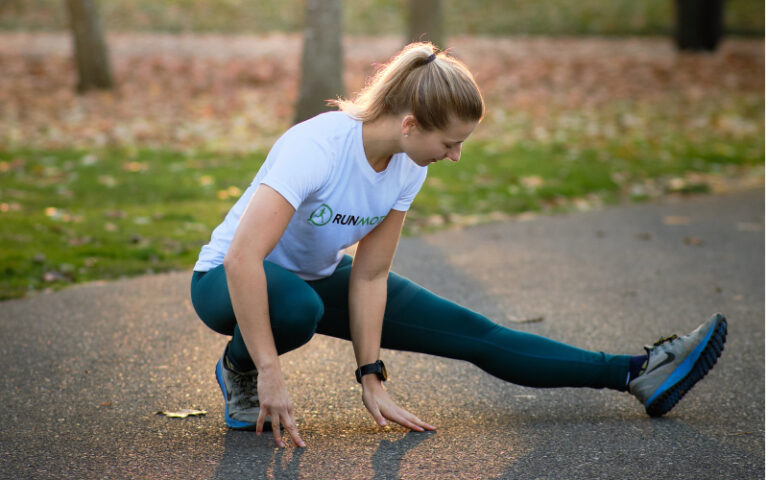
Once you’ve finished your session, we recommend 5 to 10 minutes of active recovery with an easy endurance jog. This helps you cool down gradually and speed up your post-workout recovery. Either you’re able to flow straight into an easy jog, or you can take a short break standing still or walking before you start jogging.
Ideally, rehydrate soon after your session, and if it was a hard workout, you can also take in some carbohydrates to take advantage of the metabolic window.
RunMotion Coach’s take
Whenever possible, recovery should always be active. By staying active during recovery, lactate clearance (a chemical by-product you produce during intense efforts) will be better, and you’ll stay closer to your target heart rate zones for the workout, with less of a gap between fast intervals and recoveries.
If you’re new to running, it will probably be tough at first to recover by running or jogging. So you can start by walking slowly. Over time, you’ll see that you’ll be able to run during your recovery. Keep going, you’ve got this!
Want even more tips? Feel free to follow us on our Instagram account here😉