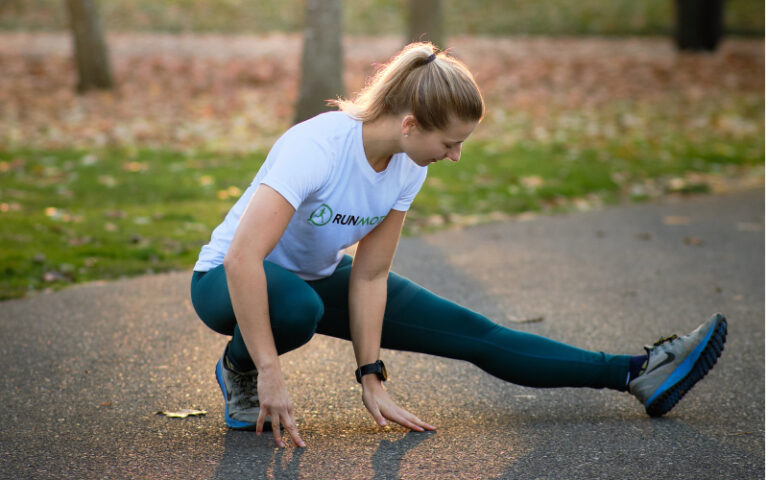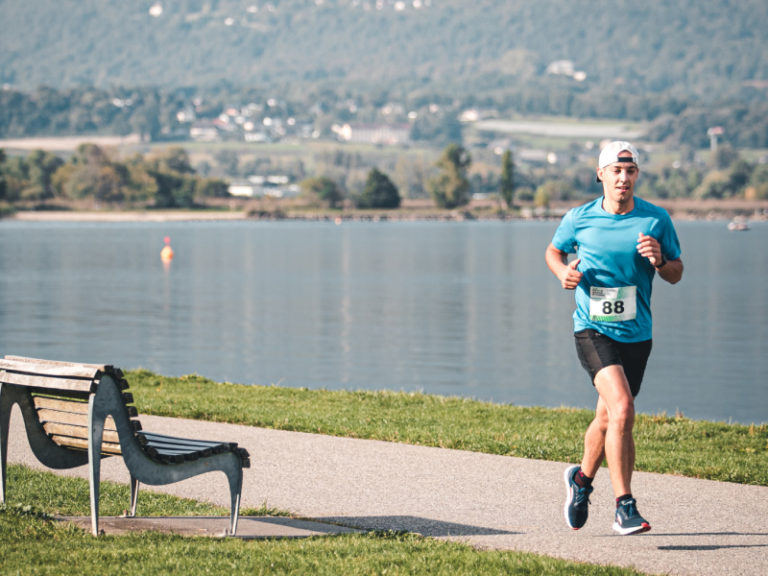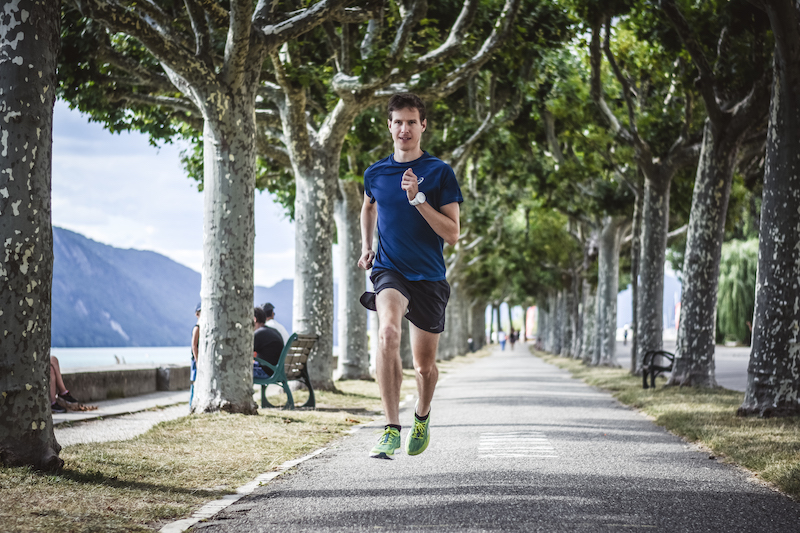
Strides are short accelerations that help you improve foot strike quality and running mechanics. These 15-second efforts are also a great way to finish your warm-up and feel sharp before a workout or race.
When should you do these accelerations?
You can do strides at the end of an easy run of around 50 minutes, for example 6 x 15 seconds, with 45 seconds of recovery walking.
The goal here is maximum quality, so walking is recommended. With classic interval training, you usually jog your recovery so your heart rate does not drop too much.
At the end of an endurance run, the aim is to work on relaxation and a more efficient stride.
These strides are also perfect to add at the end of your warm-up before a workout. You can do 2 to 3 reps of about 15 seconds, again with about 45 seconds of recovery walking.
Here, the goal is to finish your tendon and muscle warm-up and feel more dynamic before you start the main set.
Adding strides to your training can bring a ton of benefits for endurance performance. You will find them included in your plan, especially in your RunMotion Coach program.
Depending on how you feel, you can even do them on a slight uphill. More experienced runners can also do them on a gentle downhill, but this requires solid running biomechanics because your muscles and tendons are under greater load.
How should you do strides?
With these acceleration drills, the most important thing is to stay relaxed and not turn it into a sprint. As the name suggests, you do not go all-out from the start. Build up progressively over the first 4 to 5 seconds, then aim to run fast while staying as smooth and easy as possible.
Also make sure you decelerate gradually at the end of the stride.
The pace for strides at the end of an easy run is close to the pace you would use in a vVO2max workout, in other words a speed you could hold for about 6 minutes. So yes, it is definitely not a sprint.
Before a workout, you can do these strides at your target session pace, so you are sure you start the workout at the right intensity. Or just a touch faster if you need an extra spark.
In a group, one common trap is skipping the progressive build-up and going too hard too soon.
Strides are a great moment to focus on running technique and posture, especially with a slight forward lean from the ankles. Pay attention to your arm swing, and keep your shoulders loose and relaxed.
You can also take the opportunity to film yourself if you want. You will quickly spot any issues to fix, and if you are happy with the result you can even post it on Instagram and tag @runmotion_global.