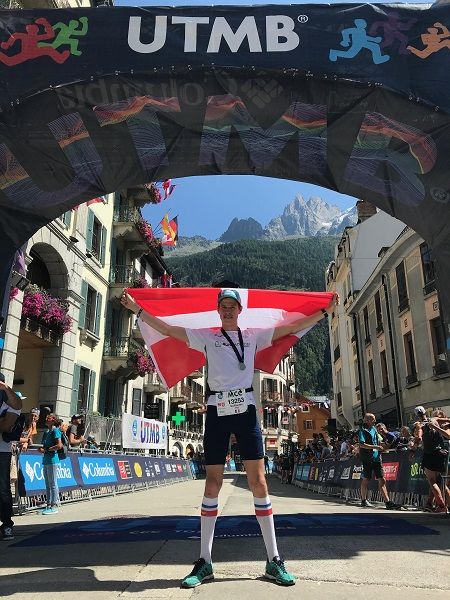
Are you registered for one of the UTMB® Mont-Blanc races at the end of August, the UTMB®, CCC®, TDS®, OCC, MCC or PTL®? RunMotion Coach is the official coach of UTMB® Mont-Blanc. In that role, we share our top tips for succeeding in this legendary race around Mont Blanc, plus everything your UTMB® Mont-Blanc training plan needs to maximise your chances of crossing the iconic finish arch in Chamonix!
Whether your goal is to chase a fast time or simply become a finisher, you need a tailored trail running training plan. Below, discover our advice for the flagship UTMB® race, 171 km with 10,000 m of elevation gain, as well as the other races taking place during the week.
Contents
Build a Consistent Overall Training Volume
If you want to succeed at UTMB®, you need to train for at least 10 hours per week, ideally 15 hours if possible. Most of this volume should come from running. Your body needs to adapt to the impact and elevation gain that come with running.
It is recommended to supplement your overall training volume with cycling, which is excellent for endurance and developing leg strength endurance. To add variety, you can go ski touring or cross-country skiing in winter, and swimming in summer.
For the CCC®, aim for 8 to 12 hours of training per week. For the MCC and OCC, 5 to 10 hours per week may be enough. Of course, this depends on the individual, particularly your previous training volume and your ambitions. If you want to increase your weekly training hours compared with last year, do so gradually.
Key Sessions for Your UTMB® Training Plan
The UTMB® Mont-Blanc races demand appropriate training. To prepare, include a range of trail-specific workouts.
Hike-Run Sessions
One of the foundations of ultra trail training is the hike-run session. The pace is close to what you will run in an ultra. The goal is to get used to alternating between hiking and running, while helping your body adapt to these intensities. As a rule, it is not advisable to go beyond five hours in a hike-run session, as the body is already under significant stress. If you want a bigger training volume, you can add one or two hours of cycling afterwards.
To build even greater volume, you can also enter preparatory races, which we will discuss later.
Hill Repeats
With hill repeat workouts, the aim is to develop strength and running form while maintaining a relatively high cadence. For example, you could do sessions from 12 x 30 seconds up to 8 x 1 minute 30 seconds. They may seem short, but the advantage is that you can run them almost anywhere, even in the city if you have a long enough hill, and they are easy to fit into a lunchtime break. Your heart rate will generally rise significantly.
Uphill Threshold Sessions
Uphill threshold training improves your ability to climb a long ascent quickly, with 500 to 1,000 m of elevation gain, for example. These sessions build endurance under sustained effort. Typical workouts include 4 x 6 minutes, 3 x 10 minutes or 2 x 20 minutes.
Downhill Training
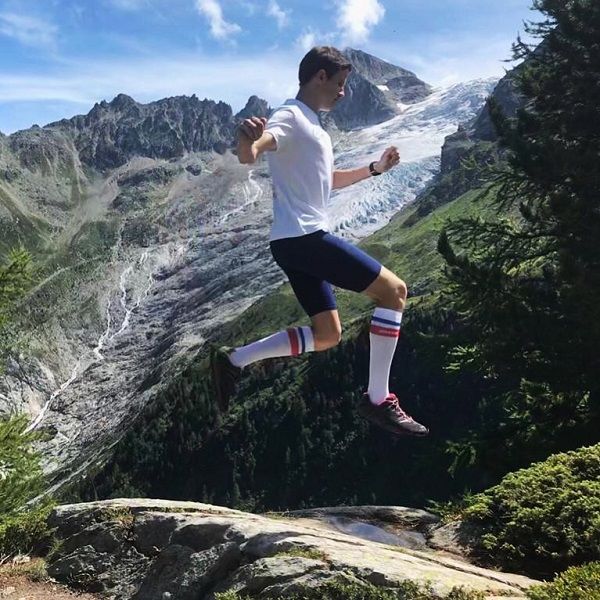
Every trail runner knows that descents are usually what destroy your legs. One of the best ways to prepare is to train downhill specifically, at a faster-than-race pace. At first, you will cause muscle fibre damage, then your muscles will become stronger. You can do up to 10 x 1 minute downhill, for example. The pace is faster than your race pace, helping you feel more comfortable in competition.
Trail-Specific Strength and Conditioning
For ultra trail efforts, it is essential to include appropriate strength and conditioning. Focus on muscle-strengthening exercises, such as those available in the S&C module in the RunMotion Coach app.
You can also add cycling or indoor trainer workouts to develop strength and strength endurance. For example, perform a short maximal effort, the app also offers these workouts if you select one or more cycling days each week, or use a big gear on climbs for longer efforts.
If you live in a city, stairs can be an excellent way to work on plyometrics.
Plan Preparatory Races Before UTMB®
To build substantial training volume, nothing beats a race. You benefit from planned aid stations and safety support, and you can test your gear and nutrition strategy. It is essentially a dress rehearsal and an opportunity to assess your current fitness.
For example, if you are preparing for UTMB® or TDS®, you could schedule an 80 to 100 km trail race between May and June, or even early July. You could even run two 80 km trail races one month apart.
If you are preparing for the CCC®, look for a 60 to 70 km trail race between May and mid-July. For the OCC® and MCC, you can race distances from 20 km to 42 km up until the end of July.
Prepare for UTMB® Mont-Blanc Weather Conditions
At UTMB® Mont-Blanc, the fastest runners spend just one night out on the course, finishing on Saturday afternoon. Only around 100 runners finish in under 30 hours, before midnight on Saturday. Everyone else will spend two nights running outdoors.
It is therefore important to train at night, so you get used to running in the dark and know your headlamp inside out. For example, train in the evening to run into the sunset, then descend using your headlamp. You can also head out early in the morning to catch the sunrise!
However, it is not recommended to spend an entire night outdoors in training, as it creates a great deal of fatigue. A few hours of night running in training is enough. You can also include night races in your preparation, or races with a very early start.
Half of TDS® runners also spend a second night outdoors. The vast majority of CCC® runners finish during the night. You therefore need to prepare to run at night.
Prepare for cold weather too. The mountain passes on the Mont Blanc circuit reach up to 2,500 m in altitude. This is not high altitude mountaineering, but it can be cold at the end of August and snow is possible, particularly at night and in rainy conditions. If snow has fallen, the route may be modified.
It is important to test your gear in training. Take a close look at the UTMB® Mont-Blanc mandatory equipment, especially the cold-weather kit.
Do Not Overdo It in August!
In August, you enter the final stretch. These are the last moments of your preparation. While you can still fit in a few long runs at the beginning of August, reduce your mileage over the final two to three weeks.
You do not want to arrive overly tired or, worse, injured. Beyond physical fatigue, you need to preserve your mental freshness and the desire to give everything on race day.
The biggest mistake would be training too hard in the weeks before the race. Even if you feel you should have done more volume in your preparation, keep your training load reasonable at the end.
Prioritise Your Recovery
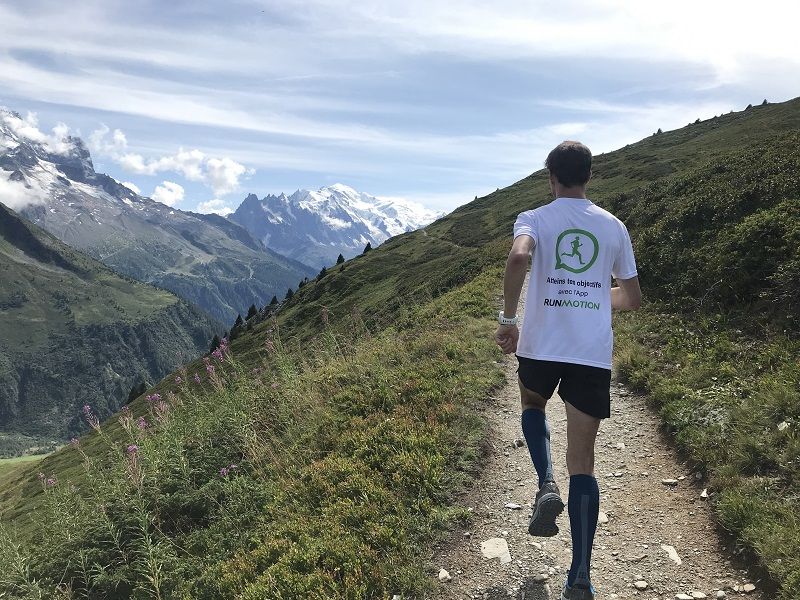
To absorb the volume of your training effectively, here are a few key recovery principles. The three pillars of recovery are sleep, nutrition and hydration.
The most restorative thing for your body is sleep. Aim for at least seven to eight hours per night in a quiet environment. During particularly intense weeks, you can even target nine hours of sleep and add a nap during intensive training weekends.
After a demanding workout, eat carbohydrates and protein within an hour of finishing. During this period, your body absorbs carbohydrates and protein more effectively. This is known as the metabolic window. It helps replenish your carbohydrate stores and supports muscle recovery.
For hydration, aim to drink at least 1.5 litres of water every day, plus 300 to 500 ml per hour of exercise. On your long runs, always remember to carry a water bottle or flask.
Massage, compression socks, electrical muscle stimulation and hot-cold contrast therapy can all be useful additions to your recovery routine.

Fuel the Week Before UTMB® Mont-Blanc
The leading cause of withdrawal from an Ultra-Trail® is digestive issues. Running places stress on the intestinal walls. During exercise, the heart directs blood to the organs that matter most, primarily the brain and muscles. The intestine may sometimes receive insufficient blood flow, while repeated impact can also damage the intestinal lining.
That is why it is best to start with a strong foundation. In the weeks before a race, you can take a course of L-glutamine and probiotics. L-glutamine is an essential fuel for small intestine cells and nutrient absorption. Put simply, it strengthens your intestinal lining. Probiotics support a healthy microbiome balance and regular digestion.
When you line up for one of the UTMB® Mont-Blanc races, it is best to have optimised your carbohydrate stores. Carbohydrates are the main fuel used during an Ultra-Trail®. That means fewer calories to make up at the first aid stations.
From three days to one day before the race, prioritise quality carbohydrate sources, including starchy foods, rice, potatoes, bread, pancakes, honey and maple syrup. Some runners may prefer gluten-free foods. Avoid consuming too much fibre, which can irritate the intestinal lining. You can eat very ripe fruit such as bananas, or cooked fruit such as apples, pears and peaches.
You will also need to prepare your race nutrition and hydration strategy carefully.
Manage Your Effort in Your UTMB® Race
That is it, you are ready to take on UTMB® Mont-Blanc! Above all, this is a race where you learn about yourself and push your limits. Do not ruin your chances by starting too fast. It is one of the most common mistakes. You are heading out for dozens of hours of effort, and the few minutes gained at the start can cost you dearly at the finish.
Good training should leave you ready for race day. Listen to your body and enjoy the experience! Think back to your preparation and why you chose to start. You have trained for months, perhaps years, to run these incredible trails around Mont Blanc. Enjoy every moment!
One Month Before UTMB, Prepare Your Race Strategy Too
And one month before UTMB, it is time to shift from preparation to strategy. How should you manage the first climbs? What pace should you start at to avoid blowing up before Champex? When should you hike on the ascents? What split times should you target at each aid station? When and how should you fuel?
To help answer these questions, Race Strategy lets you create a personalised race plan based on your level and your goal. You can visualise your split times, pace and effort management throughout UTMB, so you arrive on race day with a clear strategy.
👉 Create your race plan for UTMB one month out and prepare every stage of your ultra with Race Strategy.
If you want to maximise your chances of success and need a personalised UTMB Mont-Blanc training plan, you can download the RunMotion Coach app, the official coach of UTMB Mont-Blanc.
Enter your current experience and your UTMB Mont-Blanc goal, UTMB, CCC, TDS, OCC, MCC, ETC or PTL. You will find all the advice shared here in greater detail, along with your structured training programme. All that is left for you to do is run!