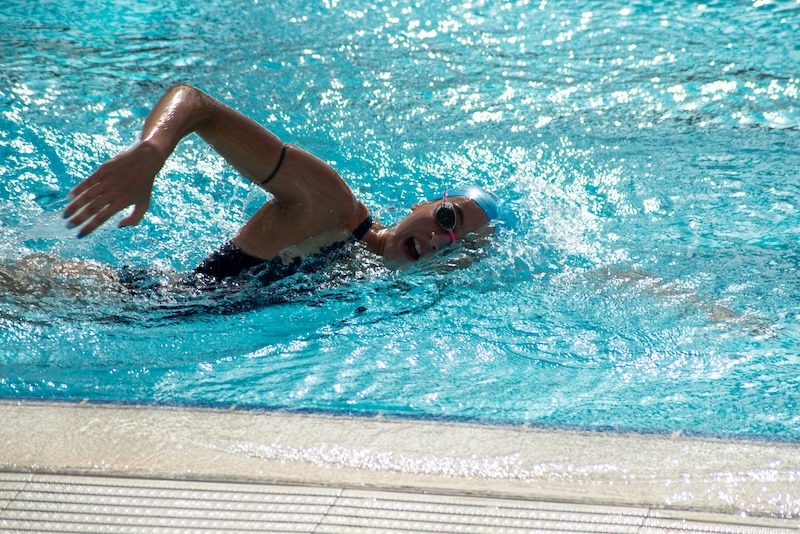
For a lot of triathletes, swimming is the most intimidating discipline. Unlike running or cycling, where progress is largely driven by building fitness, swimming fast is first and foremost about solid technique. That’s great news, because even without dramatically increasing your training volume, you can quickly feel more comfortable in the water and gain speed.
Whether you’re training for your first triathlon or an Ironman, improving your swim will not only help you exit the water sooner, it will also save energy for the bike and run.
Contents
- Why is it so important to improve your swim in triathlon?
- Technique first, always
- Build consistency to improve your swim
- Add drills to every session
- Mix up your intensities
- Core strength also boosts your swim
- Use gear wisely
- Remember to train in open water
- Tailored swim workouts with RunMotion Coach
- Mistakes to avoid
Why is it so important to improve your swim in triathlon?
In a triathlon, the swim is usually the shortest portion of your total race time. Still, it has a major impact on how the day unfolds. Efficient swimming reduces energy cost and sets you up for a smoother transition onto the bike.
On the other hand, a rough swim often means a high heart rate from the first few strokes and fatigue that can linger for miles on the bike.
The swim is also the leg that tends to create the most stress for triathletes. Working to improve, in open water or in the pool, can dramatically reduce the anxiety that comes with that first start.
Technique first, always
If there’s one area where a few tweaks can change everything, it’s technique. Two triathletes with similar fitness can be more than twenty seconds apart per 100 meters simply because one moves through the water with better glide.
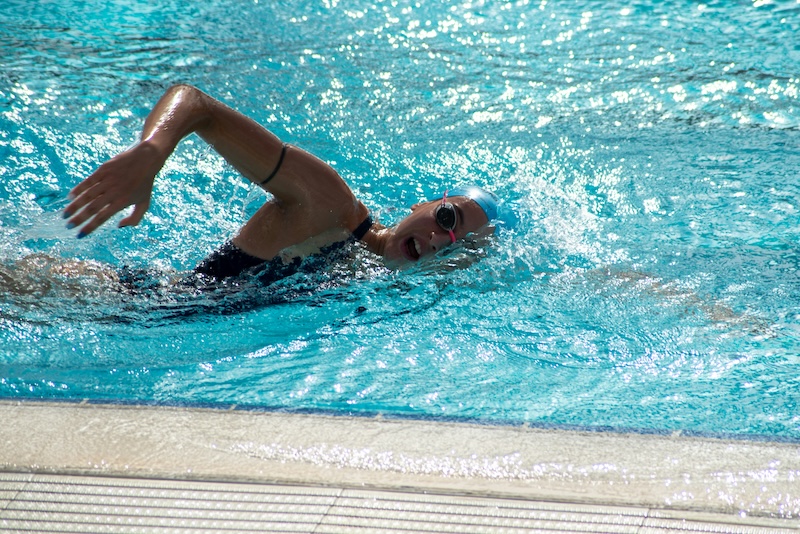
Before you chase speed, take time to improve your body position. A long, aligned body, eyes looking down, smooth breathing, and a strong catch can massively reduce drag. Every stroke becomes more effective and costs less energy. That’s why the best swimmers often look relaxed while moving a lot faster.
Build consistency to improve your swim
In swimming, it’s better to swim twice a week year-round than to cram big sessions in randomly. Your feel for the water is built gradually, and it comes from repeating the right movements.
For most triathletes, two swim sessions per week is an excellent foundation. If you’re training for a Half or an Ironman, adding a third session can help you improve even faster.
Add drills to every session
Technique drills are often overlooked by triathletes, even though they’re one of the best ways to make real progress. Drills sharpen your feel for the stroke, improve coordination, and help you develop a smoother, more efficient freestyle.
Spending about ten minutes at the start of each workout on a few technical exercises, like one-arm freestyle, catch-up drill, or kick work, often delivers more benefit than adding a few hundred extra meters with no clear purpose.
Check out 12 technique drills to help you improve your triathlon swimming.
Mix up your intensities
Just like in running, not every swim session should be done at the same pace.
Some workouts build your endurance with longer sets, while others improve speed with shorter intervals. Alternating intensities helps you progress faster and keeps training from getting boring.
The ideal week blends technique sets, aerobic endurance work, and a few fast reps, so you train every quality you need for triathlon performance.
Core strength also boosts your swim
It’s easy to think your arms do all the work. In reality, strong core stability is essential to hold a hydrodynamic position.
When your trunk stays stable, your legs sink less and every stroke becomes more efficient. A few strength training sessions per week are enough to improve your posture in the water. Planks, side planks, and hollow holds are especially valuable for triathletes who want to swim faster with less energy.
Use gear wisely
Swim gear can be a great teaching tool, but it shouldn’t replace technical work.
A pull buoy helps you feel the pull and focus on your arms, while a front snorkel lets you work on alignment without worrying about breathing. Paddles can also build power, as long as you use them in moderation to avoid overloading your shoulders.
The goal is always to transfer what you learn back into your full stroke, without any assistance.
Remember to train in open water
If you want to improve your swim for triathlon, it’s important not to limit your preparation to the pool.
Swimming in a lake or the ocean requires specific skills. You need to learn how to sight, breathe through chop, handle a crowded start, and swim without lane lines.
A few open-water swim sessions before race day will boost confidence and cut stress when it matters most.
Tailored swim workouts with RunMotion Coach
Building varied, well-balanced swim sessions isn’t always easy, especially when you’re just starting out. To support your progress, RunMotion Coach includes triathlon-specific swim workouts inside its training plans. Sessions rotate through technique, endurance, and intervals, with progression matched to your goal.
In the app, choose the days you want to swim, then for each day specify whether you’re training in the pool (25m or 50m) or in open water, and what you want to focus on: endurance, intensity, or let your coach decide.
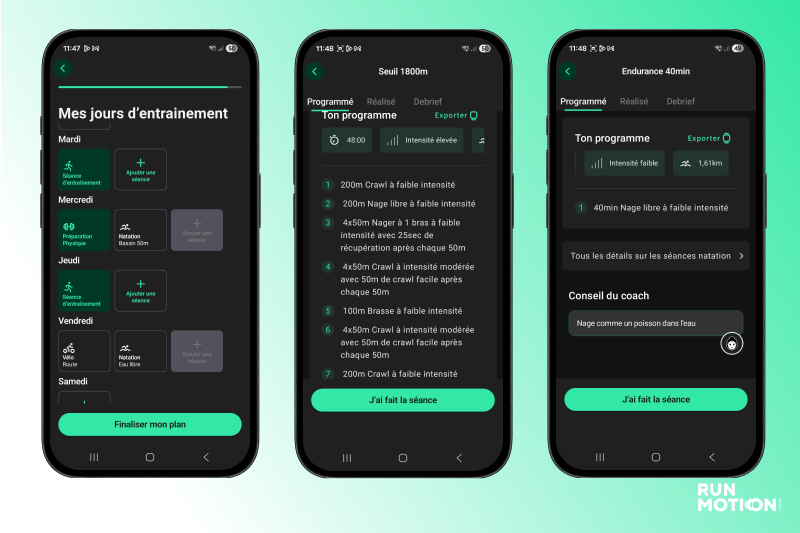
Here are a few examples of swim sessions you can find in the RunMotion Coach app (available with the Premium version):
Open-water session to build endurance
40m easy freestyle
50m pool session to improve technique
200m easy freestyle
100m easy breaststroke
200m easy freestyle
2x200m freestyle at moderate intensity with 30sec recovery after each 200m
2x50m easy backstroke with 50m easy freestyle after each 50m
4x50m freestyle at moderate intensity with 50m easy freestyle after each 50m
100m easy freestyle
Mistakes to avoid
Most triathletes make the same mistakes early on. Trying to swim fast before you can swim well, repeating the exact same workout every time, or skipping drills often slows progress.
On the other hand, by prioritizing consistency, technical quality, and training variety, you’ll gradually build a more economical and more efficient stroke.
Spend a few weeks working on these key areas and you’ll gain confidence, speed, and above all better swim economy. You’ll start the bike in much better shape, with more energy left to really enjoy your race.
If you want guidance in your build-up, the swim sessions included in RunMotion Coach help you improve step by step with a personalized training plan tailored to your level and your goal.
Download the RunMotion Coach app and start your triathlon training plan today!