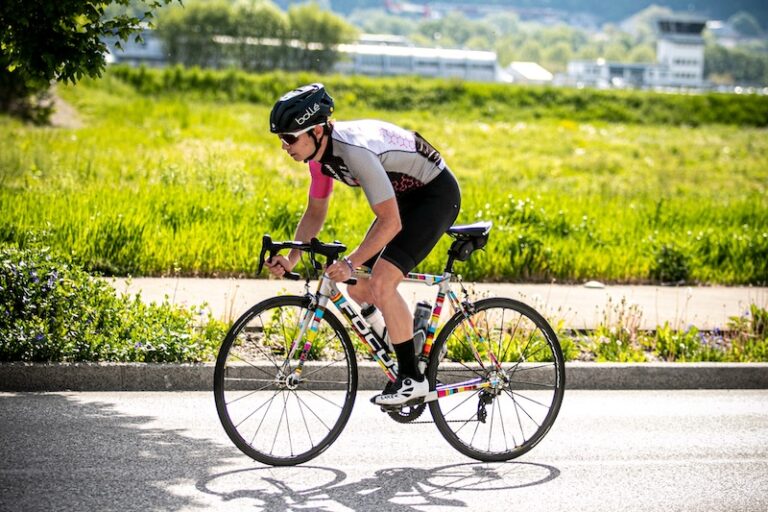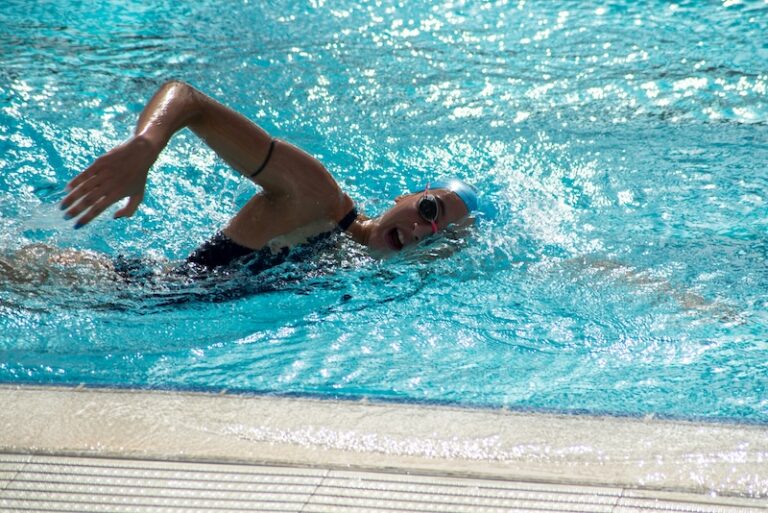
For a long time, strength training in triathlon was seen as a “nice-to-have”. Many triathletes preferred stacking up meters in the pool, miles on the bike, and run volume, rather than spending time on squats, core work, or lunges.
But mindsets are changing fast. Today, strength training is a core part of triathlon training, from beginners all the way to elite athletes.
Why? Because a triathlete does not just need endurance. You also need to produce force, hold an efficient posture, resist muscular fatigue, and above all avoid injuries that come from combining three demanding sports.
So, what are the benefits of strength training for triathlon? Which exercises should you prioritize? And how do you integrate it intelligently into your training plan?
Contents
- Triathlon is an endurance sport… but it’s also extremely demanding on your muscles.
- The benefits of strength training for triathletes
- Do you need heavy lifting?
- Key areas to strengthen for triathlon
- Examples of strength training exercises for triathlon
- How to add strength training to your training plan
- Example of a triathlon mini circuit
- Strength training, a real lever for progress
Triathlon is an endurance sport… but it’s also extremely demanding on your muscles.
Strength training for triathlon helps your body handle those stresses while staying technically efficient. Just like in running and trail running, general strength and conditioning (S&C) helps you:
- build stability and core strength
- improve muscular efficiency
- push back fatigue
- improve posture
- reduce injury risk
The benefits of strength training for triathletes
Better resistance to fatigue
Especially in long-distance triathlon, muscular fatigue often becomes the main limiting factor. When your muscles tire, your posture collapses, your pedal stroke loses efficiency, your run stride becomes less springy, and the risk of cramps goes up.
Strength training helps you maintain better movement quality, even after hours of effort.
Injury prevention
Triathlon combines high training volume with repetitive movement patterns. Common trouble spots include knees, Achilles tendons, lower back, shoulders, and hips.
Strength training in triathlon helps you balance muscle chains and fix weak links that the three disciplines often amplify.
Improved movement economy
A stronger triathlete often spends less energy at the same intensity. In practice, you stabilize your pelvis better on the run, you transfer power more efficiently on the bike, and you hold a better position in the water.
The result is better overall efficiency and delayed fatigue.
Do you need heavy lifting?
This is a common question among triathletes. The answer mostly depends on your level, your goal, and where you are in the season.
For most amateur triathletes, the goal is not to gain muscle size. It’s to develop strength, stability, endurance, and coordination.
So most of the work can be done with bodyweight, resistance bands, a kettlebell or light dumbbells, or through functional circuits. Heavy strength training is best saved for very experienced triathletes.
Key areas to strengthen for triathlon
Core stability
Your trunk plays a central role in all three disciplines. Core stability is especially important to:
- maintain alignment in swimming.
- hold an aero position on the bike
- stabilize your pelvis while running, especially when you’re tired
Legs
Quads, glutes, hamstrings, and calves are heavily used throughout triathlon. The right strength work helps you:
- improve power
- better absorb impact
- avoid a late-race breakdown when fatigue hits hard.
Upper body
Upper-body work is crucial for swimming, especially to feel more relaxed and efficient in the first discipline. Strengthening your shoulders, lats, and arms helps you:
- improve propulsion
- maintain good posture
- reduce neck and lower-back pain.
Examples of strength training exercises for triathlon
Here are a few simple, effective exercises to include in a triathlon strength training routine:
- Squats to improve stability and force production
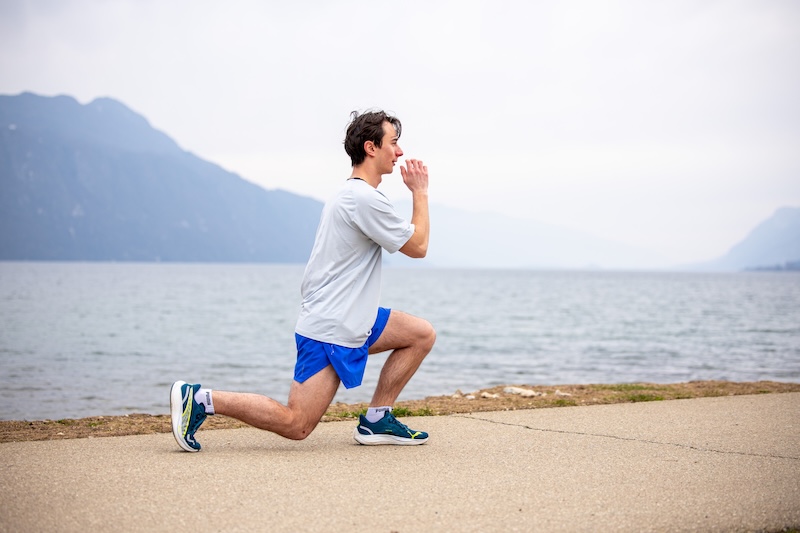
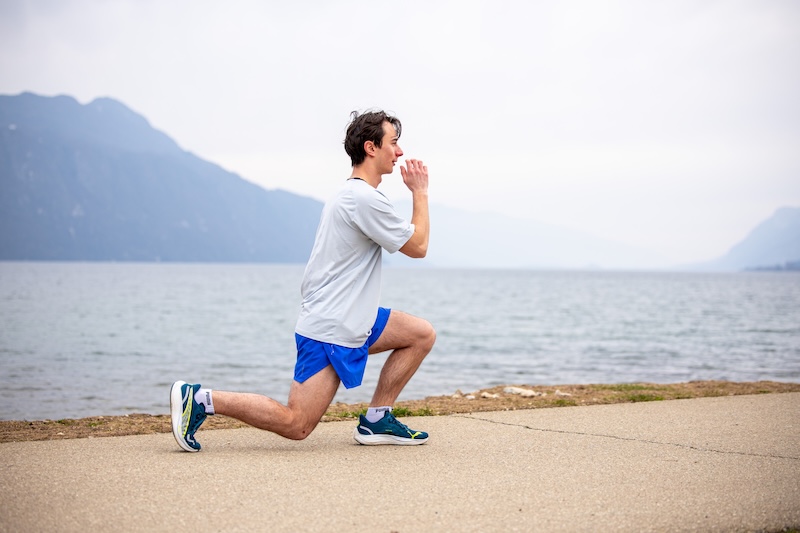
- Forward or walking lunges for balance, stability, and single-leg strength that carries over to running
- The plank to build a stronger core
- Hip thrusts to improve pelvic stability, so you’re more powerful on the bike and more efficient on the run
- Push-ups for overall posture and swimming strength
- Burpees for cardio and explosiveness
How to add strength training to your training plan
The most important thing is consistency. There’s no need for super long or brutally hard sessions. For most triathletes, 1 to 2 sessions per week is enough, and 20 to 40 minutes can already be highly effective.
Ideally, place these sessions away from your most intense workouts, avoid a big leg session right before a key ride or run, and reduce volume as race day approaches.
Just like swimming, cycling, or running, progressive overload and gradual progression are essential.
Example of a triathlon mini circuit
Here’s a simple circuit to repeat 3 to 5 times:
- 15 squats
- 10 push-ups
- 10 lunges per leg
- 45 seconds of planking
- 15 hip thrusts
- 10 dips
- 10 burpees.
Recovery: 1 to 2 minutes between rounds.
Strength training, a real lever for progress
Strength training in triathlon obviously doesn’t replace triathlon-specific training. But it often helps you handle training load better, improve more sustainably, reduce injuries, and be more efficient in all three disciplines.
Long considered optional, it has now become a true pillar of endurance performance. And the good news is that just a few consistent sessions are enough to feel the benefits.
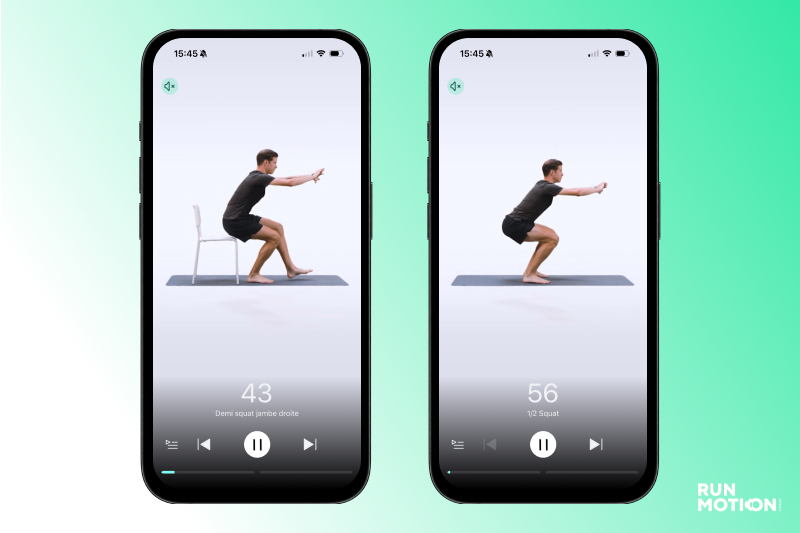
In the RunMotion Coach app, you can find swimming, cycling, and running sessions in your triathlon plan, plus fully guided strength training sessions. Just pick the days of the week when you want to do each discipline and your S&C. So you no longer have an excuse to skip strength training!