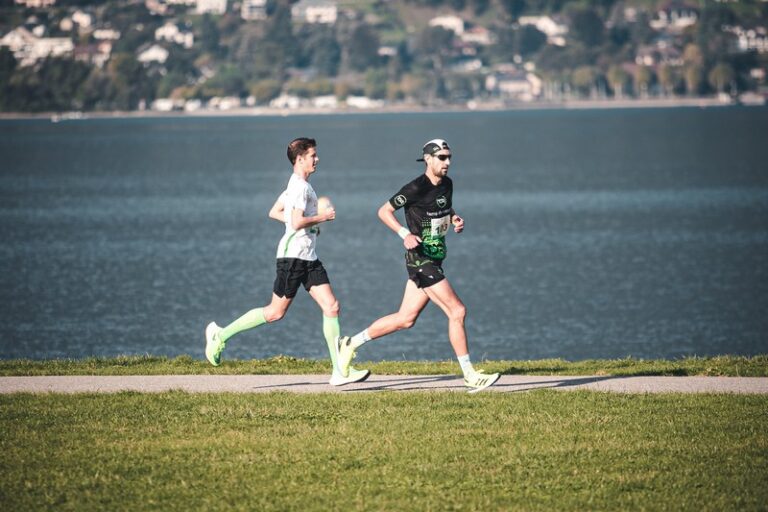
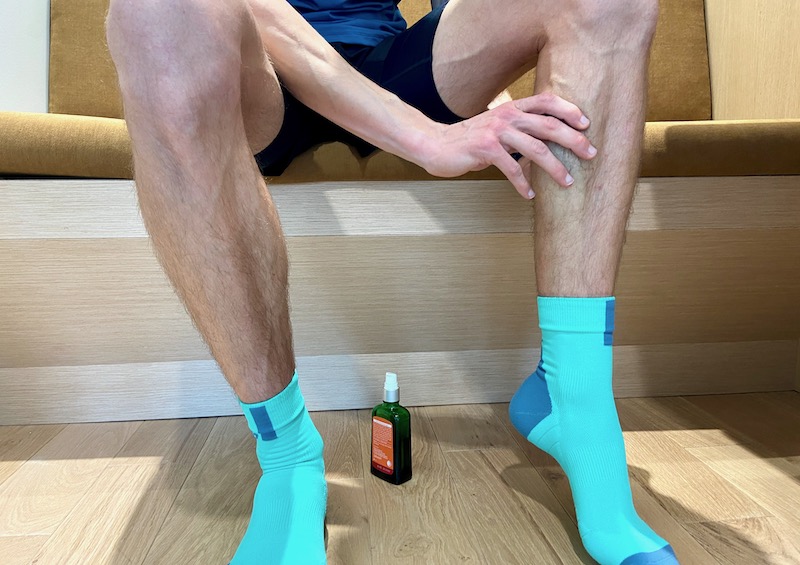
Recovery is a core part of every runner’s training. If you don’t take recovery seriously, you can slip into overtraining. Self-massage paired with a few shiatsu acupressure points can help you recover faster, reduce muscle soreness (DOMS), and prevent injuries.
If you want more general tips to improve your post-workout recovery, head here.
You’ve basically got two kinds of recovery, couch recovery 😴 or active recovery 🧘♂️.
And yeah, sadly the most effective one isn’t the couch one.
Active recovery helps your tissues “switch back on” faster. In other words, you’ll reduce soreness and lower your risk of injury after hard training.
Contents
What types of self-massage are there?
It’s usually recommended to massage from bottom to top for each muscle, starting with the calves, then moving up to the thighs. Here are a few methods you can use.
Shiatsu
Inspired by Traditional Chinese Medicine, this practice aims to restore the flow of vital energy in areas where it’s considered deficient or excessive. It uses precise acupressure points, drawn from acupuncture pathways, to bring the body back into balance and support healing.
For recovery after a tough workout, this technique is especially useful for addressing specific pains that showed up after training, or the ones that tend to appear the day after.
Shiatsu is typically done by a professional, but some points and self-massage techniques can be done on your own.
Self-massage
When you run, your legs take a beating (no surprise there 😅). In Traditional Chinese Medicine, six meridians run through the legs, and your running can affect them.
Practicing self-massage can help stimulate the following organs: the stomach, spleen, pancreas, liver, bladder, gallbladder, and kidneys.
This practice helps you relax the muscles and loosen the fascia (muscles, nerves, bones, blood vessels).
Self-massage benefits for runners
- Helps prevent injuries
- Reduces muscle soreness (DOMS)
- A feel-good moment just for you
- Decreases fatigue
- Relaxing
- Free
When and how should you do self-massage?
You can do self-massage at any time of day. If you do it in the evening, it can help you unwind and sleep better, especially after a hard session or intense endurance workout.
First, here are two exercises that can also double as a warm-up.
This is often practiced in martial arts like aikido to activate blood circulation.
From bottom to top, you’ll tap along your limbs using your fist (inner side).
Arm self-massage
- Stand up and extend one arm in front of you.
- Using your fist, tap the outside of the arm, from the hand up to the shoulder.
- Once you reach the shoulder, come back down tapping the inside of the arm, down to the wrist.
- Repeat two more times, then switch arms and do the same on the other side.
Leg self-massage
- Stand with your knees slightly bent.
- With your fists closed, tap along the outside of your legs from the hips down to the feet.
- Then move back up from the ankles to the hips, tapping this time on the inside of the legs.
- Repeat these actions three times.
Thigh self-massage
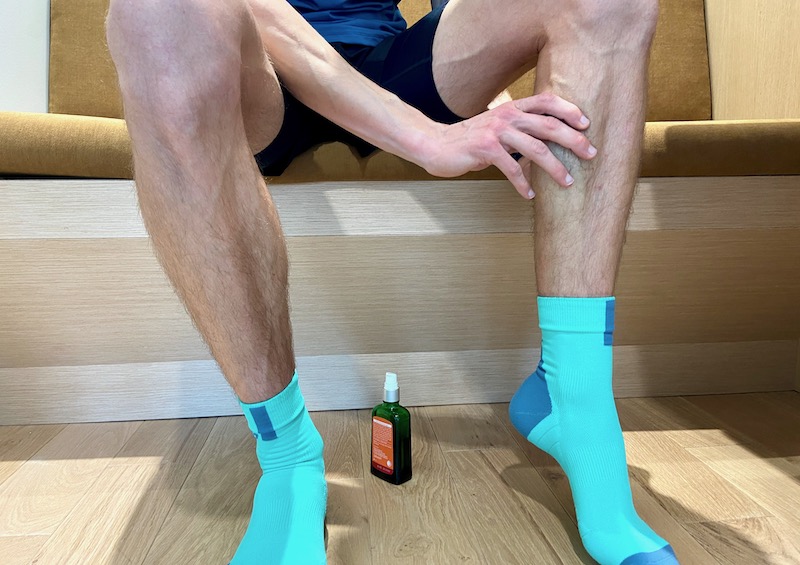
You can use massage oils if you want, ideally arnica-based oils (like Weleda). Red Tiger Balm can also be used for more targeted muscle or joint pain. Be careful with Tiger Balm though, it has a strong effect and acts like a topical anti-inflammatory/analgesic.
Knead the area and find the spot that gives you the most relief.
- Apply pressure with your thumb along a line on the outside of the femur. If you want more pressure, you can also use your elbow.
- Do the same on the inside of the femur, starting from the knee. Bend your leg a bit more to stay comfortable.
Repeat as many times as you like.
Knee self-massage
Warning: pressure should be light here, it’s a sensitive area.
- Knee bent
- Warm up the sides of the knee
- Warm up the top of the knee
- Gently massage under the knee with your fingers
- Lay the leg flat and, using your fingers, mobilize the kneecap
Three points under the kneecap, in the small hollows:
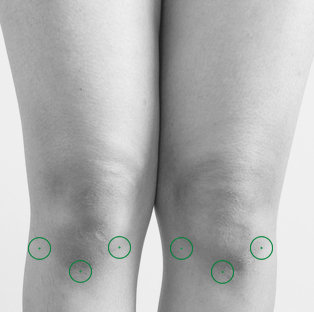
- Press your thumb on the inner side of the lower kneecap,
- Press your thumb just under the kneecap
- And on the outer side of the kneecap
Repeat several times from the inside to the outside. This can help flush metabolic waste and limit inflammation.
Calf self-massage
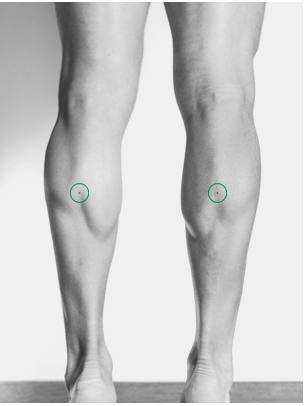
- Bend your leg, with your foot flat on the ground,
- Massage behind the knee
- Using both thumbs facing each other, apply pressure and move down the calf along a line through the middle
- In the center of the calf, in the “gap” between the muscles, about 3 cm below the knee, there’s a point that can help reduce cramps. Press it with a small circular motion for around 30 seconds.
Shin self-massage
- Apply pressure with your thumb along the outside edge of your shin down to the ankle.
- Starting again from the ankle, press along the inside edge of the shin, along a line between the bone and the muscles.
Recovery acupressure points
ZU SAN LI
This point helps tone the body, especially the legs, and can support swollen legs and knee pain. You can use it daily without any problem.
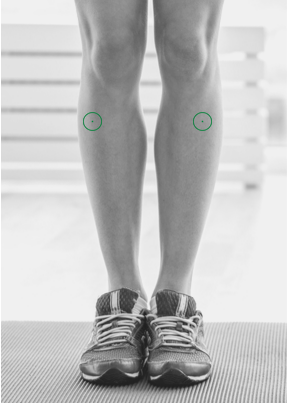
To find it:
- Place four finger-widths (using the hand opposite the leg you’re working on) below the kneecap, then rotate your hand downward (your middle finger should land on the shin). Move your middle finger one finger-width outward. The point is under your middle finger where, when you flex your foot, you feel the muscle contract.
- Massage using strong circular pressure for two to three minutes.
YANG LING QUAN
It can help reduce muscle issues like cramps, tightness, tendon pain, and spasms, and it may help “free up” the knee after a sprain.
To find it:
- Sit down with your foot flat on the floor
- On the outer side of the leg just below the knee, locate the bony bump, the head of the fibula. The point is just below this bump, right next to the bone.
Here are a few simple exercises that I hope will help you improve your recovery.
The foam roller
What is it?
Foam rollers are foam cylinders in different sizes. They help reduce the build-up of knots, boost blood flow, and improve mobility and flexibility.
How do you use it?
Roll the foam roller over your muscles (calves, quads, back, etc.), especially over tight spots, applying pressure for about 30 seconds until the pain goes away or at least eases.
Be careful, don’t roll directly over joints or over recent muscle injuries.
Foam roller tip
Roll in the direction of the muscle fibers, from bottom to top.
We’re sharing a video from our partner adidas Runtastic with foam roller exercises.
We hope these tips help you. Have a great training block and an even better active recovery!