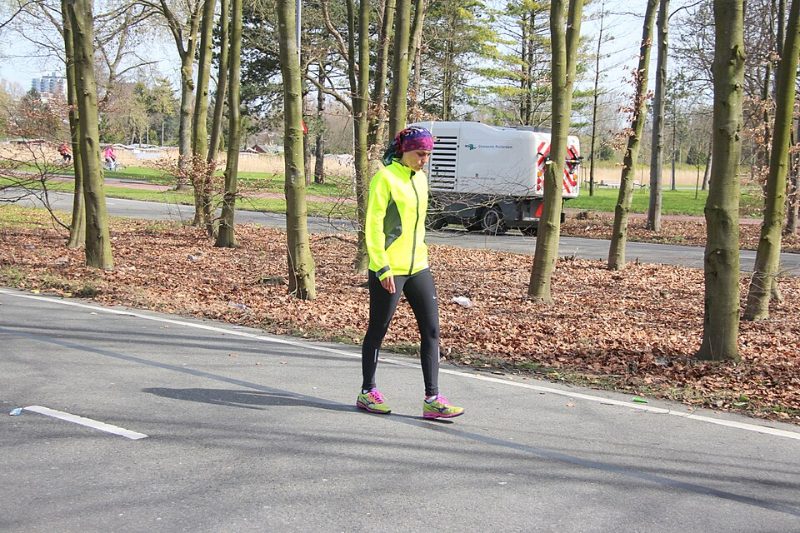
Running a marathon without training is possible on paper, but it’s a risky bet. The most likely outcome: cramps, legs that give out long before your lungs do, long stretches of walking and a painful recovery. Less often, it ends in the medical tent or at the hospital. Here’s what really happens to your body, and how to limit the damage if you’ve already signed up.
The short answer
- A marathon is no small thing: at the 2026 London Marathon, around 1,400 St John Ambulance volunteers and 45 ambulances were on hand, and medical teams treated scores of runners for cramp, exhaustion and heatstroke.
- Without training, it’s mostly your muscles, tendons and joints that fail, often from around 20 or 25 km.
- The main risks: injuries, rhabdomyolysis, hyponatremia (drinking too much), heatstroke and, very rarely, cardiac arrest.
- If you’re already registered and undertrained, switch to a shorter distance or start very slowly, alternating running and walking.
- For a marathon you can enjoy, allow 10 to 16 weeks of training, assuming you already run regularly.
Contents
- A marathon is no small thing: the London Marathon example
- What happens when you run a marathon without training
- The main risks of running a marathon without training
- Already registered but not trained: how to limit the risks
- How long does it take to train for a marathon?
- Frequently asked questions
- Train for your marathon so you can enjoy it
A marathon is no small thing: the London Marathon example
It’s easy to forget when you watch thousands of runners cross the line with a smile: 42.195 km is a real assault on the body, even for a well-prepared runner.
In April 2026, the London Marathon set a world record for the largest marathon ever, with 59,830 finishers. To look after them, around 1,400 St John Ambulance volunteers and 45 ambulances were deployed along the course. At the finish-line treatment centre alone, volunteers treated scores of patients, mainly for severe cramp, exhaustion and heatstroke, and some were sent on to hospital.
The point isn’t to be afraid of the marathon. It’s that a marathon has to be prepared for.

What happens when you run a marathon without training
Your legs give out before your lungs
Many people in good general shape (cyclists, footballers, gym-goers) assume their fitness will carry them. The problem is rarely your heart or lungs. It’s your muscles, tendons and bones, which haven’t been conditioned for the tens of thousands of impacts of a marathon.
Without long runs in your legs, muscle fibres get progressively damaged. Around 20 or 25 km, your thighs and calves tighten, cramps set in and your stride falls apart. That’s often when the walking starts, sometimes for 15 or 20 km.
The wall comes sooner and hits harder
Your body stores a limited amount of glycogen, the main fuel for running. Endurance training teaches you to spare it by burning more fat. Without that adaptation, your stores run out earlier and you hit the marathon wall well before 30 km: empty legs, dizziness, morale in free fall.
The main risks of running a marathon without training
Injuries
This is the number one risk, and the best documented. A meta-analysis covering different types of runners found around 17.8 injuries per 1,000 hours of running in novice runners, compared with 7.7 in recreational runners (Videbæk et al., 2015). A beginner’s body handles load less well, and a marathon means 4 to 6 hours of load in one go.
The most common: Achilles tendinopathy, IT band syndrome, knee pain, shin splints and, in the following weeks, stress fractures. Not to mention blisters and black toenails, far less serious but enough to turn the last few kilometres into an ordeal.
Rhabdomyolysis
After very long efforts, muscle fibres break down and release their contents into the bloodstream. This happens to some degree in every marathon runner. But when the effort goes far beyond what your muscles are used to, the breakdown can become massive and overload your kidneys: this is exertional rhabdomyolysis.
Warning signs: extreme muscle pain that doesn’t ease, swollen muscles and very dark urine, the colour of tea or cola. If that happens, see a doctor quickly, without waiting until the next day.
Hyponatremia: when you drink too much
This is the most counter-intuitive risk. A slow runner who spends 5 or 6 hours on the course and drinks at every aid station “just to be safe” can dilute the sodium in their blood. That’s hyponatremia, which causes nausea, headaches, confusion and, in severe cases, seizures.
At the 2002 Boston Marathon, a study found hyponatremia in 13% of the 488 runners tested, with 0.6% in a critical form. The main risk factors: gaining weight during the race (a sign of drinking too much) and a finish time over 4 hours (Almond et al., 2005). In other words, the typical profile of an untrained runner. The rule: drink to thirst, not at every station.
Your kidneys under pressure
Even in trained runners, the marathon stresses the kidneys. A Yale University study at the Hartford Marathon found mild acute kidney injury (stage 1) in 82% of the runners studied, right after the race. Markers returned to normal within about two days (Mansour et al., 2017). In a well-hydrated, trained runner, it’s temporary. Combined with rhabdomyolysis, heat or anti-inflammatory drugs, it can become serious.
Your heart: a rare but real risk
Cardiac events during marathons are rare. A large US study of 10.9 million runners counted around 1 cardiac arrest per 100,000 marathon participants, compared with 0.27 for half marathons (Kim et al., 2012). Most victims had an underlying heart condition, often undiagnosed.
Training doesn’t remove this risk, but it helps reveal it: warning signs (chest pain, unusual breathlessness, palpitations, feeling faint) often show up during the weeks of training. Depending on the country and the race, you may also have to fill in a health questionnaire or provide a medical certificate. If in any doubt, or if heart disease runs in your family, see a doctor before you toe the line.
Heat
A marathon run in warm weather, without experience of long efforts, exposes you to heatstroke: your core temperature spirals, confusion sets in, you collapse. Untrained runners are more exposed because they spend longer on the course, often during the hottest hours.
Train for your marathon without putting yourself at risk. RunMotion Coach builds your plan around your level, your available time and your race date, and adjusts it after every session. Try the app free for 7 days.
Already registered but not trained: how to limit the risks
The most sensible decision, and the hardest, is often to switch distance. Many races let you move to the half marathon or 10K, or transfer your bib under the conditions set by the race rules. A well-run half beats a marathon you just survive.
If you still take the start, a few rules make all the difference:
- Start very slowly, much slower than you think you can hold. You’ll never make up for a start that’s too fast.
- Alternate running and walking from the start, for example 8 minutes running and 1 minute walking, before you get tired rather than once you’re exhausted.
- Drink to thirst, without forcing yourself at every aid station, and take in sugar regularly (gels, sports drink, dried fruit).
- Don’t take anti-inflammatories before or during the race: they put extra strain on your kidneys during exercise.
- Don’t try anything new on race day: shoes, kit, gels. The classic mistakes are covered in our day-before-race checklist.
- Give yourself permission to drop out. A DNF isn’t a failure: it’s a smart runner’s decision.

Signs that should make you stop
Stop and head to the nearest medical point if you feel chest pain or tightness, unusual palpitations, dizziness, confusion, chills even though it’s hot, worsening nausea or headache, or sharp, localised pain (bone, tendon) that makes you limp.
How long does it take to train for a marathon?
It depends on your starting point. If you already run regularly and can run for an hour without stopping, marathon training usually takes 10 to 16 weeks, ideally with a marathon training plan matched to your level. If you’re starting from scratch, allow several months of regular running before you even begin a marathon-specific plan.
To check where you stand, read our article can you run a marathon?. You can also predict your marathon time from your 10K or half marathon times to set a realistic goal. And if it’s your first, see our tips for running your first marathon.
Frequently asked questions
Can you finish a marathon without training?
Some people manage it, especially if they have a solid sporting background. But they often end up walking a large part of the course, with pain for several days and a much higher risk of injury. Finishing doesn’t mean it went well.
Is it dangerous to walk a marathon?
Walking reduces impact, but the effort then lasts 6 to 7 hours. The risks of dehydration, hyponatremia (if you drink too much) and blisters are still real. Check the cut-off times too: many marathons close the course after around 6 hours.
How long does it take to recover from a marathon run without training?
Muscle soreness often lasts a week, sometimes longer. Muscles and tendons take longer to fully repair. Start back with walking and very short easy runs, and see a professional if a specific pain lasts more than a few days.
Do you need a medical check before a marathon?
Rules vary by country and by race: some require a medical certificate or a health questionnaire, others don’t. Either way, if you have symptoms, a medical condition or a family history of heart disease, see a doctor before you start training.
Train for your marathon so you can enjoy it
A marathon is won in the weeks before the race, not on race day. With progressive training, you greatly reduce the risks and turn 42 km of survival into a real race. RunMotion Coach guides you with a personalised plan that adapts to your fitness and your schedule. Start your 7-day free trial.
Sources
- St John Ambulance at the 2026 London Marathon, reported by Harrow Online (27 April 2026).
- Videbæk S, Bueno AM, Nielsen RO, Rasmussen S. Incidence of running-related injuries per 1000 h of running in different types of runners: a systematic review and meta-analysis. Sports Medicine, 2015. DOI: 10.1007/s40279-015-0333-8
- Almond CSD et al. Hyponatremia among runners in the Boston Marathon. New England Journal of Medicine, 2005. DOI: 10.1056/NEJMoa043901
- Mansour SG et al. Kidney injury and repair biomarkers in marathon runners. American Journal of Kidney Diseases, 2017. DOI: 10.1053/j.ajkd.2017.01.045
- Kim JH et al. Cardiac arrest during long-distance running races. New England Journal of Medicine, 2012. DOI: 10.1056/NEJMoa1106468
Last updated: 4 November 2026.