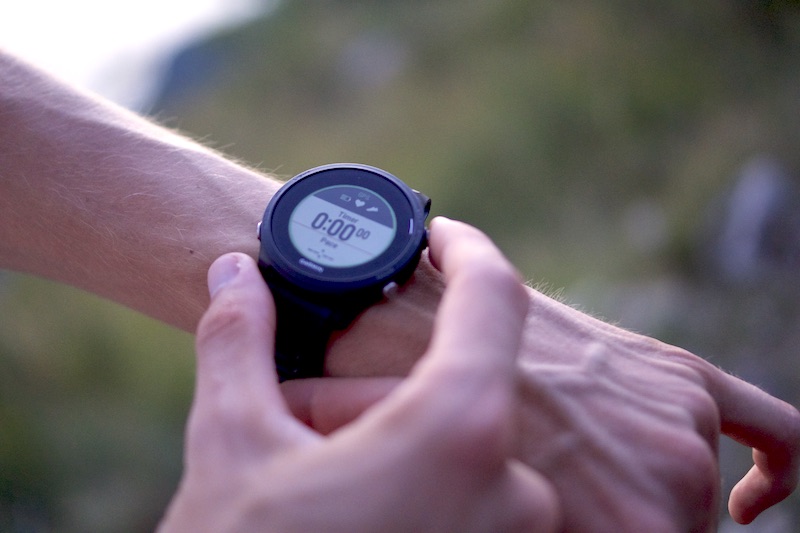
 While using a heart rate monitor in training isn’t always necessary if you know your body well, measuring your resting heart rate and heart rate variability (HRV) is the best way to track your daily fitness and recovery. A higher-than-usual resting heart rate, or lower-than-usual HRV, can signal accumulated fatigue or the early signs of illness.
Who am I? I’m Guillaume Adam, an elite runner (29:31 for 10K). I worked in a CNRS lab and at MIT in Boston on analyzing heart rate at rest and during exercise. One of the goals was to determine the best training and racing paces for each athlete.
Contents
Typical resting heart rate values
At rest, average heart rate is roughly:
– 80 beats per minute for a sedentary person
– 60 beats per minute for a regular exerciser
– 30 to 40 beats per minute for elite endurance athletes
The more active a person is, the more this resting heart rate tends to drop. Your body needs a certain blood supply, and the heart delivers it at a given output.
Like a pump, the stronger the heart, the higher that output. If output increases, it needs fewer beats to move the same amount of blood, so heart rate goes down.
You may already have measured your resting heart rate and noticed that it changes from day to day. That variation is what really matters when you want to assess your fitness and track progress.
So it is important to measure your resting heart rate the same way every time, and at the same time of day. The ideal moment is right after waking up, before starting any activity, and preferably while lying down.
What should I do if my resting heart rate is higher than usual?
If your resting heart rate is higher than usual, 5 to 10 beats more, your body is trying to respond to stress. That could come from a celebration, stress at work, or a lack of sleep. So it is better not to add extra stress with a hard training session. A rest day is the smart choice.
If your heart rate stays higher for several days, then check whether your training load is too high.
In practice, how do I use resting HR?
Heart rate is easy to measure with an HR chest strap or a mobile app that uses your phone camera sensor. The good old manual method works just as well. Take your pulse at the wrist or neck and count the beats for 30 seconds. Then multiply that number by 2 to get your heart rate per minute.
When your device shows a value that is higher or lower than usual, it is worth double-checking manually to make sure the sensor is not glitching.
Another metric is even more precise for tracking fitness and the effects of training: heart rate variability (HRV)!