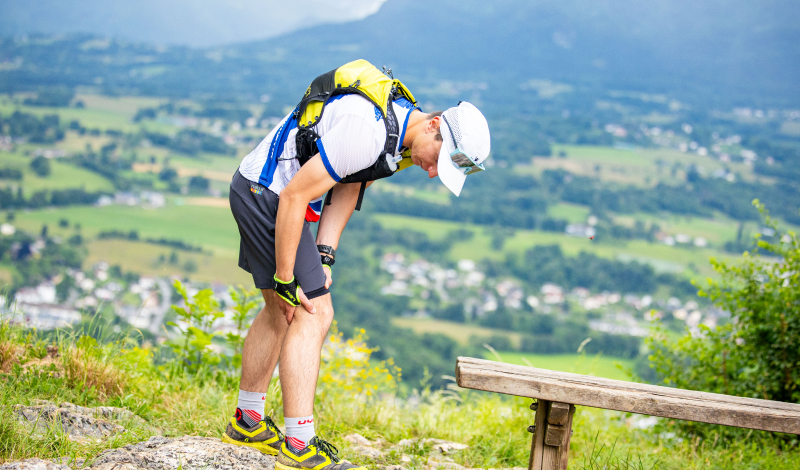
Training for a trail race? Huge respect, that is a real challenge. During your build-up or on race day, you might run into muscle cramps. They tend to show up on trail races longer than 30 km, especially in the 40 km to 80 km range, and even more often in ultras like a 100 km. To keep that pain from stopping you in your tracks, it helps to prepare for it and know how to calm it fast. Here are our six tips to prevent cramps during trail running, plus what to do to stop them if they hit.
Contents
What is a cramp? What are the symptoms?
A cramp is an involuntary, painful contraction of a muscle or muscle group. It usually comes on suddenly and can last anywhere from a few seconds to several minutes.
Types of cramps trail runners often face
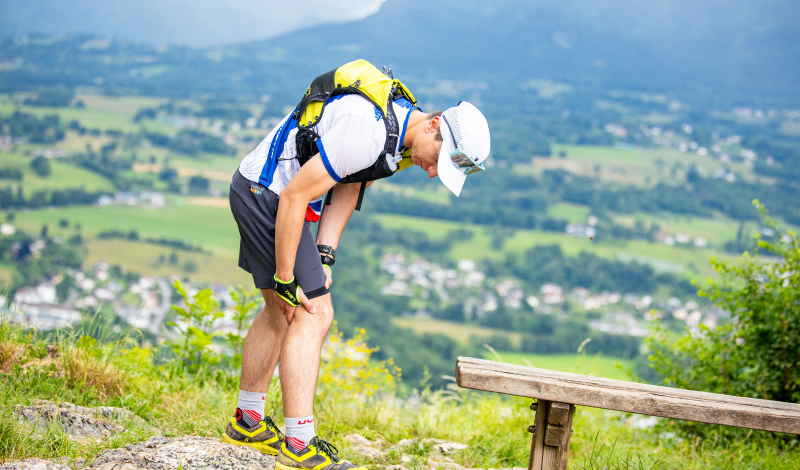
Trail runners are especially prone to exercise-associated muscle cramps, which appear during hard, prolonged effort. They often strike on steep climbs or technical descents, when muscles are pushed close to their limit. Sustained intensity, paired with uneven and unstable terrain, increases the risk of sudden, painful muscle contractions.
Night cramps can also show up after a race, when muscles are tired and you are slightly dehydrated. After hours on the trails, the body is drained and recovery can feel rough, especially if post-race hydration and nutrition are not on point.
Cramps by muscle group and main causes
Cramps usually hit the muscle groups that take the biggest beating while running, especially:
Calf cramps
Your calves are heavily worked on both climbs and descents, which can make them tighten up as fatigue builds. Uphill, they work hard to drive you forward and up. Downhill, they help stabilize and absorb impact. That constant load can trigger painful cramps.
Quadriceps cramps
Your quads take a major workload, especially downhill, where they handle much of the impact and stabilization. On technical descents, they absorb shock and control speed, which can fatigue them quickly and cause cramps during a trail run.
Hamstring cramps
Your hamstrings work hard throughout a trail race, especially on uneven terrain where your stride and mechanics constantly change. They are always engaged to help with propulsion and stability, and that repeated demand can wear them down and lead to hamstring cramps.
Foot cramps
The small muscles of the feet can cramp from fatigue and repeated impact on varied, often rocky or uneven trails. Every step on unstable ground forces the feet to work for balance and grip, which raises the risk of cramping.
Back and abdominal muscle cramps
Your back and core muscles are constantly recruited to maintain posture and balance on technical terrain. It is less common, but these muscles can cramp too, especially once fatigue sets in. Solid core stability is key for efficient trail running, and excessive fatigue can spark painful contractions.
When you understand the most common types of cramps and the muscles involved, you can prepare better and prevent these issues in your trail races. Use smart training and recovery strategies to strengthen these muscle groups and build endurance, so cramps are less likely to ruin your day.
Our 6 tips to prevent cramps during a trail run or ultra-trail
Add general strength and conditioning (PPG)
General strength and conditioning, often called PPG in French training plans, is essential for building overall strength and muscular endurance, which is a major factor in preventing cramps in trail running. By adding strength work to your training plan, you prepare your muscles for long duration effort and constantly changing terrain. Even before dehydration becomes an issue, muscle weakness is one of the main reasons cramps happen during exercise.

With the RunMotion app, you get personalized training plans based on your goals, including trail-specific strength sessions. These plans include targeted strength and mobility exercises to boost performance and reduce the risk of cramps during a trail race. With RunMotion, you follow a structured program that guides your training and gets you ready for anything you might face on race day.
Progressive training matters
Progressive training builds strength and muscular endurance step by step. By gradually increasing distance and intensity, you lower the risk of muscle overload and therefore cramps. The RunMotion app factors in your training load and the intensity of recent sessions to help avoid these pitfalls.
- Vary your intensities: Alternate long endurance runs with speed sessions to get your muscles used to different demands.
- Rest and recovery: Build rest days and recovery weeks into your plan so your muscles can repair and adapt.
Hydrate properly
Proper hydration is key to preventing cramps. Drink small amounts regularly before, during, and after training or racing to keep muscles hydrated. Mineral water provides more minerals and can be alternated with regular still water.
- Before the race: Hydrate well in the days leading up to the event by sipping water regularly.
- During the race: Drink at regular intervals, about every 15 to 20 minutes, to offset sweat losses.
- After the race: Keep drinking water to rehydrate and support muscle recovery in the days after your race.
Balance your electrolytes
Electrolytes like sodium, potassium, and magnesium are essential for proper muscle contraction. Eat electrolyte-rich foods or use supplements and isotonic sports drinks to maintain a solid electrolyte balance, especially during long endurance events.
- Electrolyte-rich foods: Banana, orange, spinach, nuts, and seeds.
- Isotonic drinks: Use sports drinks with electrolytes to stay balanced during the race.
- Electrolyte supplements: Use tablets or electrolyte gels if you have specific needs or during long races.
Choose the right gear
The right kit can help prevent cramps and improve performance. Invest in trail running shoes that match your stride and offer reliable cushioning, wear technical clothing that wicks sweat and keeps you comfortable, and consider compression socks to support blood flow.
- Trail shoes: Pick shoes with solid cushioning and traction, designed for rugged terrain.
- Technical clothing: Choose breathable, moisture-wicking fabrics to stay dry and avoid chafing.
- Compression socks: They can improve circulation and reduce muscle fatigue, which matters in long efforts like trail races. If your calves are a weak point, they are worth testing.
- Hydration pack : A hydration pack is essential for carrying key gear like gels, soft flasks, and other important equipment. It helps you stay hydrated and gives you easy access to what you need between aid stations.
Drink pickle juice to help prevent cramps
A surprising but effective way to help prevent cramps is drinking pickle juice. The exact mechanism is still debated, but it is widely used in endurance sports like cycling and trail running, and many athletes swear by it. It contains electrolytes and acetic acid, which may help relieve and prevent cramps quickly. Plenty of runners use it for its ability to restore balance and reduce muscle cramps almost instantly.
What to do if a cramp hits during a trail race?
- Slow down and walk : As soon as you feel a cramp coming on, back off immediately and walk to reduce stress on the affected muscle. This lowers tension and helps blood flow return to the area.
- Stretch gently : Lightly stretch the cramped muscle to help it relax. For a calf cramp, lean forward with the affected leg back and heel on the ground. For quad cramps, bend the knee and bring your heel toward your glutes, holding the position.
- Drink and take electrolytes : Drink water, an electrolyte drink, or pickle juice if you have it to rehydrate and restore electrolyte balance. Always carry soft flasks or electrolyte powder packets so you can mix them with water.
- Massage the area : Gently massage the cramped muscle to improve circulation and release tension. Use your hands, or a small massage roller if you carry one in your hydration pack.
- Restart gradually : Once the cramp eases, ease back into running and stay alert for signs it may return. Alternate walking and easy running until you are ready to settle back into your normal rhythm.
Prevent trail running cramps with the RunMotion Coach strength module (PPG)
With the right preparation, you can dramatically lower your risk of cramps during a trail race or ultra. Hydrate well, manage electrolytes, follow a smart training plan, dial in your nutrition, and above all listen to your body. These strategies help you run with more confidence and comfort, even on the toughest terrain and over long distances.
For the best preparation, check out the RunMotion training plans. They are designed to help you improve progressively and get ready for the race you are targeting. On top of that, the strength module (PPG) gives you specific strengthening exercises to prepare your muscles for long efforts and the unstable terrain you will face. Balanced leg strength development, including the hamstrings, is a real advantage for preventing cramps and injuries.