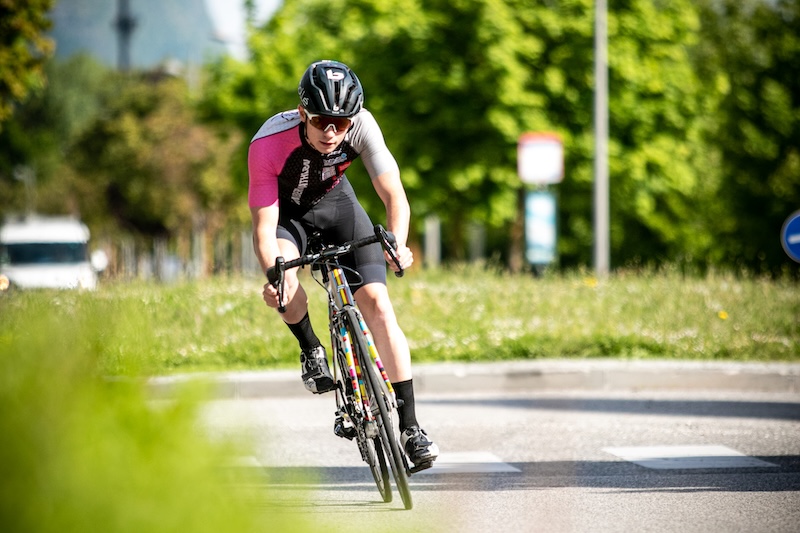
IRONMAN, also known as Full Distance or XL triathlon, is a legendary goal for many athletes.
3.8 km swim, 180 km bike, and 42.2 km run… A true endurance adventure where physical and mental resilience become the whole game.
Training for an IRONMAN is not just about stacking miles. You also need to learn how to manage fatigue, fuel properly, recover well, and stay consistent through months of demanding preparation.
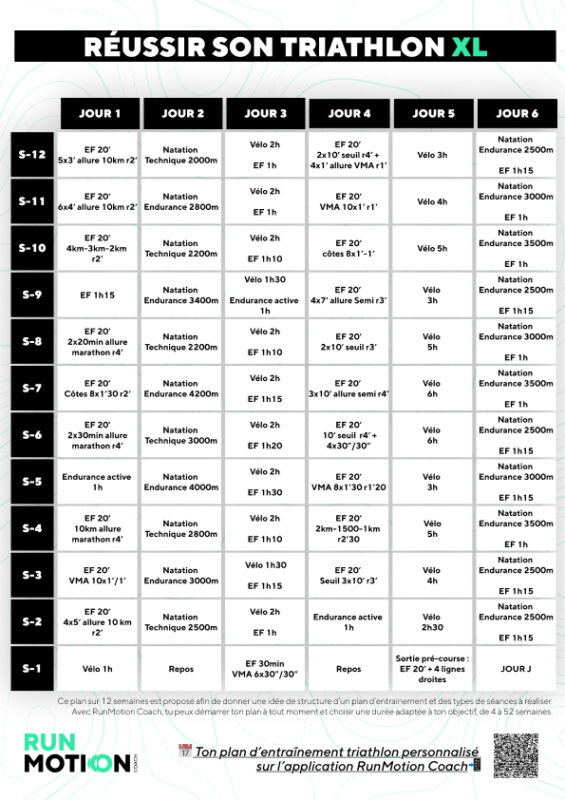
With a progressive, structured plan that matches your level, thousands of age-groupers cross the finish line every year. The real challenge is showing up ready and healthy on race day. To help you get there, we put together the most important tips plus a 12-week training plan.
Contents
- The IRONMAN format: a race like no other
- How long does it take to train for an IRONMAN?
- How to structure your training for a Full Distance triathlon
- Key sessions to prepare for a Full Distance triathlon
- Nutrition and recovery: the fourth discipline
- Your personalized IRONMAN plan with RunMotion Coach
- FAQ: IRONMAN
The IRONMAN format: a race like no other
The Full Distance triathlon is:
- 3.8 km swim,
- 180 km bike,
- 42.2 km run.
For most amateur triathletes, total race time typically falls between 9 and 16 hours.
At this scale, everything changes. Pacing, nutrition, recovery, and mental strategy become just as important as fitness.
On an IRONMAN, the race is rarely decided by raw speed. It is usually won through endurance and the ability to stay steady all day long.
Every detail matters. Poor fueling, starting too fast, missing hydration, or mismanaging your effort can quickly turn the final hours into survival mode. That is exactly why a coherent training plan matters.
How long does it take to train for an IRONMAN?
Before you tackle your first Full Distance triathlon, we recommend you have already raced an Olympic distance or a Half (70.3) to build long-distance experience.
For a first attempt at this distance, plan on 5 to 8 months of training. The first months are mainly about building a huge endurance base and getting your body used to the training load.
Progression is absolutely crucial at this distance. Trying to increase volume too fast is often the quickest route to injury or deep fatigue that is hard to shake. The goal is not just to complete sessions, it is to string together months of consistent training.
For more experienced triathletes, the work becomes more specific.
That is where optimization comes in:
- pacing
- bike power
- race-day fueling strategy
- running economy,
- the ability to manage accumulated fatigue.
And at this level, recovery becomes almost a full training block on its own.
How to structure your training for a Full Distance triathlon
Preparation usually includes 8 to 12 sessions per week.
Training volume often ranges from 10 to 18 hours per week, depending on the phase of the build and your experience.
You will typically combine multiple swim sessions, long bike rides and long runs, brick workouts, plus strength training.
But contrary to what many think, not everything should be hard. A large part of the work happens in Zone 2 (easy aerobic endurance) to build the ability to hold a very long effort.
Discover your 12-week IRONMAN training plan
Key sessions to prepare for a Full Distance triathlon
Build a strong, efficient swim
In an IRONMAN, the swim is “only” the first part of the day.
In training, the goal is to develop endurance and technical efficiency to save energy. As the plan progresses, sets get gradually longer so your body learns to hold a steady effort for close to an hour, or more depending on your level.
More experienced triathletes can also add sighting practice, mass starts, drafting, and pace changes to get closer to race conditions. The objective stays the same, exit the water with enough energy to tackle the long day ahead with confidence.
Here are 12 swim drills to help you improve in triathlon.
Long bike rides
In an XL triathlon, you spend more than half the day on the bike, so it is crucial to be ready for it, and to make it as efficient as possible.
Long rides help you work on:
- endurance,
- pacing,
- nutrition,
- and mental toughness.
These are essential sessions for learning how to manage hours of effort without drifting into the red.
It is also during these workouts that you validate your entire fueling strategy, hydration, carbohydrate intake, gut tolerance, and aid-station routine. Race day is not the time for surprises. The more you rehearse the basics in training, the easier it becomes to stay clear-headed and effective when it counts.
Long runs
The marathon at the end of an IRONMAN is run with massive accumulated fatigue.
The goal of your run training is to build endurance while limiting excessive muscle damage.
That means plenty of easy aerobic running, plus work at IRONMAN run pace so you can stay steady even when tired.
Long runs improve your ability to use fat as a fuel source and hold a stable pace over time. They also strengthen muscles, tendons, and joints so you can better absorb the repeated impact of running late in the race.
Big brick workouts
In Full Distance training, brick sessions help you simulate the bike-to-run transition. Your body and your mind need to be ready for the long hours you will face on race day.
Example of a brick workout to include in your Full Distance build: 5 hours cycling followed by 45 minutes to 1 hour running.
We also recommend using these sessions to test your fueling and your race strategy.
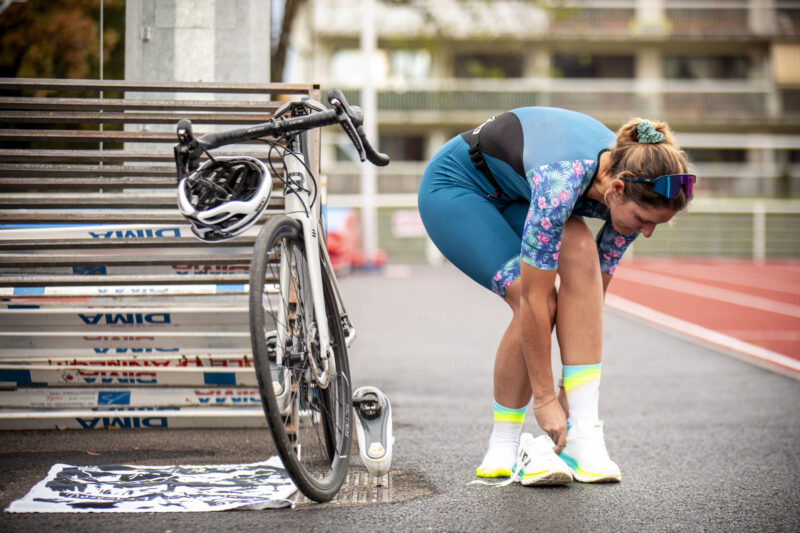
Brick workouts are not yet available in the RunMotion Coach app, but this feature is coming soon.
In the meantime, we recommend either adding 1 to 3 km of running right after your bike ride, or scheduling two sessions on the same day directly in the app.
Nutrition and recovery: the fourth discipline
At this distance, nutrition is almost a fourth discipline.
You need to learn how to drink and eat during the effort, and also when to do it, how to manage your carbohydrate intake, all while avoiding gastrointestinal issues that can quickly become a major limiter.
Recovery is just as essential if you want to absorb months of training load. Prioritize sleep, plus down weeks with fewer and easier sessions.
Transitions are less decisive at this distance because you will tend to take a little more time. That also helps bring your heart rate down.
Your personalized IRONMAN plan with RunMotion Coach
RunMotion Coach offers personalized Full Distance triathlon training plans based on your level and goal, adapting to your progress, fitness, and schedule.
In the app, create your triathlon goal and access specific workouts, long sessions, plus guidance on nutrition, recovery, and race strategy.
Triathlon goals are available only with the premium version.
Get 15 days free right now!
FAQ: IRONMAN
How long does it take to prepare for an XL triathlon?
Training for an XL triathlon usually takes 5 to 8 months depending on your starting level, endurance, and goal. The less experienced you are, the more important it is to take time and build training volume gradually.
How many training hours per week for a Full?
Preparing for a Full Distance triathlon averages between 10 and 18 hours of training per week. Volume changes across the build, with lighter weeks to support recovery.
Can you train for an IRONMAN while working?
Yes, it is absolutely possible to train for an IRONMAN while holding a job. Good organization, realistic planning, and a training plan that fits your schedule are essential for keeping balance. In RunMotion Coach, you can adjust each training week based on your personal constraints and how you feel.
Is nutrition essential in a Full Distance triathlon?
Yes. Nutrition plays a key role in IRONMAN success. Managing hydration and energy intake helps you maintain performance and avoid major breakdowns during the race.
Do you need to have done a Half before an IRONMAN?
Yes, finishing a Half Distance triathlon is strongly recommended before stepping up to a Full. That experience helps you understand pacing, fueling, and how the three disciplines connect over long distance.
How long does it take to recover after an IRONMAN?
Recovery after an IRONMAN can take several weeks, sometimes even a few months, to feel fully fresh physically and mentally again. Plan for an active recovery phase after the race, then a gradual return to training so your body can properly absorb the exceptional stress of a Full Distance triathlon.
In RunMotion Coach, you can also create a recovery goal after a race.