In triathlon, a lot of athletes mainly want one thing: to get faster. Hard sessions, intervals, or “tempo” workouts often feel more effective and more exciting. But easy endurance, also known as Zone 2, is still the foundation of long-term progress in triathlon training.
This intensity can feel almost too easy, and some people even think they are “wasting time” when they ride or run slowly. Yet it is exactly this zone that builds the aerobic engine you need to keep improving, season after season.
Contents
What is Zone 2 endurance in triathlon?
Zone 2 is a low to moderate effort: you can talk comfortably without getting out of breath.
In triathlon, there are two main ways to track training intensity: heart rate and power. To know what you should focus on in training, check out our article on the topic: Triathlon : faut-il s’entraîner en zones de fréquence cardiaque ou en puissance ?
It usually corresponds to about 60 to 75% of your maximum heart rate. The goal is not to push hard, but to stay in a steady, controlled intensity you can sustain.
This is the zone where your body builds many of the key endurance adaptations, including those famous mitochondria.
Why Zone 2 is so important
Easy endurance first improves energy efficiency: the more you train in Zone 2, the better your body becomes at using fat as fuel and sparing precious glycogen stores.
On long efforts like a triathlon, that ability can be a game changer for performance.
It also improves how your cardiovascular system works. Your heart becomes more efficient, your muscles receive oxygen more easily, and your endurance capacity builds steadily.
Very intense sessions create a lot of muscular and nervous system stress. If you stack only hard workouts, your risk of plateauing or getting injured goes up quickly. Zone 2 acts as the base that helps you absorb heavier training loads.
To train Zone 2 effectively, it helps to know your training zones.
They can be set from heart rate, cycling power, or running paces. The most accurate approach is usually an exercise lab test or a well-designed field test, so you get zones that match your current fitness.
But for many age-group triathletes, a simple cue works extremely well: in easy endurance, you should be able to breathe calmly and hold a conversation without feeling breathless.
Why so many triathletes train too fast
One of the most common mistakes is to ride or run just a little too hard all the time.
You feel “good”, you think you are training productively, but you often sit in that middle zone that drains you without delivering the benefits of truly hard sessions.
The result: you pile up fatigue while limiting your progress.
To build a real aerobic base, you need to accept slowing down. Sometimes a lot more than your ego would like.
How to train easy endurance in triathlon
Zone 2 endurance can be trained in all three triathlon disciplines, but it can feel very different in swimming, cycling, and running.
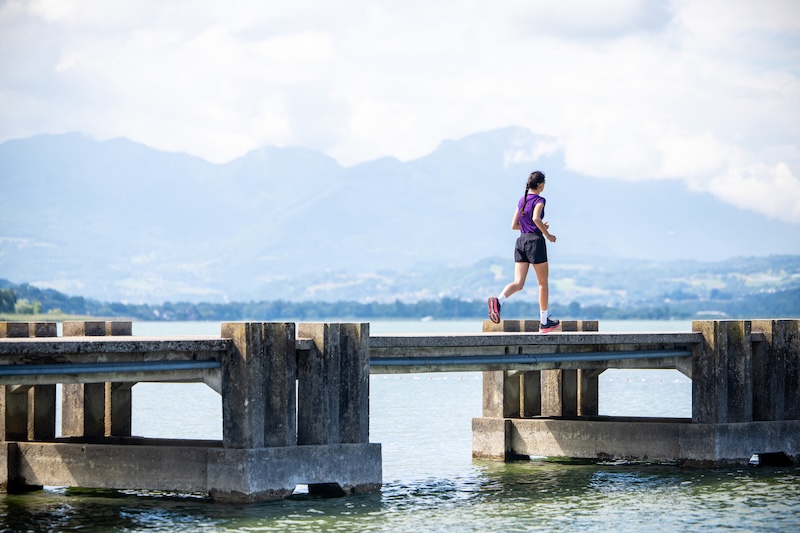
In running, it is often the hardest place to truly stay in Zone 2. If you cannot talk easily during your run, it usually means you are already training too hard.
On the bike, it is often easier to hold endurance pace (unless you start racing your friends). Long, easy rides are perfect for building aerobic fitness and adding training volume without excessive stress.
In swimming, Zone 2 looks like smooth, relaxed swimming with controlled breathing. The goal is not to swim fast, but to keep a steady effort without your fatigue drifting upward.
Easy endurance remains one of the most important pillars of triathlon training. Even if it feels less impressive than high-intensity work, it is what builds your ability to last, recover, and perform over the long term.
Your heart becomes more efficient, your muscles get oxygen more effectively, and your endurance improves little by little. Learning to truly control Zone 2 helps you develop stronger, more durable endurance and, very often, to race faster on race day.