
You’ve decided to take on an ambitious challenge by signing up for your first triathlon. But as this new adventure begins, one big question pops up, how do you structure your training?
Because even if triathlon combines three endurance sports, preparing for it is not just about doing a bit of swimming, cycling, and running whenever you feel like it. It’s really a balancing act, and above all, it starts with an honest look at your own strengths and limits.
In this article, we’ll look at how to smartly combine the three disciplines so you can maximize progress, build endurance performance, and avoid injury from piling on too much training volume.
Contents
How many training sessions per week?
First, let’s talk about training volume, meaning how many sessions you do each week, and even more importantly, how long those sessions are. That volume depends on several factors, especially your fitness level and your experience. To stay injury-free, you have to park your ego and accept that when you’re new to triathlon, your weekly volume should stay relatively low, even if you’re already a strong runner.
For a beginner triathlete
If you’re training for your very first triathlon, you don’t need to train every day. In most cases, 3 to 4 sessions per week are plenty to get started. The main goal is to build an endurance base across all three disciplines while giving your body time to recover. Sessions can last around 45 minutes to 1 hour, for example one swim, one bike ride, and two runs.
For a more experienced triathlete
As you gain experience, your endurance workload can gradually increase. An intermediate triathlete typically completes 5 to 7 sessions per week, sometimes stacking two disciplines in the same day. Sessions are usually longer (1 to 2 hours), building endurance and your ability to string efforts together. The goal is to prepare your body for race-day demands while continuing to improve in each sport.
Of course, the number of sessions varies depending on the distance you’re training for. Here we’re assuming beginners start with an XS or S triathlon, while more experienced athletes target M, L, or even Ironman races.
Identify your weaknesses
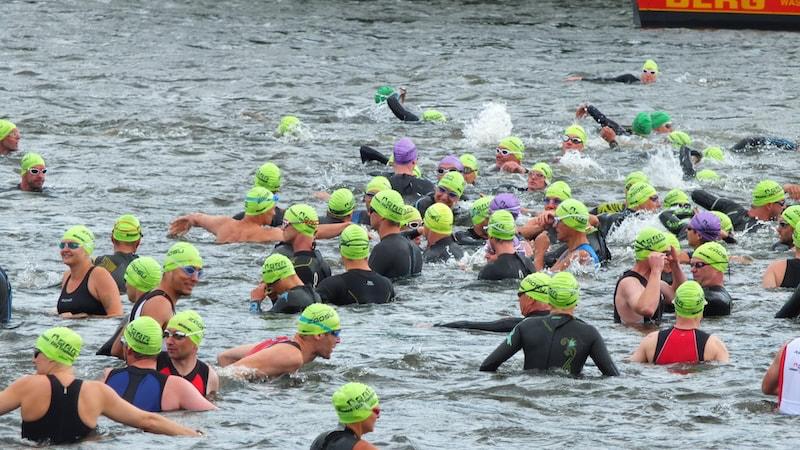
Let’s be honest, in triathlon, very few people naturally shine in all three disciplines. Most triathletes have a favorite, and usually one sport they like a little less.
For some, it’s swimming, where it can feel like you’re fighting for air more than actually moving forward. For others, it’s the bike and those long rides that can really batter the legs. And then there’s running, which quickly turns into a real challenge once you hop off the bike with already heavy, tired legs.
In short, every triathlete has a small weak spot, and that’s completely normal. The key is to identify it so you can adjust your triathlon training plan and improve where it matters most. Think of it as fighting fire with fire.
Strengthen your weakest discipline
Once you’ve identified your weak point, the idea is simple, give it a bit more space in your training week. In practical terms, that means adding one extra session in that discipline, and slightly trimming the sport where you feel most comfortable.
For example, if your schedule includes:
- 1 swim session
- 2 run sessions
- 2 bike sessions
And swimming is your main limiter, it may be smart to move to 2 swim sessions, reducing volume slightly in your strongest discipline, for example cycling.
Alternate your training weeks
Another approach is to alternate the volume of each discipline from one week to the next. This lets you attack your weakness without throwing your overall balance off.
For example:
- Week 1: 1 swim session, 2 run sessions, 2 bike sessions
- Week 2: 2 swim sessions, 2 run sessions, 1 bike session
This rotation helps you gradually strengthen your weakest discipline while keeping consistent work in the other two sports.
Build your triathlon training plan
Now let’s get practical, how do you actually organize your week of triathlon training?
The goal is to find the right balance between swimming, cycling, and running, while leaving enough recovery time to improve consistently and stay healthy.
A balanced split across the three disciplines
In a classic training week for a beginner or intermediate triathlete, the ideal approach is to spread sessions across all three sports (1 to 2 workouts per discipline). This keeps each skill fresh while steadily building your overall aerobic fitness.
A typical week could look like this:
- Monday: rest or strength training
- Tuesday: swim
- Wednesday: run
- Thursday: rest or easy session
- Friday: swim or bike
- Saturday: brick workout
- Sunday: run, long easy effort
Of course, this structure should stay flexible and match your schedule and your current fitness. The RunMotion Coach app can guide your preparation by adapting to your work and personal constraints, and also to what your body can handle.
Brick workouts to level up
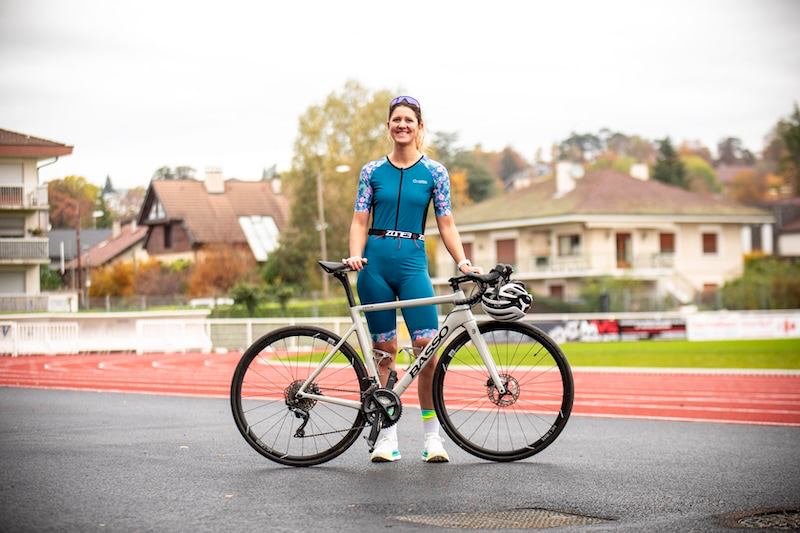
Among the triathlon-specific sessions, brick workouts are a key tool.
They involve linking two disciplines, most often cycling then running, with no real break.
The goal is to teach your body to handle the sudden switch and adapt to the different energy systems involved.
For example, a brick session might look like:
- 1 to 1.5 hours of cycling
- Followed immediately by 20 to 30 minutes of running
This type of session is especially valuable as race day approaches, and it also gives you the perfect chance to practice transitions.
Intensity sessions
Even though the foundation of triathlon training is mostly built on low-intensity work, it’s still essential to include a few harder sessions to improve. These workouts boost speed, power, and your ability to hold a stronger effort in racing.
That said, intensity needs to be used carefully. Too much high-intensity training can quickly lead to overtraining, bringing excessive fatigue, a drop in performance, and eventually a higher risk of injury.
To strike the right balance, many coaches recommend the 80/20 approach. The idea is simple:
- 80% low intensity, at an easy pace where you can still talk while training.
- 20% high intensity, during more demanding sessions (intervals, repeats, hill workouts, etc.).
In other words, most of your prep should feel pretty manageable, and the remaining 20% will spice up your training week and remind you that triathlon is not always a walk in the park.
In priority, intensity sessions should be done on the bike or on the run.
And for you triathlon lovers who are still slightly scarred by endless school pool laps, focus first on technique sessions. There’s no point going all-out in the pool if your form is not solid yet.
Without efficient stroke mechanics, it’s tough to fully tap into your athletic potential. So it’s smarter to spend time improving your stroke, breathing, and body position in the water before turning up the intensity.
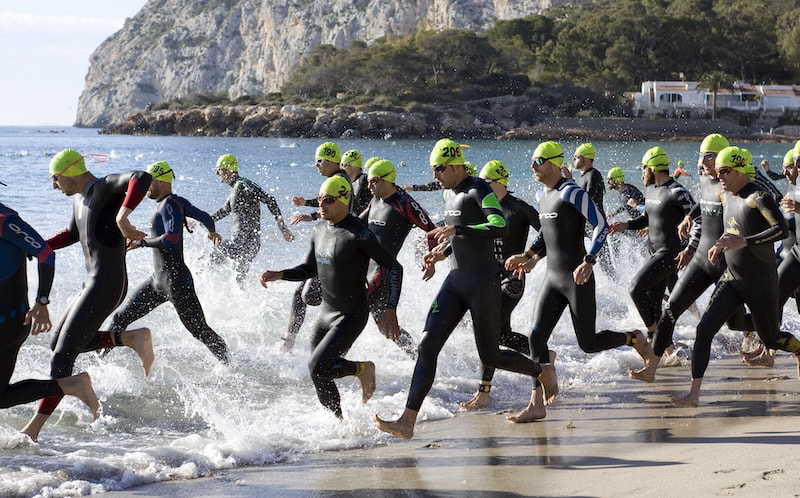
Planning your triathlon training week is mostly about finding the right balance between swimming, cycling, and running, progressing at a level that matches where you are, and listening to your body. By identifying your weak points and structuring your sessions intelligently, especially with brick workouts and well-placed intensity sessions, you can improve efficiently while keeping injury risk under control.
If you want to go further, tools like RunMotion Coach let you follow personalized triathlon training plans tailored to your level, your goals, and your real-life constraints. We let you choose the training days for cycling and swimming, since they usually require more planning than running. A great way to structure your build-up and show up to your next triathlon in the best possible shape.