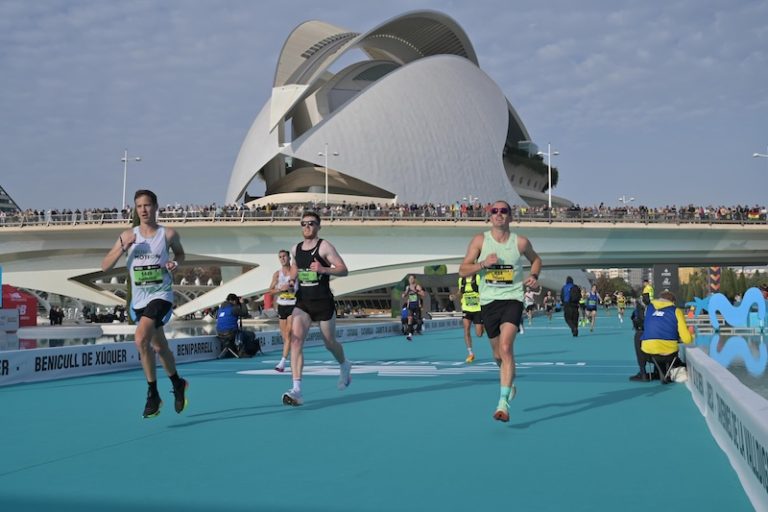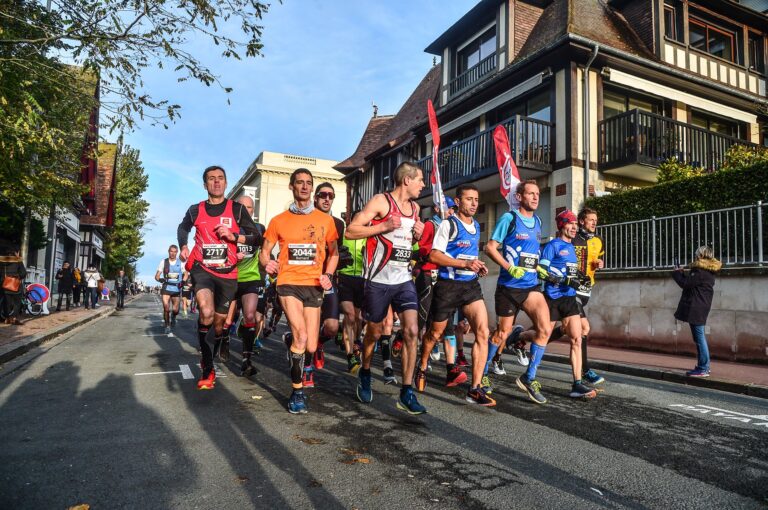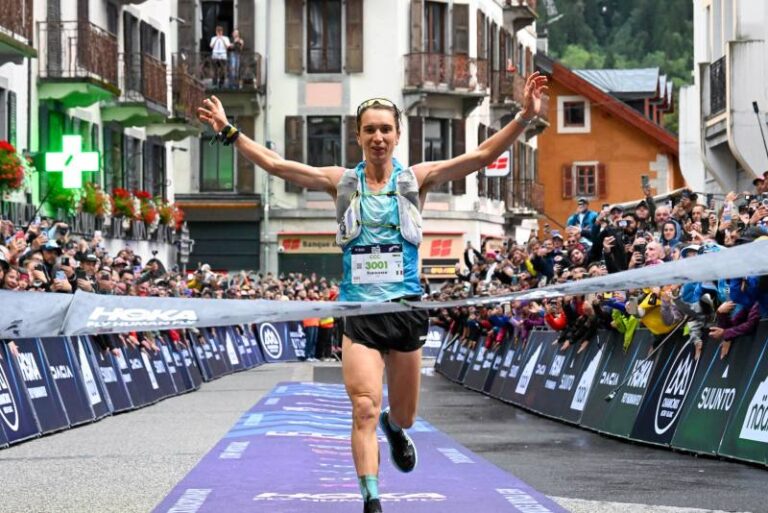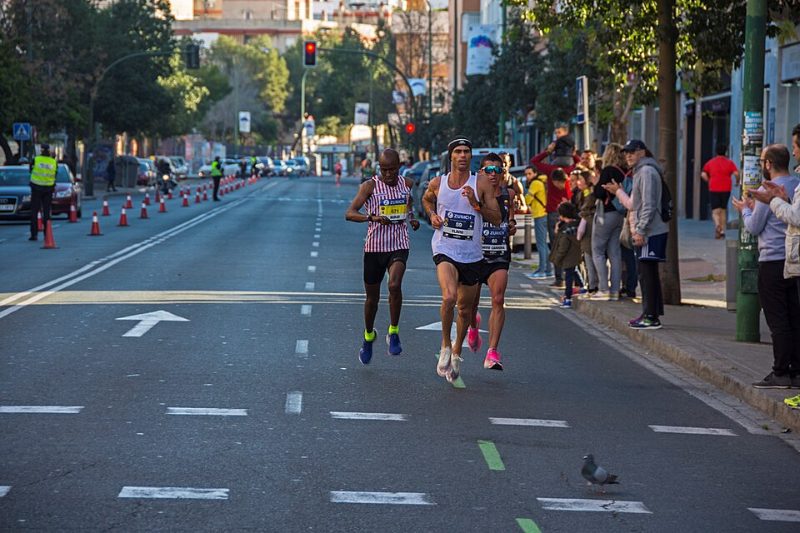
The 2027 Zurich Seville Marathon takes place on Sunday 21 February 2027. It’s one of the flattest and fastest marathons in Europe, and the first big target of the season: if you’re running it, your training starts now. Here is everything you need to know: entry, course, records, weather and training plan.
The short answer
- Date: Sunday 21 February 2027, 8:30 am start on Avenida de María Luisa.
- Entry: 20,000 bibs, €82.10 for runners from outside the province of Seville. Several running sites report that bibs have sold out: check the official website.
- Course: a single loop, almost completely flat (about 10 m of elevation gain according to the organisers), finishing on Paseo de las Delicias.
- Training: a 12-week plan starts in late November; a 16-week plan in late October.
Contents
Seville Marathon 2027 entry
For 2027, the organisers have increased the field to 20,000 bibs (up from 17,000, which sold out months before the previous race). Prices published on the official Zurich Maratón de Sevilla website:
- Runners from outside the province of Seville: €82.10.
- Runners without a Spanish athletics licence: add €5 for the RFEA day licence.
- Residents of the province of Seville: reduced prices depending on the registration date.
Registration closes on Monday 15 February 2027 or when bibs run out. Several running sites report that all 20,000 bibs have already been sold: if you don’t have one yet, check the official website for a waiting list or bib transfers before looking elsewhere.
Is the Seville Marathon flat?
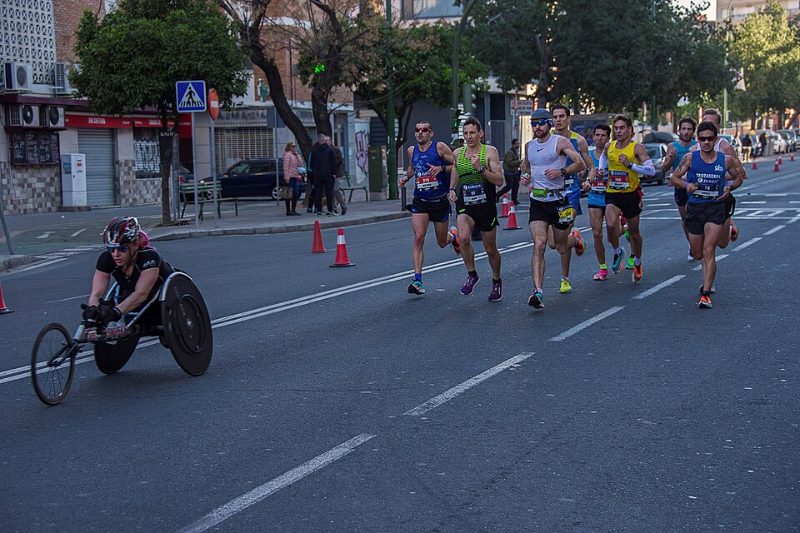
Yes. Seville is run as a single 42.195 km loop on tarmac with an almost flat profile: the organisers quote around ten metres of elevation gain. The start is on Avenida de María Luisa, next to the park, and the finish on Paseo de las Delicias, at Glorieta de Buenos Aires.
Along the way you’ll pass some of the city’s most beautiful spots, including Plaza de España, Plaza Nueva, Puerta de Jerez and Alameda de Hércules, and cross the Guadalquivir on bridges such as San Telmo and La Barqueta. On the bridges and the open stretches by the river, you may feel the wind more.
A fast marathon for a PB
The men’s course record is 2:03:27, set by Ethiopia’s Deresa Geleta in 2024. In 2026, Shura Kitata won after a photo finish (2:03:59), and Finland’s Alisa Vainio won the women’s race in 2:20:39, a national record. It’s one of Europe’s best courses for a personal best; compare it with other fast courses in our ranking of the flattest marathons in the world.
What’s the weather like in Seville in February?
It’s one of Seville’s big advantages: in mid-February, mornings are cool, usually between 8 and 15 °C during the race. Ideal conditions to run fast, especially if you’re coming from a northern European winter. Rain is possible, so check the forecast and bring a throwaway layer for the start.
How to train for the 2027 Seville Marathon
With race day on 21 February, a 16-week plan would have started in late October and a 12-week plan starts in late November. In other words: if you haven’t started yet, now is the time. The hardest block of training falls in January, with long runs in mid-winter, so plan them for daylight and dress for the cold.
A course this flat doesn’t forgive pacing mistakes. Work out your splits with our marathon split times calculator and plan your race-day fuelling. Need a benchmark? See our 3:30 marathon training plan.
The RunMotion Coach app builds your marathon training plan around your race date, fitness and goal time, then adapts it after every session. Try it free for 7 days.
How to pace the race
- First few kilometres: with 20,000 runners, the start is crowded. Don’t waste energy weaving: start in your corral and settle into your pace gradually.
- Up to km 30: keep it steady. Banking a little time is fine, but never run more than 5 seconds per kilometre faster than your goal pace.
- After km 30: this is where the marathon really begins. If you still have legs, pick up the pace gradually towards Paseo de las Delicias.
For your split times and race plan, try Race Strategy.
Practical information
- Start: 8:30 am, Avenida de María Luisa.
- Finish: Paseo de las Delicias; the finish closes at 3:00 pm.
- Getting there: Seville airport has direct flights from many European cities, and the high-speed train links Madrid to Seville in about two and a half hours.
- Accommodation: book early, as the city fills up on marathon weekend. Staying near María Luisa Park lets you walk to the start.
Seville Marathon FAQ
When is the 2027 Seville Marathon?
Sunday 21 February 2027, with an 8:30 am start.
How much does it cost to enter?
€82.10 for runners from outside the province of Seville, plus €5 for the day licence if you don’t hold a Spanish athletics licence.
Is Seville a good marathon for a PB?
Yes: a single flat loop and cool February weather. It’s one of the fastest courses in Europe, with a course record of 2:03:27.
What other fast marathons are there in Spain?
Valencia, in early December, is the other big PB race; read our guide to the Valencia Marathon. For more options, see the best marathons in Spain.
So, should you run the Seville Marathon?
Yes, if you’re chasing a PB: a flat single loop, cool weather, a beautiful city and a huge field. With the race so early in the season, the key is to start training now and reach 21 February with a full build behind you.